Best Over Lock Sewing Machines for Fast, Durable Edges and Finishes
The best overlock (serger) sewing machines provide fast, clean edge finishes and reliable performance across fabrics. This guide highlights five top options, showing who they suit best, their standout features, and practical cautions. Ideal buyers include hobby sewists tackling knits and lightweight to heavy fabrics, small studios needing durable metal frames, and professionals who require quick, precise edging. Below is a quick comparison table of the selected models to help you decide at a glance.
| Product | ||
|---|---|---|
| Brother Serger 1034D | Heavy fabrics and denim projects | 1,300 stitches per minute with metal frame |
| SewLaVie 360 Upgraded | Beginner to intermediate, wide-open threading | Open threading area and 1,300 SPM |
| SINGER X5004-HD | Durable home projects and varied stitch options | Heavy-duty metal frame with 2–4 thread options |
| FEIYUE FY505 | Durable builds with rolled hem capability | 2/3/4 thread, built-in rolled hem |
| SINGER S14-78 | Versatile kits and LED illumination | 2–4 thread capability with included accessories |
Note: All models are described using their listed features. Consider threading ease, differential feed, and knife reliability when comparing options for your typical projects.
Brother Serger 1034D: Heavy-Duty Serger

The Brother 1034D is a metal-frame serger designed for durability and consistent stitching. It supports 3 or 4-thread configurations and finishes seams quickly with up to 1,300 stitches per minute. The underlooper threader aids setup, and a removable trim trap helps minimize bulk on projects. Best for sewers who work with multiple layers or denim and who need robust performance in a compact home setup.
Who this is best for: hobbyists and hobby-to-midrig studios that frequently sew heavy fabrics and require steady performance with a sturdy metal frame. Why chosen: high speed and metal construction promote long-term reliability for frequent serging tasks.
Caution: The machine’s complexity can be challenging for absolute beginners; ensure you follow threading steps and pedal control carefully to avoid tension issues.
SewLaVie 360 Upgraded Serger
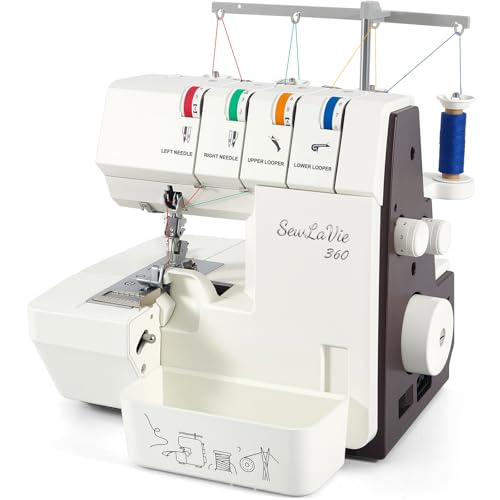
The SewLaVie 360 Upgraded Serger focuses on accessible threading and high-speed performance. It offers open threading with a clear visual guide and supports 2/3/4-thread options, finishing edges at up to 1,300 stitches per minute. Differential feed helps manage knits and sheer fabrics, reducing wrinkling and improving fabric handling for a wide range of projects.
Who this is best for: beginners to intermediate sewists who want straightforward setup and reliable edge finishing. Why chosen: the open-threading area and guide reduce setup time and frustration.
Caution: While versatile, advanced decorative stitches may be limited compared to more specialized machines; consider projects that focus on clean serging and edges first.
SINGER X5004-HD Metal Frame Serger

The SINGER X5004-HD features a heavy-duty metal frame for stability and a versatile 2/3/4-thread setup. It provides six stitch types and a high 1,300 stitches per minute speed. The stronger frame and larger cutting area support thicker fabrics for professional-looking finishes. Best for: serging across a mix of fabrics while maintaining smooth operation.
Why chosen: strong construction reduces vibrations and helps maintain consistent stitch quality with dense materials. Caution: blade changes require careful handling to maintain edge accuracy over time.
FEIYUE FY505 Serger Overlock

The FEIYUE FY505 emphasizes a durable metal frame with 2/3/4 thread capability and a built-in rolled hem. Its blade and threading design deliver precise cuts and clean edges for dependable edge finishing. This model is well-suited for users who want rolled hems and a robust build without extra frills.
Who this is best for: crafters and garment makers seeking rolled hems and reliable performance in a compact package. Why chosen: strong construction supports prolonged use with heavier fabrics. Caution: some users may require practice to fully optimize rolled-hem settings.
SINGER S14-78 Serger with Accessory Kit

The SINGER S14-78 provides 2/3/4-thread options with LED light and a free arm, aiding visibility in tight areas. It ships with essential accessories, including tweezers and a needle set, to support serging right out of the box. It operates at up to 1,200 stitches per minute, which is slightly slower than some rivals but adequate for many projects.
Who this is best for: crafters who value helpful accessories and an illuminated work area for precise finishing. Why chosen: the free arm supports sewing cuffs and collars for neat results. Caution: slower speed compared to some high-end models may affect production timelines on large projects.
Buying Guide
What to consider when choosing an overlock machine:
- Thread capability: Decide whether you need 2, 3, or 4-thread operation, and whether rolled hems are essential.
- Frame and durability: A metal frame generally offers greater stability and longevity, especially with dense fabrics.
- Stitches and speed: A higher stitches-per-minute rate helps finish edges quickly, but ensure the machine remains easy to thread and adjust.
- Threading design: Open or assisted threading reduces setup time and mistakes, which is valuable for beginners.
- Differential feed: Useful for knits, eliminating stretching or puckering on varying fabric weights.
- Accessory kit: A comprehensive kit with extra feet, tweezers, and screwdrivers can save setup time.
- Maintenance: Look for easily replaceable blades and straightforward cleaning options to preserve edge quality over time.
Frequently Asked Questions
- What is an overlock serger best used for?
- Do I need a 4-thread serger for every project?
- Is a metal frame better than plastic for sergers?
- What should I look for in a beginner-friendly serger?
- Is rolled hem important on a serger?
- Can I serge multiple layers like denim?
It creates clean, professional edges on fabrics, finishes seams quickly, and can trim excess fabric as it sews, making it ideal for knits and woven fabrics alike.
No. A 2-thread or 3-thread option can handle most standard finishes; a 4-thread setup is beneficial for stronger seams and heavier fabrics.
Yes. A metal frame generally offers greater durability, stability, and consistent stitching, especially with heavy fabrics.
Accessible threading, clear guides, a user-friendly differential feed, and a practical accessory kit are helpful for new users.
Rolled hems are useful for lightweight fabrics and fine edge finishes. If you frequently hem delicate fabrics, a built-in rolled hem option is valuable.
Yes, models with a strong metal frame and higher stitch speed can handle multiple layers, though technique and tension settings matter for best results.