Best pH Meters for Cheese Making: Accurate Fermentation Readouts for Home Dairy Enthusiasts
Getting precise pH readings matters for cheese making and other dairy applications. This guide highlights five reliable pH meters that suit cheese fermentations, sourdough starters, and related kitchen processes. Each option targets home cooks and small-batch cheesemakers, with different strengths for semi-solid samples, calibration ease, or data tracking. The table below summarizes core details to help you compare at a glance.
| Product | Best For | |
|---|---|---|
| EZTOCH Food pH Meter | Cheesemakers, sourdough bakers | Bluetooth data logging and versatile food testing |
| GIDIGI pH Meter for Food | Fermentation projects and hot sauces | Open-junction probe resists clogging; semi-solid measurement |
| Digital pH Meter Food Pocket (GIDIGI) | Professional kitchen use, canning & fermentation | Color display, ATC, and app connectivity |
| YINMIK Food pH Meter (Extra Probe) | Sourdough and broad fermentation tasks | Extra probe and stable readings with ATC |
| Smart pH Meter for Food (GIDIGI) | Advanced data tracking and canning prep | Phone connectivity and enhanced calibration options |
EZTOCH Food pH Meter for Food
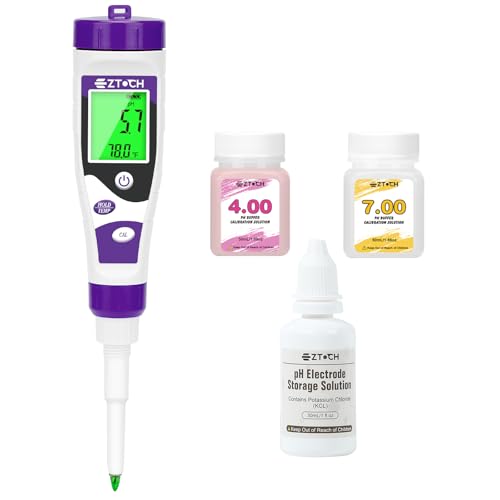
The EZTOCH pH meter is designed for a wide range of food testing tasks, including cheese fermentation, canning, and bread making. It supports measuring pH in meat, fruits, vegetables, sauces, and dairy products. The included Bluetooth function helps you monitor and record pH values over time, which is useful for sourdough starters and cheese cultures. Best for home canners and cooks who want to track trends and store data for later review. A potential limitation is the need to manage Bluetooth connectivity for consistent data logs in busy kitchen environments.
GIDIGI pH Meter for Food

This GIDIGI model emphasizes a conical spear probe with an open junction, designed to measure semi-solid foods like sauces, yogurt, and cheese. Its kit includes three calibration solutions and is pitched toward hot sauces, sourdough, and dairy fermentation. Best for cooks who work with thick mixtures and want a durable probe that resists clogging. A caution: calibration solutions require proper storage and handling to maintain accuracy over time.
Digital pH Meter Food Pocket pH Pen (GIDIGI)

Designed for portability and field use, this GIDIGI pocket meter offers a vivid color display, ATC, and a spear-tip probe suitable for solids, semi-solids, and liquids. Quick calibration with included solutions (4.00, 7.00, 10.01) makes it a strong choice for ongoing fermentation monitoring, sourdough, and canning projects. Best for cooks who value an easy setup and a readable display in dim kitchen corners. Limitation: smaller form factor can be less comfortable for frequent, extended use with large batches.
YINMIK Food pH Meter With Extra Probe

This YINMIK model includes an extra replaceable probe, a helpful feature for households that use pH meters frequently in sourdough, meat curing, cheese making, or canned products. It emphasizes ATC stability and a protective cap with a sponge kept moist by KCl solution, extending probe life. Best for long-term use and reduced downtime for replacement probes. A potential limitation is that calibration relies on included solutions, so keep them accessible for regular maintenance.
YINMIK Digital pH Meter for Food

This YINMIK model focuses on sourdough and broader fermentation needs, offering a 0.00-14.00 pH range with ±0.1 accuracy and a spear probe for direct testing in thick mixtures. Best for bakers and home fermenters who want precise readings across dairy, sauces, and meat products. A caveat: accuracy depends on regular calibration and probe care, especially in dense samples.
Smart pH Meter for Food (GIDIGI)

GIDIGI’s Smart pH Meter offers a professional-grade test pen with ATC and an app-friendly interface. It supports data storage, notes, and range alerts via a mobile connection, which helps track fermentation progress and canning schedules. Best for users who want a digitally integrated workflow. Limitation: setup may require pairing the device with a phone and learning app navigation for full benefit.
pH Meter for Food Digital pH Meter (GIDIGI)
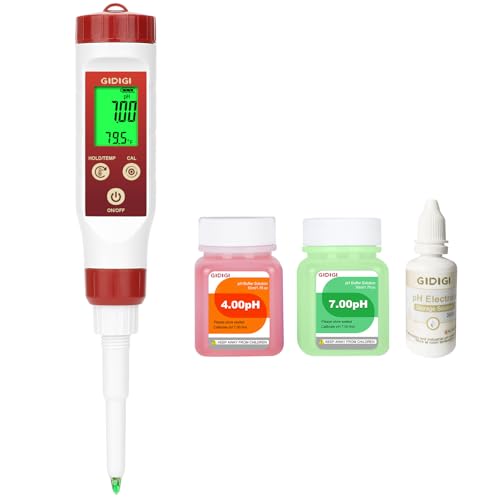
This GIDIGI kit emphasizes a reliable calibration setup with included solutions, a spear sensor for semi-solids, and robust design for fermentation tasks. Best for cooks who want a balanced package with easy calibration and a sturdy probe. Caution: ensure calibration fluid storage is organized to maintain accuracy over time.
Buying Guide: How to Choose The Right Cheese-Making pH Meter
Type of samples matters. Cheese, yogurt, and dairy sauces often require a spear-tip probe for direct testing in semi-solids. Look for open-junction designs to minimize clogging when testing dairy mixtures with proteins. Consider ATC (automatic temperature compensation) to keep readings stable across kitchen temperatures.
- Calibration and stability: Choose meters that include calibration solutions and offer straightforward, one-click calibration or app-supported calibration logs.
- Probe accessibility: A spear-tip probe helps with semi-solid foods; open junction reduces clogging for dairy and sauces.
- Data tracking: If you want to monitor fermentation progress, prioritize meters with data logging, Bluetooth/app integration, or easy export options.
- Portability vs. bulk testing: Pocket meters suit on-the-go checks, while larger units with colorful displays aid visibility in dim kitchens.
- Maintenance: Look for reusable probe caps with moisture retention and protective covers to extend probe life.
Frequently Asked Questions
- What pH range is ideal for cheese fermentation?
Most cheese fermentation relies on a pH range that ensures safety and texture, typically around pH 5.0 to 5.5 during early steps, trending toward lower pH as acid develops. Check specific cheese recipes for guidance.
- Do I need a dedicated food pH meter for canning?
Yes. Canning safety often depends on accurate pH readings. A meter with reliable semi-solid measurement and calibration options helps verify acidity levels for high- or low-acid foods.
- Is automatic temperature compensation important?
Yes. ATC helps maintain stable readings when ambient kitchen temperatures vary, which is common in home kitchens.
- Can I use the same meter for bread dough and dairy?
Yes, provided the meter has a suitable probe (spear tip) and a broad pH range with stable readings for solids and liquids.
- How often should I calibrate a pH meter?
Calibrate before frequent use or if readings drift. Many meters include 4.00 and 7.00 solutions for quick calibration checks.
- Do meters drain batteries quickly in the kitchen?
Some pocket meters are designed for low power consumption, but battery life varies by model. Keep spare calibrants and backup probes if possible.