Best pH Tester for Fermentation and Canning
Answering your search for reliable fermentation pH testing tools, these picks cover kitchen and home-brew needs. Ideal for sourdough, sausages, pickles, yogurt fermentation, and canning safety. The top products target different buyers: hobby bakers, home brewers, DIY food canners, and small-scale fermenters. Below you’ll find six curated options with clear pros, best-use scenarios, and practical cautions. A quick buying guide and FAQ follow to help you compare features, accuracy, and ease of use.
Summary of chosen products
- EZTOCH Food pH Meter — best overall for diverse fermentation and canning tasks.
- GIDIGI pH Meter for Food — best for semi-solid samples and direct measurement.
- VIVOSUN Digital pH Meter — best for hydroponics and water-based testing.
- YINMIK Digital pH Meter — best for sourdough and solid/liquid samples alike.
- Fermentaholics pH Test Strips — best for quick, casual testing without probes.
EZTOCH Food pH Meter For Fermentation
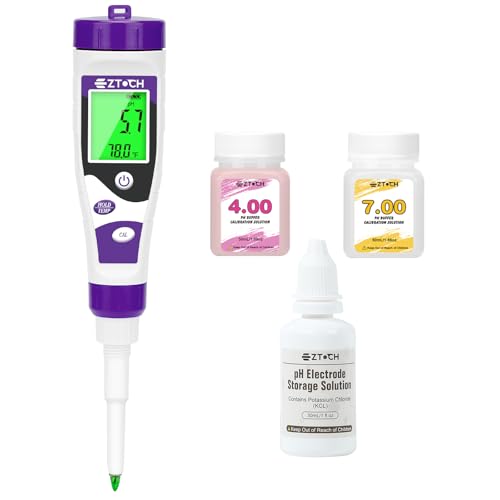
Best for: Home canners, sourdough bakers, and cooks testing sauces, cheeses, and pickles. This meter supports a wide pH range and Bluetooth logging for recording pH values during fermentation or canning. It helps determine high-acid (pH < 4.6) versus low-acid (pH > 4.6) foods for water bath vs pressure canning. It also suits yogurt, kombucha, and beer projects where precise pH tracking matters. Use with caution on very thick solids where probe penetration may be limited.
Why selected: It combines a versatile probe with a broad application set—from bread and dairy to sauces and meats. The Bluetooth logging feature supports recipe documentation, helpful for repeatable fermentation workflows. The meter is described as durable for kitchen environments and food testing tasks.
Caution: Ensure thorough cleaning between samples to avoid cross-contamination and probe clogging with highly viscous sauces or solids.
Fermentaholics Kombucha & Fermentation pH Test Strips

Best for: Quick, on-the-go pH checks of kombucha, beer, wine, mead, and fermentation brines. These strips provide instant readings without wiring or calibration. They are ideal for beginners or busy kitchens needing fast trend checks rather than instrument precision. No calibration fluids are required, which keeps setup simple.
Why selected: No instruments to clean or calibrate, making them ideal for fast batch monitoring and education. The range 0–6 covers typical fermentation starter and early-stage pH values for many home brews and ferments.
Caution: For highly precise control, strips are less exact than digital meters and may require multiple strips to confirm a trend. Reading intervals can vary with lighting and color interpretation.
GIDIGI pH Meter For Food And Fermentation

Best for: Semi-solid foods like cheese, sauces, hot sauces, and sourdough starters. This meter features a spear tip and open junction to minimize clogging when testing semi-solids, dairy, and emulsions. It’s designed to measure pH directly in solids or semi-solids, reducing prep work for testers who work with chunky mixes.
Why selected: The open junction and spear tip help reach accurate readings in thick samples where standard meters struggle. It supports a broader fermentation and canning workflow by providing direct measurements in foods such as salsa, yogurt, and cheese.
Caution: Probe maintenance is important; improper cleaning can affect long-term stability. It includes calibration solution kits to maintain accuracy.
VIVOSUN Digital pH Meter

Best for: Hydroponics, home water testing, and basic fermentation projects where a compact meter with clear readouts is preferred. It offers a pocket-friendly size, backlit display, and straightforward calibration. The meter is useful for testing water used in fermentation and for general household testing of drinking water.
Why selected: It emphasizes ease of use and quick readings with a readable LCD, making it suitable for beginners and frequent testers who value simplicity over advanced features.
Caution: It’s more generalized for water and simple liquids; for thick foods, a dedicated food-grade meter with a spear probe may perform better.
YINMIK Digital pH Meter For Food

Best for: Sour dough management, sausages, salami, and canned jams or sauces. This meter has a spear probe suitable for solids and liquids, with a wide pH range (0.00–14.00) and 0.1 accuracy. It is positioned for versatile kitchen fermentation tasks, including sushi rice testing and dairy testing like yogurts and cheeses.
Why selected: The spear tip design enables direct testing in thick or semi-solid samples, reducing prep. It aligns with both home fermentation projects and more delicate dairy or meat preparations where precise pH matters.
Caution: Probe care is important to prevent cross-sample contamination. Calibrate regularly for best accuracy when switching between sample types.
Digital pH Meter Food Pocket pH Pen

Best for: On-the-go testers who need quick, accurate checks during fermentation experiments, cooking, or canning prep. The kit includes calibration solutions and a color display for easy, readable results in various lighting conditions. It’s suitable for both beginners and more experienced home cooks.
Why selected: Its pocket form factor and included calibration materials support frequent testing without heavy equipment. The extended temperature sensor helps stabilize readings in different environments, which is helpful for seasonal kitchen projects.
Caution: The kit’s extra features mean more components to manage; keep calibration solutions securely capped and stored as directed.
Buying Guide: Key Considerations For Choosing a Fermentation pH Tester
- Accuracy and range: For bread and dairy, choose meters with at least 0.1 pH resolution and a wide range (0–14) when possible.
- Probe type: Spear/tip probes excel with solids and semi-solids; open-junction designs resist clogging in dairy or sauce testing.
- Calibration: Check included calibration solutions and the ease of recalibration. ATC (automatic temperature compensation) improves consistency in varying temperatures.
- Display and readability: Backlit displays help in dim kitchens; color charts or digital readouts expedite quick checks.
- Maintenance: Consider how easy it is to clean between samples and dry the probe to prevent corrosion or buildup.
- Portability vs. lab-grade: Decide if you need a pocket meter for on-the-go use or a more feature-rich unit for a dedicated fermentation station.
- Use-case alignment: If you primarily test liquids, a standard pen-style meter is often sufficient; for semi-solids (sauces, cheese), prioritize spear-tipped or open-junction designs.
Frequently Asked Questions
- What pH range is ideal for sourdough fermentation? Common ranges are around 3.5 to 5.0, depending on the stage and starter.
- Do I need calibration solutions for every test? Regular calibration improves accuracy; many meters include one-time solutions, and you should replace them as needed.
- Can I test pH of solid foods directly? Yes, meters with spear or open-junction probes are designed for direct testing in semi-solids and emulsions.
- Are pH strips sufficient for fermentation? Strips are quick but less precise than digital meters; they’re best for trend checks or quick screening.
- Is automatic temperature compensation necessary? ATC helps stabilize readings across temperature changes, which is helpful in kitchens with variable ambient temps.
- Which product is best for beginners? Strips or pocket meters with simple calibration are typically easier for beginners to start with and learn the basics.