Best Pizza Dough Baller Machine Options for Efficient Pizza Making
Answering the search for pizza dough baller machines, this guide highlights five reliable options suited for small bakeries, pizzerias, and home kitchens. Each pick emphasizes consistent dough sizing, speed, and practical operation. Best for chefs who need uniform dough balls, best for busy shops, or best for compact workstations, these machines streamline early-stage dough processing without sacrificing quality. The table below compares the five highlighted models at a glance to help you decide quickly.
| Product | Best For | Key Benefit | Approx. Output |
|---|---|---|---|
| TECHTONGDA Commercial Dough Divider | Small operations, table-top use | Adjustable speed for precise dough portions | 1-300 g options |
| Koalalko Auto Dough Divider | Restaurant prep lines | Four preset molds with adjustable weight | 0-500 g range |
| VEVOR 3-16 Inch Pizza Roller Sheeter | Medium to large batches | High-throughput dough pressing | 3-16 in dough width |
| INTSUPERMAI Dough Divider Rounder | High-precision divider work | Multiple dies, copper motor | 1-500 g range |
| BOOROS Commercial Dough Mixer | Mixing and dough prep | Strong 750W motor for quick kneading | 10 L capacity |
Note: Each model has unique strengths and potential limitations. Review details about mold sizes, output range, and health/safety features to pick the best fit for your kitchen workflow and space.
TECHTONGDA Dough Divider: Compact and Versatile
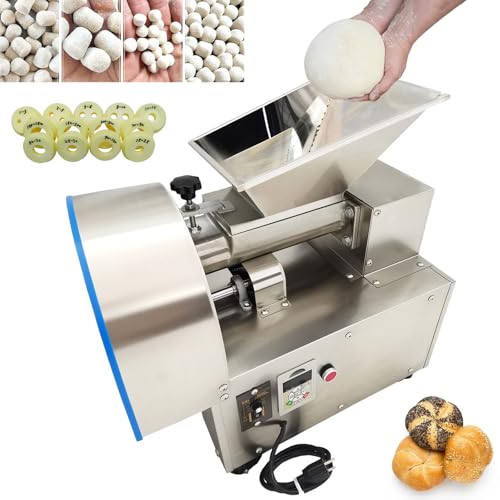
Features include adjustable kneading and cutting speeds to produce consistent dough portions for dumplings, buns, breads, desserts, and pizzas. The design emphasizes a small footprint with strong functionality, making it suitable for table-top use or as a companion to other dough-processing equipment. Best for compact kitchens or prep stations that require a quick, reliable dough sizing solution. Limitation: smaller size may limit the maximum batch size per cycle compared with larger, dedicated production lines.
Koalalko Electric Dough Equal Cutter

This auto dough divider offers four default round molds (25 mm, 30 mm, 40 mm) with adjustable dough weight (0-500 g) and one-button operation. It’s best for kitchens that need precise, repeatable portioning at higher throughput. The 400W motor and robust frame support steady operation. Choose this if you value multiple dough ball sizes and faster batch processing. Caution: larger footprint and heavier weight require stable installation and space planning.
VEVOR Pizza Dough Roller Sheeter 3-16 Inch

This semi-automatic roller sheeter presses dough to dimensions from 3 to 16 inches with thickness control from 1 to 5.5 mm. It suits busy cafes and pizzerias needing consistent dough sheets quickly, with even pressing via upper and lower rollers. Best for operations prioritizing uniform sheet formation for pizzas, pastas, and flatbreads. Limitation: semi-automatic feeding requires manual dough placement, which may slow batch throughput slightly in high-volume environments.
Pizza Dough Roller Sheeter HasanEN

HASANEN’s model is a 370W roller system with a dual-roller design, supporting dough widths from 4 to 15 inches and adjustable thickness from 0.7 to 5.4 mm. It uses durable stainless steel construction and food-grade rollers for consistent, safe dough shaping. Best for operations that want a wider range of dough sizes in a single machine. Caution: ensure the drive motor and rollers are kept clean to maintain performance and safety across continuous use.
INTSUPERMAI Dough Divider Rounder
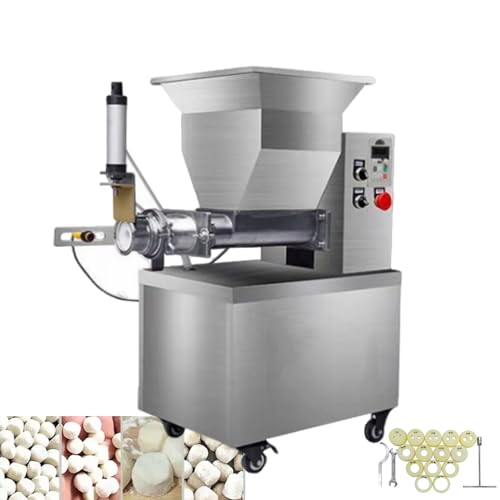
Equipped with 14 dies and a copper motor, this machine handles dough from 1 g to 500 g with adjustable speed and dough feed rate. It offers high efficiency and smooth dough surfaces without compromising elasticity. Best for bakeries that require precise dough piece sizing and rapid production, especially when multiple die shapes are needed. Limitation: higher complexity in setup and die changes may require operator familiarity.
BOOROS Commercial Dough Mixer
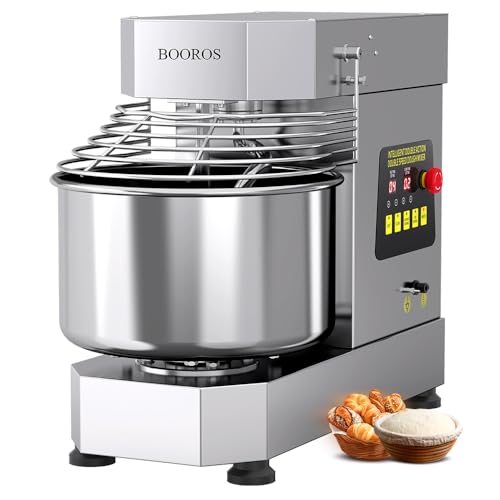
While primarily a mixer, this 750W twin-action mixer excels at kneading high-viscosity dough quickly, with a 10-quart (approximately 10 liters) bowl and 2.2–11 lb dough capacity. Best for shops needing reliable dough blending and bulk prep to complement dough-ball forming. Use it in tandem with a dedicated dough divider if you require uniform ball sizes. Limitation: not a dedicated dough baller, so you’ll still need a separate balling step for uniform portions.
Buying Guide: How To Choose The Right Dough Baller Machine
- Volume and throughput: Match machine output to your daily dough production needs. High-volume shops benefit from multi-mold or high-speed models, while smaller kitchens may favor compact, table-top units.
- Portion control: Look for adjustable dough weight ranges and multiple mold sizes to cover different recipes and portions.
- Footprint and installation: Consider space, weight, and whether you need a stationary unit or a portable table-top model.
- Maintenance and hygiene: Stainless steel bodies and food-grade components reduce corrosion risks and simplify cleaning.
- Ease of operation: One-button or simple speed controls reduce training time and operator fatigue during busy periods.
- Versatility: Some models also function as dividers, rollers, or mixers. Identify which capabilities align with your workflow to minimize equipment clutter.
- Safety: Check protective shields, overload protection, and stable footing to protect staff during continuous use.
Frequently Asked Questions
- What is a pizza dough baller machine? A dough baller machine portions dough into uniform spheres, often with adjustable weights and multiple molds or dies for consistent pizza dough balls.
- Do I need a separate roller and divider or a combined unit? A combined unit can save space and improve workflow, but a dedicated divider and roller may offer higher throughput for large shops.
- Which material is best for food equipment? Stainless steel construction is common for durability and hygiene in commercial kitchens.
- Can these machines handle different dough types? Many models support various dough ranges, but always verify weight limits and mold sizes for your recipes.
- Is maintenance difficult? Most models require regular cleaning and occasional die changes; copper motors and reliable seals reduce downtime when properly maintained.
- What safety features should I look for? Overload protection, stable bases, and shields around moving parts help prevent injuries during operation.