Best Electric Oven Plug Options: Durable, Safe, and Ready for Kitchen Installations
Answering the common question “what is the right plug for an electric oven?” this guide highlights five reliable plug and adapter choices designed for heavy-duty kitchen appliances. Each option targets a specific use case, from standard 30/50-amp oven setups to adapters that convert between common outlet configurations. Choose based on your oven’s power needs, wiring, and installation space. This overview helps buyers identify which plug or adapter is best for a rental kitchen, a DIY kitchen remodel, or a professional electrical upgrade. The table below compares the top picks to simplify decision-making.
| Product | Best For | Key Benefit |
|---|---|---|
| ELEGRP NEMA 14-30P & 14-50P Plug | New or replacement for 30A/50A oven setups | Dual power blades for interchangeable use |
| FGIEU 6AWG 50A 4 Prong to 3 Prong Adapter | Converting 4-prong to 3-prong for basic dryer/oven needs | Waterproof housing, grip handle, ETL listed |
| ELEGRP NEMA 10-30P & 10-50P Angle Plug | Older 3-wire oven configurations | Heavy-duty non-grounding plug with dual blades |
| Micmi NEMA 10-30P & 10-50P Angle Plug | Versatile 3-wire oven connections | Sturdy thermoplastic shell, interchangeable blades |
| Suplevel NEMA 14-50P to 10-50R Adapter | RV or generator-to-stove power transitions | ETL listed, 50A to 50A rating with 3-prong conversion |
ELEGRP NEMA 14-30P & 14-50P Plug

Best for: Modern installs requiring flexibility between 30A and 50A ovens. This dual-plug configuration supports both common NEMA 14-30P and NEMA 14-50P outlets with a single component, reducing the need to stock separate plugs. The unit features a tough thermoplastic shell and brass contacts for improved conductivity. It is UL listed and provides grounding through a 4-wire, 3-pole design.
Why selected: The dual power attachment design simplifies replacement parts and reduces inventory challenges in busy kitchens. The plug’s heavy-duty construction is well suited for frequent plugging and unplugging in commercial or home settings.
Limitations: The 3-wire option depends on the correct matching outlet configuration; verify that your oven and wiring require a grounded 4-wire setup before installation.
FGIEU 6AWG 50A 4 Prong to 3 Prong Adapter

Best for: Converting a 4-prong 50A dryer/oven outlet to a 3-prong plug where permitted. This adapter is designed for heavy-duty use with 6 AWG STW cable, suitable for 125/250V loads up to 50A. It is ETL listed and emphasizes easy handling with a non-slip grip.
Why selected: It offers a practical bridge for older homes or appliances that originally used 3-wire or 4-wire configurations, helping maintain compatibility without rewiring. The waterproof housing adds resilience in areas with moisture exposure.
Limitations: Explicitly not intended for EV charging or other high-demand applications beyond oven or dryer usage; confirm local electrical codes before installation.
ELEGRP NEMA 10-30P & 10-50P Angle Plug

Best for: Older-style 3-wire ovens that require NEMA 10-30P or 10-50P configurations. This plug provides a heavy-duty option with 3 poles and 3 wires, designed for UL listing and robust conductance thanks to brass contacts.
Why selected: It matches classic dryer/oven outlet formats while offering a streamlined dual-blade approach. This makes it a dependable replacement for aging outlets in kitchens still configured with 3-wire systems.
Limitations: Non-grounding design means it is not suitable where a grounded connection is mandated by current codes; verify your local code requirements before installing in a modern kitchen.
Micmi NEMA 10-30P & 10-50P Angle Plug
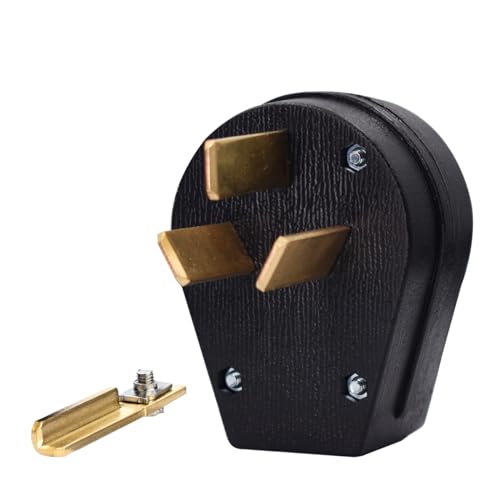
Best for: Versatile replacement for 3-wire ovens and stoves that can utilize 10-30P or 10-50P configurations. The product emphasizes a heavy-duty build with a thermoplastic shell and brass contacts to ensure reliable conductivity.
Why selected: The dual-blade approach reduces stocking needs while providing a sturdy, easy-to-clean exterior. This option is well-suited for kitchens with a mix of older and newer ovens that still rely on 3-wire configurations.
Limitations: Like other non-grounding options, it should be installed only where grounded outlets are not required by code; confirm compliance before use in a modern installation.
Suplevel NEMA 14-50P to 10-50R Adapter

Best for: Converting a 14-50P generator or RV outlet to a 10-50R to power an oven or range with three-prong connections, particularly in setups where a full 4-prong receptacle isn’t available. The adapter supports 50A, 250V operation and is ETL listed for reliability.
Why selected: This option provides practical flexibility for temporary or remote installations, such as a generator-powered kitchen or an RV-equipped cooking area, where a three-prong outlet is the norm.
Limitations: It only facilitates conversion to a 3-prong outlet; ensure that your oven’s power configuration allows such operation under local codes and appliance requirements.
Buying Guide
What is the correct plug type for my oven?
Check the oven’s user manual or the data plate on the back of the appliance. Common configurations include NEMA 10-30/10-50 (3-wire, older installations) and NEMA 14-30/14-50 (4-wire, modern installations with grounding). Choose a plug that matches the outlet type and the appliance’s amperage rating.
Should I prioritize dual-blade or single-blade designs?
Dual-blade designs offer flexibility when you have to power multiple outlet configurations from a single plug. If your oven setup is fixed, a dedicated plug that matches the outlet reduces the risk of miswiring and improves safety.
Grounding and code considerations
Modern kitchens typically require grounding and a 4-wire connection (hot-hot-neutral-ground). If your outlet or local code requires a grounded connection, avoid non-grounding options unless you plan a proper electrical update. Always verify local electrical codes before installation.
Adapter usage versus replacement plugs
Adapters are convenient for temporary or transitional arrangements, especially in older homes or rental spaces. For long-term use, replacing the outlet with a correctly rated plug is safer and more compliant with electrical standards.
Installation and safety
Power should be turned off at the breaker before any installation. If you are unsure about wiring or amperage requirements, consult a licensed electrician. Use components that are UL or ETL listed to ensure compliance and safety.
FAQ
- Can I use a 50A adapter for a 30A oven? Only if the adapter and wiring are rated for the oven’s amperage. Mismatched amperage can be unsafe and violate code.
- Do these plugs require grounding? Many modern ovens require a grounded (4-wire) connection; non-grounding options are generally for older installations and may not meet current codes.
- Is a dual-blade plug safer than a single-blade plug? Dual-blade designs provide flexibility and can reduce stocking needs, but safety depends on proper matching to outlet type and correct wiring.
- Are adapters ETL or UL listed? Yes, several options are ETL listed or UL listed, which supports product safety and compliance.
- What should I do if my kitchen has mixed oven configurations? Consider a combination approach: use adapters for older outlets while upgrading to a 4-wire 14-50/14-30 receptacle for newer ovens, following local code guidelines.
- When should I consult a professional? If you are unsure about wiring diagrams, breaker sizing, or proper grounding, seek a licensed electrician to avoid fire or shock hazards.