Best Portable Ice Maker With Ice Full Sensor: Find the Right Sensor-Driven Model
Answering the common buyer question, these portable ice makers rely on ice-full sensors to prevent overflow and optimize cycles. This guide highlights five models with reliable fullness or ice-level sensing designed for homes, offices, and small businesses. Ideal for users who want automatic stopping cues when the basket fills, or quick alerts to add water. The selection focuses on sensor reliability, ease of installation, and practical use in real-world settings.
| Product | Best For | Sensor Type |
|---|---|---|
| Upgraded Ice Fullness Sensor (Generic) | Commercial or heavy-duty small kitchens | Magnetic switch ice-full sensor |
| Ice Fullness Sensor for Business (Cydewhoale) | Vevor Cotline and similar commercial machines | Magnetic switch |
| LGEGE Ice Full Sensor | Home repair or DIY upgrades | Magnetic switch |
| ecozy Ice Makers Countertop | Home, small parties, RVs | Infrared ice-level sensor (auto pause) |
| EUHOMY Countertop Ice Maker | Home/kitchen, travel-friendly use | Ice-full indicator with infrared sensing |
Upgraded Ice Fullness Sensor for Ice Machines

Best for: Commercial-equipped small kitchens and repair-friendly setups. This sensor uses a magnetic switch that detects when the ice bin is full and signals the microcontroller to halt ice production. It’s designed for easy installation and quiet operation, suitable for DIY fixes without professional repair services.
Why chosen: It provides a direct ice-full signal via a magnetic switch, aligning with systems that rely on a precise “full” state. The product emphasizes compatibility, a 3-step quality process, and straightforward assembly for quick replacement in household or light-duty commercial machines.
Limitation: The description focuses on sensor function and compatibility; users should confirm exact model compatibility with their ice machine before purchase.
Ice Fullness Sensor for Business Ice Makers

Best for: Commercial deployments using Vevor or Cotline-inspired cubes machines. This sensor uses a magnetic switch to detect full bins, preventing overflow and potential damage from overfilling. It’s specifically pitched for business cube ice makers and related systems.
Why chosen: Clear focus on compatibility with popular commercial brands, enabling reliable fullness detection and simple plug-and-play installation, reducing downtime during maintenance.
Limitation: May require minor wiring adjustments depending on the machine model.
LGEGE Ice Full Sensor for Ice Maker

Best for: DIY enthusiasts and repair technicians upgrading home or mini ice makers. This sensor uses a magnetic switch, ensuring strong compatibility and straightforward integration with popular ice machines.
Why chosen: Emphasizes durability and 100% compatibility, with a plug-and-play approach that suits both replacement and early-stage upgrades in home environments.
Limitation: Data focuses on compatibility; verify your machine’s exact connector type before installation.
ecozy Countertop Ice Maker With Full-Color Panel

Best for: Home users who want a smart, visually guided ice-maker experience. The unit features an infrared ice-level sensor and a full-color panel that displays ambient conditions and process status.
Why chosen: The ice-level sensor automatically pauses the cycle when the basket is full and when water is low, reducing overflow risk. The self-contained lighting helps monitor progress in dim environments.
Limitation: The advanced panel and lighting are feature-rich but can be more complex to operate for casual users seeking the simplest model.
EUHOMY Countertop Ice Maker with Infrared Sensor
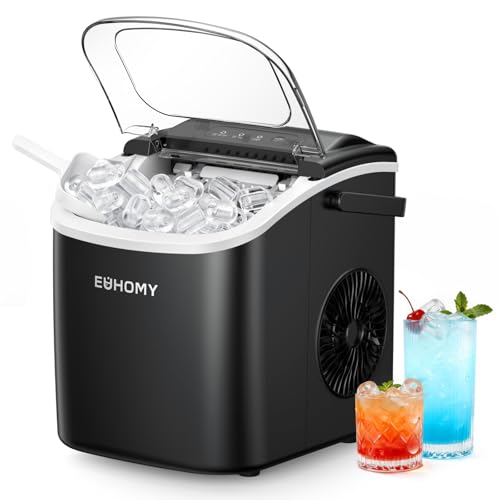
Best for: Home users seeking a compact, quiet ice maker with practical fullness cues. It emphasizes a quick 6-minute first batch and an ice-full indicator that helps manage ice production without manual checks.
Why chosen: Combines fast ice making with a clear fullness indicator, making it suitable for small kitchens, camping setups, or RV use where space is at a premium.
Limitation: While the product highlights sensor indicators, exact sensor type details are less explicit, so confirm sensor compatibility with your machine if you rely on a specific sensor standard.
Buying Guide
What type of sensor should I prioritize?
- Magnetic switch fullness sensors are reliable for commercial and DIY repairs and give a straightforward full-bin signal.
- Infrared or electronic ice-level sensors help prevent overflow and work well in compact or illuminated setups.
Which model is best for a small kitchen or RV?
- ecozy and EUHOMY models emphasize portable design, quiet operation, and practical fullness cues, ideal for limited spaces.
- Non-commercial units with auto-cleaning and light indicators can streamline daily use without requiring extensive maintenance.
What installation considerations matter?
- Check compatibility with your existing ice maker’s wiring and connector types.
- Ensure the sensor is rated for the machine’s ice-making style (cube, bullet, nugget) and bin configuration.
How does sensor type affect maintenance?
- Magnetic switches generally require less cleaning than optical sensors but may need recalibration if the bin shifts significantly.
- Infrared/ice-level sensors benefit from clean lenses and free movement of the basket to avoid false alerts.
Frequently Asked Questions
- What is an ice-full sensor and how does it work?
It detects when the ice bin has reached its capacity and signals the ice maker to pause or stop producing ice. - Are these sensors compatible with most countertop ice makers?
Many are designed as replacements for common models, but verify exact model compatibility before purchasing. - Do fullness sensors affect ice quality?
No, their purpose is to manage production cycles, not alter ice quality directly. - Can sensor upgrades reduce maintenance?
Yes, by preventing overfills and minimizing manual checks, they reduce spillovers and manual interventions. - Which sensor type is best for noise-sensitive environments?
Infrared-based fullness sensors tend to operate quietly and minimize mechanical interruptions. - Is installation DIY-friendly?
In most cases, yes, but refer to device-specific instructions and ensure power is disconnected before any wiring changes.