Best Pressure Pot for Canning: Top 5 Canners for Safe, Home Preservation
Whether you’re a weekend canner or stocking up for the harvest season, choosing the right pressure pot improves safety and efficiency. This guide highlights five top options that suit different home-preservation needs, from large-batch processing to electric convenience. Buyers who want a traditional stovetop canner, a compact electric option, or a complete starter kit will find a fit here. The selections emphasize safety features, capacity, and compatibility with common canning methods.
| Product | Capacity | Best For |
|---|---|---|
| T-Fal 22-Quart Aluminum Pressure Canner | 22 quarts | Large-batch canning; versatile for water bath and pressure canning |
| Presto 01781 23 Qt Pressure Canner and Cooker | 23 quarts | USDA recommended canning method; dual use as pressure and water bath canner |
| NESCO NPC-9 Smart Electric Pressure Canner | 9.5 quarts | Electric countertop canning; preset programs for consistent results |
| Supa Ant 23 Qt Canning Pot Starter Kit | 23 quarts | All-in-one starter kit with essential tools |
| Barton 22-Quart Pressure Canner with Gauge | 22 quarts | High-altitude or precise pressure canning with dial gauge |
T-Fal 22-Quart Aluminum Pressure Canner

Best for: Home canners who want a large, durable aluminum pot that handles both low-acid and high-acid foods. The 22-quart capacity supports sizable batches, reducing the number of canning rounds. It’s well-suited for vegetables, meats, seafood, and fruits using USDA-recommended methods.
Why selected: It combines sturdy aluminum construction with a versatile two-stage canning approach, enabling both pressure canning and water bath canning. The large capacity is a clear advantage for batch processing, and the design emphasizes longevity and even heating.
Caution: Verify compatibility with your stove, especially if you have a glass-ceramic surface, to avoid any warping or heat distribution issues. Ensure you follow the canning guide to avoid under- or over-processing.
Presto 01781 Pressure Canner and Cooker, 23 Qt

Best for: Canners who want a USDA-approved method and a dual-purpose workhorse that can handle vegetables, meats, and seafood, plus a boiling-water canner option for high-acid items like fruits and jams.
Why selected: The design emphasizes safety and durability with warp-resistant aluminum and compatibility with regular and smooth-top ranges. The 23-quart size balances capacity with manageability for frequent batch processing.
Caution: Must use proper venting and processing times per tested canning guidelines; the large pot can be heavy when filled, so use a sturdy surface and safe lifting practices.
NESCO NPC-9 Smart Electric Pressure Canner
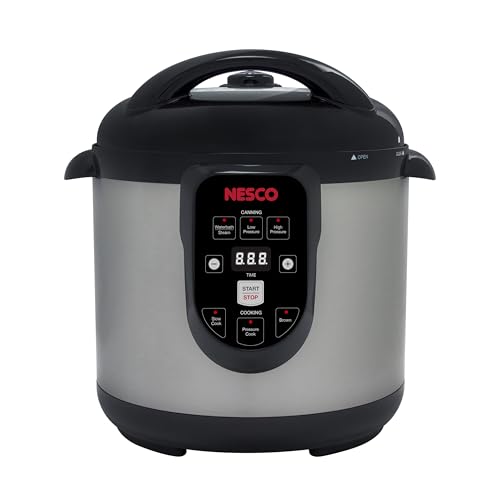
Best for: Canners seeking electric operation with built-in safety controls and preset programs for consistent results without a stove top.
Why selected: This model offers dedicated electric pressure canning with automatic regulation of pressure and temperature. It also functions as a multi-cooker with modes for pressure canning, slow cooking, steaming, and water bath, making it a flexible countertop unit.
Caution: Capacity is smaller than traditional stovetop pots; plan small-to-medium batches if you need bulk processing in a single session.
Supa Ant 23 Qt Canning Pot Starter Kit

Best for: Beginners or households seeking an all-in-one solution with essential canning accessories included.
Why selected: This kit provides a large 23-quart pot plus a complete set of tools (jar lifter, rack, tongs, bubble remover, etc.), which helps streamline water bath canning and multi-jar batches. The rustproof stainless base and aluminum body offer durability and corrosion resistance.
Caution: The included rack and tools are designed for standard jars; if you use unusual jar sizes, verify fit and spacing before canning.
Barton 22-Quart Pressure Canner with Gauge

Best for: Canners who require precise pressure monitoring, including high-altitude environments or recipes that demand strict processing pressure.
Why selected: This model includes a deluxe pressure dial gauge for accurate processing pressures and a locking lid system. Its 22-quart capacity supports larger batches, and the design emphasizes safety with a spring safety device and a positive locking mechanism.
Caution: Ensure proper gauge calibration and periodic maintenance for dependable readings; incorrect gauge pressure can affect processing outcomes.
Buying Guide: Key Purchase Considerations
- Capacity: Choose according to batch size. 22–23 quarts handles multiple jars per cycle; 9–10 quarts suits smaller households or occasional use.
- Material: Aluminum pots heat quickly and evenly; stainless steel pots resist corrosion and are durable, though often heavier.
- Safety features: Look for locking lids, vent pipes, pressure gauges, and automatic venting to prevent accidental openings.
- Compatibility: Confirm stove compatibility (gas, electric coil, glass top, induction) and whether the pot works for pressure canning, water bath canning, or both.
- Accessories: Racks, jar lifters, tongs, and bubble removers save time and improve jar return rates. Starter kits are convenient for beginners.
- Maintenance: Materials that resist corrosion and are easy to clean reduce long-term upkeep.
- Altitude considerations: Some models include gauges or adjustable regulators; high-altitude cooks may need higher pressure settings.
FAQ
- What is the difference between pressure canning and water bath canning?
Pressure canning uses steam under pressure to reach temperatures safe for low-acid foods; water bath uses boiling water for high-acid foods.
- Is a gauge necessary for canning?
For many recipes, a dial gauge provides precise processing pressure, which can improve safety and consistency, especially at higher altitudes.
- Can I use any pot for pressure canning?
No. Only pots rated for pressure canning with a proper locking lid and safe venting should be used to prevent accidents.
- Do these pots work on induction stoves?
Some models are induction compatible; verify the product specs before purchasing if you have an induction range.
- What batch size is typical for a 22-quart pot?
Most 22-quart pots can process enough jars to fill a typical batch—often 18 to 24 jars, depending on jar size and packing.