Best Reverse Osmosis Systems for Refrigerator Water
Finding the right reverse osmosis (RO) system for refrigerator-ready water means balancing filtration quality, mineral balance, and installation convenience. The following five models offer strong NSF/ANSI certifications, compact designs, and features aimed at improving taste and purity for home use. Below is a quick summary to help compare options at a glance.
| Product | Brand | Key Benefit |
|---|---|---|
| RCC7AK | iSpring | Alkaline remineralization for balanced taste |
| WD-T3-M | Waterdrop | 9-stage filtration with mineral infusion |
| G3P600 | Waterdrop | Tankless, compact, smart faucet with TDS monitoring |
| G5P700A-Pro | Waterdrop | Dual flow, alkaline mineralization, high flow |
| Express Water 10-Stage | Express Water | Alkaline filter option for minerals |
iSpring RCC7AK Alkaline 6-Stage RO System

The iSpring RCC7AK represents a 6-stage reverse osmosis filtration line designed to deliver purified water with added minerals. Its patent-pending top-mounted design enables installation from above the sink, simplifying under-sink setup. A notable mineral boost is achieved through the AK stage, which aims to restore a balanced pH and essential minerals in the final drinking water. The system also features a transparent first-stage housing to help users monitor filter life and schedule replacements.
Waterdrop WD-T3-M Remineralization RO System
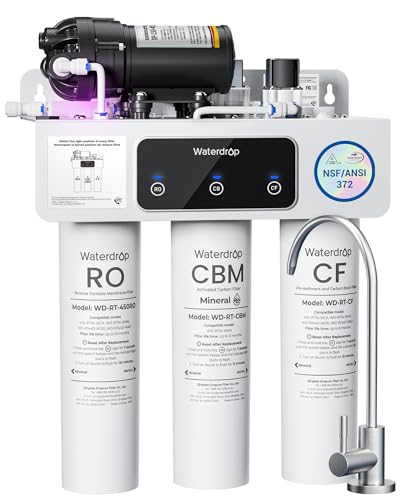
The WD-T3-M is a 9-stage under-sink RO system with remineralization that adds minerals back into purified water for better taste and health. It features advanced filtration capable of reducing heavy metals, chlorine, PFAS, and more. An LED indicator and auto-flush help maintain water quality, while the system’s mineral-infusion stage enhances flavor and hydration benefits. Note that it requires a dedicated electrical connection for operation.
Waterdrop G3P600 Tankless RO System

The Waterdrop G3P600 is a tankless RO system that emphasizes compact design and smart features. Certified for NSF/ANSI 58 and lead-free materials, it also includes a smart faucet display that monitors TDS and filter life. The 8-stage filtration process targets chlorine, contaminants, and taste while providing a convenient, space-saving installation suitable for modern kitchens and tighter under-sink spaces.
Waterdrop G5P700A-Pro Alkaline RO System

This dual-flow Waterdrop model provides two water paths: one for direct drinking water via the dedicated RO faucet, and a second for filtered water at the kitchen faucet, compatible with dishwashers, refrigerators, or ice makers. The 8-stage RO filtration includes alkaline mineralization to improve taste and pH balance, with a high 700 GPD flow for rapid dispensing. Third-party testing supports performance claims, and the compact system is designed for larger households needing robust output.
Express Water 10-Stage RO System With Alkaline Filter

The Express Water 10-stage system combines deep filtration with an alkaline remineralization stage. This model aims to remove up to 99.99% of common contaminants such as lead, chlorine, fluoride, and PFAS while restoring essential minerals to support taste and hydration. Installation is described as user-friendly for under-sink setups, and the system includes a dedicated alkaline filter option to enhance mineral content in purified water.
Buying Guide
Key purchase considerations to evaluate when choosing an RO system for refrigerator water include:
- Filtration stages and certified performance: Look for systems with multi-stage filtration and independent third-party certifications (NSF/ANSI 58, 372, etc.) confirming contaminant reduction and material safety.
- Alkaline remineralization: If you prefer water with balanced pH and minerals, consider models that add calcium, magnesium, and other minerals after filtration.
- Tank vs. tankless design: Tankless RO units save space and reduce storage requirements, but ensure your kitchen plumbing supports the configuration and that flow rates meet household needs.
- Faucet and installation considerations: Some systems feature dedicated drinking water faucets or dual-flow options for multiple outlets; verify compatibility with your refrigerator inlet and kitchen layout.
- Maintenance and filter life: Review filter replacement intervals, monitor indicators, and ease of filter access to minimize downtime and ensure optimal performance.
- Power requirements: Systems with LED indicators or auto-flush features may require a power source; ensure your setup accommodates the electrical needs safely.
- TDS and mineral balance monitoring: Some units provide TDS monitoring or smart displays to help you track water quality and schedule maintenance.
- Cost of ownership: Consider initial price, filter replacement costs, and the frequency of replacements in relation to your usage and water quality concerns.
For homes connected to refrigerators, prioritize models offering reliable mineralization, compact installation, and consistent delivery. If you value real-time water quality feedback, tankless or smart-display variants may provide greater visibility into system performance. Ensure that any model you select suits your local water chemistry and space constraints, and confirm that the unit’s inlet connections are compatible with your existing plumbing.