Best RV Stackable Washer and Dryer 110V for Your Home on the Road
If you’re outfitting an RV, tiny apartment, or camper with reliable laundry care, a compact 110V, stackable washer and dryer can save space without sacrificing performance. The following top picks are designed for limited rooms and ensure efficient operation whether you’re parked at a campground or living off-grid. This guide compares each unit’s capacity, versatility, and ease of use to help you choose the best fit for daily laundry needs while on the move.
| Product | Brand | Key Benefit |
|---|---|---|
| Splendide WDV2200XCD Combo Washer/Dryer | Westland | Vented, room-friendly combo with strong drum capacity |
| Washer And Dryer Combo (3.1 cu.ft, 120V) | SMETA | Compact ventless all-in-one with multiple programs |
| Midea MLTW41A1KIT1 | Midea | Complete matching set with high efficiency washer |
| Techomey 2.7 Cu.Ft All-in-One | Techomey | Front-load, ventless, LED display with 16 cycles |
| Conserv 2.2 cf + 4 cf Condensing Dryer | Conserv | European-made efficiency with stacking kit |
Splendide WDV2200XCD: Compact, Durable RV Washer/Dryer Combo

The Splendide WDV2200XCD is a vented combo designed for RVs, delivering a practical balance of capacity and efficiency. Its 33.2L x 23.5W x 23.5H inch footprint fits tight spaces while offering a single-cycle wash and dry workflow. Weighing in at around 155 pounds per package, this model emphasizes rugged construction suitable for travel and regular use on the go. It is a straightforward choice for users who want a dedicated, all-in-one laundry solution in a compact RV setup. Features highlight basic load handling and a reliable vented process that can streamline on-road laundry routines.
Washer And Dryer Combo By SMETA: All-In-One 120V Ventless Unit

This 3.1 cu.ft all-in-one ventless washer/dryer from SMETA is tailored for compact living spaces, including RVs. Its 23.4” x 23.1” x 33.5” footprint fits many tight closets, making it a practical choice where venting is a challenge. The unit’s 16 program options provide flexibility for different fabrics, from delicate to bulky items, while the integrated design simplifies installation. It’s particularly appealing for couples or small families seeking a single appliance that covers both washing and drying duties without external venting needs.
Midea MLTW41A1KIT1: Matching Top-Load Washer And Dryer Pair
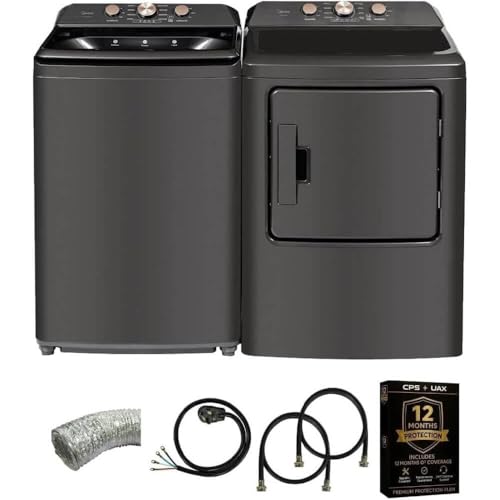
The Midea MLTW41A1KIT1 offers a complete laundry solution with a 4.1 cu ft top-load washer and a 6.7 cu ft electric dryer. This pair emphasizes efficiency and capacity, making it a strong option for RVs or small homes that can accommodate a stacked arrangement. The washer’s high-efficiency design reduces water usage, while the large dryer capacity handles bulkier items with ease. This setup is well-suited for households that prefer a full-size washing experience in a compact form factor, paired with a dryer designed to handle sizable loads.
Techomey 2.7 Cu.Ft All-in-One: Space-Saving 24″ Front-Load Ventless

The Techomey 2.7 Cu.ft all-in-one unit combines a compact 24″ front-load design with ventless operation and 16 cycle options. Its 26.5 lbs washer and 13 lbs dryer capacity split supports daily laundering for a small household or RV living space. With an LED display and a simple, intuitive control scheme, it suits users who value ease of use and a modern interface. The unit’s 1400 RPM spin speed helps reduce drying time, contributing to energy efficiency and quicker laundry cycles on the road.
Conserv 2.2 Cu Ft Washer & 4 Cu Ft Condensing Dryer
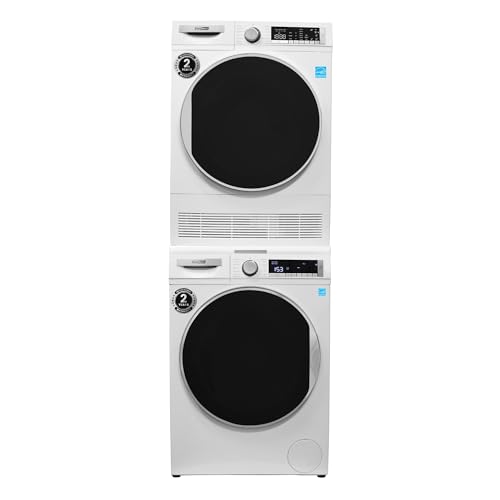
The Conserv system pairs a 2.2 cu ft washer with a 4 cu ft condensing dryer, offering a compact European-inspired setup. It’s designed for efficiency with an inverter-driven motor and compact drum sizes that fit RV cabinets. This pairing is attractive for travelers who want reliable laundry without venting requirements, and the stacking kit option helps optimize vertical space in tight areas. While it emphasizes efficient operation, potential owners should consider whether the dryer’s condensing technology aligns with their performance expectations and climate.
Buying Guide: Key Purchase Considerations
- Vent vs. ventless: Ventless units are easier to install in RVs without external exhaust, but may require longer drying times or moisture management consideration in small spaces.
- Capacity and load size: For RV living, 2.2–3.1 cu ft washers and 4–6.7 cu ft dryers cover daily needs for couples or small families; larger units increase bulk but may not fit every space.
- Power requirements: Most 110V/120V units are designed for standard outlets; confirm amperage requirements and electrical compatibility with your vehicle or RV electrical system.
- Cycle variety: More programs (cotton, synthetics, delicate, bulky loads) provide flexibility but may complicate operation. Ensure the interface is straightforward for regular use.
- Ventless vs. vented: Vented dryers usually dry faster but require proper venting access in the RV; ventless dryers simplify installation but can affect drying time and moisture handling.
- Size and fit: Measure available cabinet and doorway clearances. Consider stacking kits and the overall depth, width, and height to avoid space conflicts.
- Maintenance and durability: Look for stainless steel drums, robust motors, and accessible service support. RV machines benefit from metal components designed for travel vibration.
- Energy efficiency: Look for Energy Star-rated models or high spin speeds to reduce water use and shorten cycles, which is especially important when power is limited on the road.
- Noise and vibration: Quieter operation is preferable in close quarters; consider anti-vibration mats or built-in dampening features when evaluating models.
- Installation flexibility: Ventless options offer fewer installation constraints, while some units require dedicated plumbing or water inlets—plan cabling and plumbing accordingly.