Best Small Dehydrators for Jerky and Snacks: Top Picks for Home Curing
Looking for a compact dehydrator that excels at making jerky and healthy snacks at home? This guide highlights five compact models ideal for small batches, busy kitchens, or limited counter space. Each option is evaluated for temperature control, tray design, ease of use, and overall performance. The best fits include buyers who want precise temps for beef jerky, space-saving layouts for hobbyists, and budget-friendly machines for occasional batch drying. Below, you’ll find quick-fit summaries and in-depth product sections to help you compare at a glance.
Quick comparison table of selected products:
- Elite Gourmet EFD319 — Best for precise temp control and expandable trays.
- Cosori Dehydrator (Dark Silver) — Best for presets and strong overall performance.
- Konfintos Compact Dehydrator — Best budget compact model with clear visibility.
- PSIIDAN 650W Dehydrator — Best for high-capacity small-kitchen drying.
- Magic Mill Pro — Best for all-stainless construction and even drying.
Elite Gourmet EFD319 Food Dehydrator
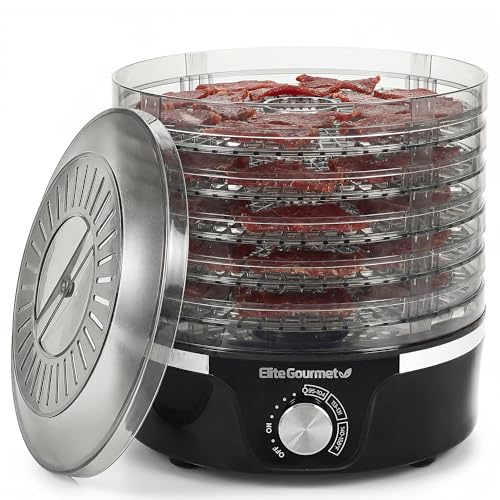
The Elite Gourmet EFD319 offers adjustable temperature control from 95°F to 158°F, allowing precise drying for jerky, fruits, herbs, and vegetables. Its 350W heater with horizontal airflow provides consistency across five 11.4″ trays. The design supports expansion, so you can add more trays as needed while keeping heat retention intact. This model suits buyers who want control without complexity and plan to dehydrate in batches that may vary in size. Best for hobbyists who value predictable results across different foods.
Why selected: The broad temperature range and expandable trays make it versatile for jerky and delicate snacks alike. The transparent trays let you monitor progress without heat loss. A caution: avoid overfilling trays to ensure even drying.
Cosori Food Dehydrator for Jerky, 176°F
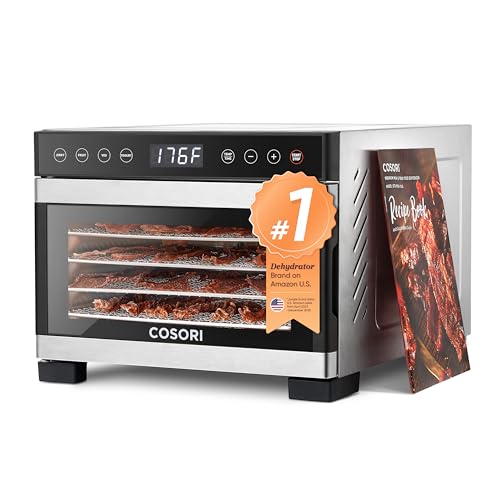
The Cosori Dehydrator uses a 176°F maximum setting with 5 stainless steel trays and a total drying space of 3.1 ft². It includes a recipe book and four default presets (jerky, fruit, vegetables, yogurt) plus the ability to customize time and temperature. This model is best for cooks who want safety-oriented jerky temps and a predictable, preconfigured workflow. Choose this if you value quick presets and solid tray construction for long-term use. A limitation: higher temps are recommended for safety but require careful monitoring to avoid over-drying.
Konfintos Compact Food Dehydrator
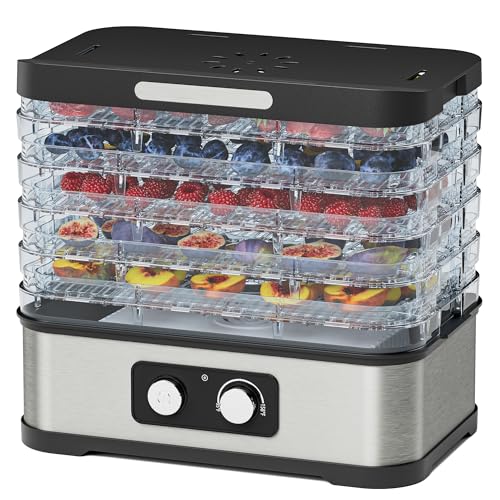
The Konfintos unit emphasizes space-saving design with five see-through, height-adjustable trays and a 250W motor. It’s built for small batches, making it ideal for beginners or households without extensive drying needs. The transparency helps track progress without opening the lid. Best for those who want a budget-friendly, compact option that still offers temperature control. A caution: capacity is smaller, so large batches may require multiple rounds.
PSIIDAN 650W Food Dehydrator

The PSIIDAN model pairs 650W with eight trays and a broad temperature range (up to 167°F) plus an internal airflow system designed for consistent results. Its emphasis on batch capacity makes it appealing for families who dry beef jerky, herbs, and fruit at once. Best for households seeking larger loads in a compact footprint. Beware that higher wattage and larger trays may demand more space and energy; monitor usage accordingly.
Magic Mill Pro Food Dehydrator
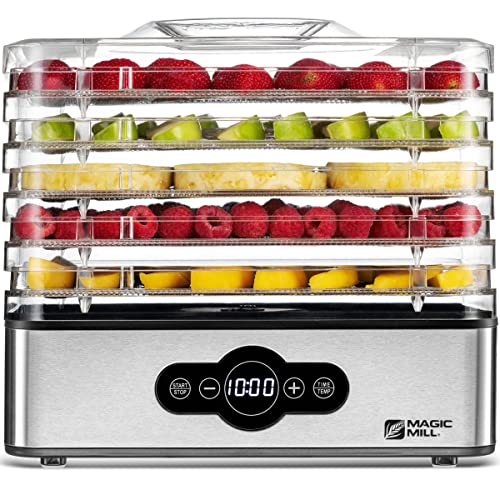
The Magic Mill Pro features a robust 600W rear fan for even drying across seven full-size stainless steel trays. Temperature control ranges from 95° to 176°F with a 48-hour timer and a keep-warm option. Stainless construction provides durability and easy cleaning. Best for users who want top-tier build quality and reliable, even drying for jerky, fruit, and dog treats. A limitation: higher-end hardware may come at a higher upfront cost and energy use.
Buying Guide: Key Considerations For Small Dehydrators
- What foods will you dry most often? If jerky is a primary goal, ensure the unit reaches or exceeds 165–176°F for safe drying.
- Tray design and capacity: Five to eight trays are common. Look for see-through trays to monitor progress without heat loss, and consider expandable trays if you anticipate larger batches later.
- Temperature control and presets: Digital controls with precise increments (1°F steps) help standardize results across foods. Presets save time for beginners but ensure you can adjust as needed.
- Airflow and heating method: Models with rear or horizontal airflow provide more even drying. Avoid models that require rotating trays for evenness.
- Build materials: Stainless steel trays offer durability and easier cleaning. BPA-free plastics reduce concerns about chemical leaching.
- Ease of cleaning: Detachable trays and dishwasher-safe components simplify maintenance.
- Noise and energy use: Higher wattage often means more consistent drying but may increase energy consumption and audible noise.
Practical Buying Questions
- Is a digital timer essential for my needs? If you want exact timing, a model with a timer and precise temperature control is recommended.
- Do I need a compact unit or a larger capacity for weekly batches? Small kitchens benefit from compact designs, while households with frequent jerky batches may prefer higher capacity.
- Should I prioritize stainless steel trays? Stainless trays resist warping and are easier to sanitize, especially for meat drying.
- Will I use it for more than jerky? Models with broader temperature ranges support fruits, vegetables, herbs, and dog treats.
Frequently Asked Questions
- What temperature is best for jerky? Most safe jerky drying requires 165–176°F (74–80°C).
- How many trays do I need? Five to eight trays cover daily small-batch needs, with expansion options for bigger runs.
- Is BPA-free plastic important? Yes, BPA-free trays reduce potential chemical exposure during drying.
- Can I dry herbs and spices? Yes, most dehydrators support herbs, spices, and fruit chips at lower temps.
- Do I need to rotate trays? Horizontal airflow models reduce the need for rotation, improving consistency.
- Is stainless steel worth it? For heavy use and easy cleaning, stainless trays and exterior are advantageous.