Best Small Orange Juice Machines for Quick Kitchen Juicing
Find your ideal compact citrus juicer with strong extraction, easy cleanup, and practical capacity. This guide highlights top small orange juice machines suited for different households—from singles and couples to small kitchens that still want fresh juice fast. Each option emphasizes efficiency, ease of use, and cleanability, helping you pick the best fit for your routine and space.
Buyer’s summary table:
| Product | Best For | Key Benefit | Capacity |
|---|---|---|---|
| Elite Gourmet ETS623 | Families or small groups | Auto-reversing reamer, large 24 oz capacity | 24 oz |
| Eurolux Electric Orange Juicer | Everyday juicing, easy cleanup | Dishwasher-safe parts | — |
| Eurolux Premium Electric Orange Juicer | Premium look with high power | 160W motor, stainless steel | — |
| Cuisinart Pulp Control Citrus Juicer CCJ-500P1 | Control over pulp | 3 pulp settings, auto-reverse | — |
| Proctor Silex 66340 Citrus Juicer | Entertaining with a pitcher | Large 34 oz pitcher | 34 oz |
Elite Gourmet ETS623 BPA-Free 40-Watt Citrus Juicer

Best for: small households that want faster yields without compromising space. This juicer uses a 40W motor and features an auto-reversing reamer, which helps extract more juice with less effort. A 24 oz (3-cup) capacity fits up to two to three servings at a time, making it suitable for quick breakfasts or weekend citrus drinks. The built-in pour spout and pulp/seed filter reduce cleanup and mess.
Why selected: The combination of a stronger motor than typical 25W models and an auto-reverse reamer makes it a strong value for users who want efficient juicing in a compact footprint. The 24 oz capacity balances daily use with countertop real estate.
Caution: The 24 oz pitcher may require refilling for larger gatherings, and the unit is best used with standard citrus fruit sizes to maximize yield.
Eurolux Electric Orange Juicer
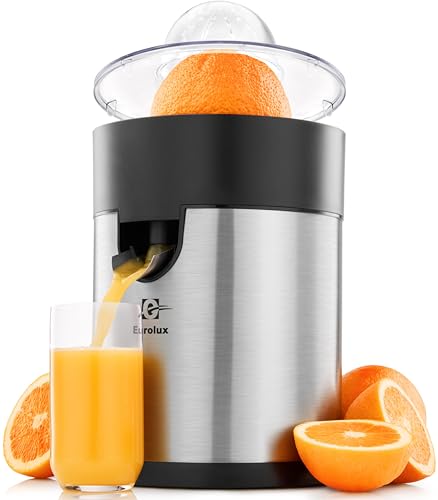
Best for: users who want a clean setup with parts that simplify maintenance. This model emphasizes easy disassembly and dishwasher-safe parts, helping keep cleanup quick after juicing. It handles oranges, lemons, and grapefruits well, delivering straightforward, reliable results.
Why selected: The promise of minimal cleaning effort aligns with busy kitchens or shared spaces where quick turnover matters. It’s a practical option when convenience is a priority.
Caution: While easy to clean, performance can vary with very large or particularly tough citrus; normal oranges and lemons juice most efficiently.
Eurolux Premium Electric Orange Juicer

Best for: enthusiasts who want stronger juicing power and a premium build. This unit uses a 160W high-torque motor and premium stainless steel construction, delivering robust, consistent juice and a stylish kitchen presence. One-touch operation simplifies use for morning routines.
Why selected: The high-torque motor and durable materials make this juicer better suited for regular use and for users who value a professional feel in a home appliance.
Caution: The premium build might come at a price of space and cost; ensure there’s adequate counter room for the stainless steel body.
Eurolux Electric Citrus Juicer Stainless Steel

Best for: quiet operation and compact counters. This model offers a 300W motor at a low rotational speed, which yields efficient extraction with minimal noise. It’s ideal for early mornings or shared spaces where loud appliances are undesirable.
Why selected: The combination of power and quiet operation makes it a versatile choice for homes where both performance and a peaceful kitchen are valued.
Caution: The single-button operation is straightforward, but some users prefer multi-function controls for versatility beyond basic juicing.
Cuisinart Pulp Control Citrus Juicer CCJ-500P1

Best for: those who want customizable pulp levels for different recipes. The CCJ-500P1 offers three pulp control settings and an auto-reversing cone to maximize juice extraction while reducing pulp in the final glass. A long spout helps with glasses and drips control.
Why selected: The pulp-control feature provides flexibility for various drinks, making it a strong pick for households that experiment with textures and recipes.
Caution: The unit’s modern features come with a slightly larger footprint; ensure you have counter space for it in smaller kitchens.
Proctor Silex Electric Citrus Juicer 66340

Best for: entertaining at-home gatherings with a large pitcher. The 34 oz detachable pitcher with a pour spout makes it easy to serve juice to guests. It features two reamers to handle fruits of different sizes and a pulp-control option for texture preference.
Why selected: The large pitcher supports social use and batch preparation, which is ideal for brunches or family meals.
Caution: Some users may prefer models with dishwasher-safe components for even easier cleanup; verify which parts are dishwashable before loading.
Proctor Silex Alex’s Lemonade Stand Electric Citrus Juicer

Best for: fans of charitable causes and classic lemonade. This model supports a foundation partnership while delivering dependable juice from lemons and other citrus. It features a 34 oz pitcher and two reamers for different fruit sizes, offering practical versatility.
Why selected: The combination of a sizable pitcher and charitable tie-in makes it a meaningful choice for those who enjoy both function and giving back.
Caution: The yellow finish is distinctive; consider color preferences for kitchen decor and potential staining from fruit juices over time.
Buying Guide: Small Citrus Juicers For Your Kitchen
- Juicing power vs. noise: Higher wattage often means stronger extraction but may increase noise. Look for a model with a motor you’re comfortable using daily, such as 40W to 160W ranges.
- Capacity needs: 12–24 oz is typical for daily servings; larger pitchers (34 oz) suit entertaining or batch juice. Match capacity to your routine.
- Pulp control and settings: Pulp control settings and auto-reverse reamers help customize texture and maximize juice yield. Consider whether you prefer a simple, single-button model or adjustable pulp levels.
- Cleanability: Dishwasher-safe parts save time. If cleaning is a priority, choose models with removable, easy-to-clean components.
- Durability and materials: Stainless steel bodies resist wear and look stylish, while BPA-free plastics offer lightweight convenience. Decide which suits your kitchen aesthetics and maintenance habits.
- Footprint and storage: Counterspace matters for small kitchens. Compare width, height, and overall footprint to ensure it fits your workspace.
- Versatility: Some models handle lemons, limes, grapefruits, and oranges with equal ease. If you juice a wide range of citrus, consider reamers and cone sizes designed for flexibility.
Frequently Asked Questions
- What capacity is best for daily juice? A 12–24 oz pitcher is typically sufficient for 1–3 servings per use, depending on fruit size and juice yield.
- Are BPA-free juicers safer for daily use? Yes, BPA-free components reduce potential chemical exposure in daily use scenarios.
- Is dishwasher cleaning important? Dishwasher-safe parts save time and ensure more consistent cleaning, but hand washing can prolong life for some models.
- What’s the advantage of an auto-reversing reamer? Auto-reverse reamers help extract more juice from rinds and reduce manual effort during juicing.
- Can a small citrus juicer handle grapefruit? Many compact juicers handle larger fruits, but performance varies by model and reamer design. Check product specifications for fruit size compatibility.
- Should I choose a premium stainless model or a plastic one? Stainless steel looks durable and stylish and often offers broader compatibility with heavy use; plastic models are typically lighter and more affordable.