Best Small Tankless Water Heaters for Quick on-Demand Hot Water
Finding compact, efficient hot water answers doesn’t require sacrificing performance. This guide highlights five reliable small electric tankless water heaters that fit tight spaces while delivering steady on-demand hot water for common household uses. Each option balances compact design, energy efficiency, and user-friendly controls, helping you choose the right model for a bathroom, kitchen, or point-of-use needs. Below is a quick overview of the featured products to help you compare at a glance.
| Product | Brand | Typical Use | Notes |
|---|---|---|---|
| Rheem 18kW 240V Tankless Electric | Rheem | Mid-demand households | High modulation, durable elements |
| EcoSmart ECO 11 | EcoSmart | Point-of-use or small homes | Self-modulating, compact |
| Rheem RTEX-24 | Rheem | Whole-home or larger point-of-use | High power, adjustable temp |
| ThermoMate 3500W | thermomate | Under-sink or compact installs | ETL certified, 110–120V operation |
| Rheem 3.5kW 120V POU | Rheem | Low-flow applications | Space-saving, 1–2 outlets |
Rheem 18kW 240V Tankless Electric Water Heater
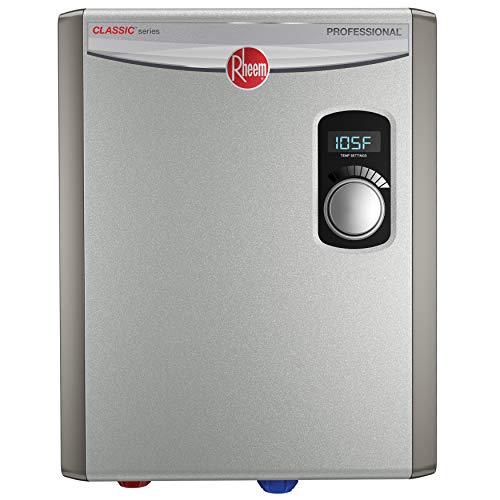
The Rheem 18kW model uses external digital thermostat control with an LED display and tight ±1 degree accuracy. It features advanced self-modulation that adjusts power to meet hot water demand, and two durable copper immersion heating elements. This unit is field serviceable and designed to deliver a flow rate up to 4.4 GPM, making it suitable for small homes or multi-use sinks with moderate hot water needs.
EcoSmart ECO 11 Electric Tankless Water Heater

EcoSmart’s ECO 11 uses patented self-modulating technology to provide endless on-demand hot water while maintaining efficiency. It continuously monitors water temperature and controls flow to stay within about 1 degree of the set point. With a compact footprint described as 90% smaller than traditional tanks, it’s ideal for wall mounting or point-of-use installations. Its 11 kW rating supports modest hot water needs with a typical 1–2 GPM flow depending on inlet water temperature.
Rheem RTEX-24 24kW 240V Electric Tankless Water Heater
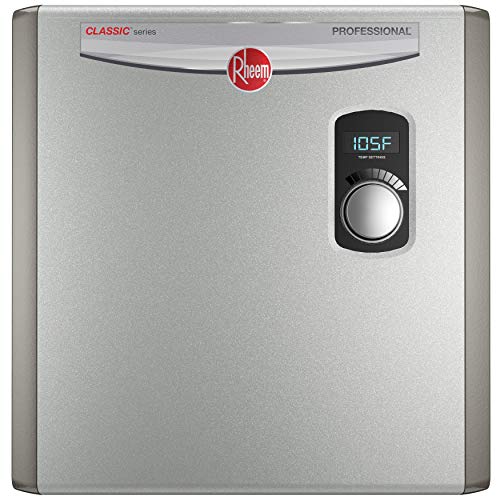
The RTEX-24 provides robust performance with 24 kW at 240V and adjustable temperature control from 80–140 degrees F in 1-degree steps. It requires appropriate electrical service (three 40-amp double-pole breakers recommended) and space in the circuit panel. The unit is designed for continuous hot water and allows you to tailor output to your climate and household usage, though capacity depends on groundwater temperature in your area.
ThermoMate Tankless Electric 3500W

The ThermoMate 3500W unit is a compact under-sink model designed for 110–120V operation. It provides on-demand hot water with a temperature range from 86°F to 131°F and supports low-flow use at roughly 0.4–0.66 GPM. The system uses a self-modulating power approach to save energy and reduce the risk of overheating, with a durable cast aluminum heating element to minimize mineral buildup.
Rheem 3.5kW 120V Point of Use

This point-of-use Rheem unit runs on 120V and requires a 30-amp double-pole breaker. It is designed for low-flow installations, such as under a bathroom sink or kitchen prep area, and is up to 98% smaller than standard tanks. Thermostatic controls adjust in 1-degree increments (80–140°F) to deliver on-demand hot water for isolated outlets with consistent temperature and minimal standby energy.
Buying Guide
Key purchase considerations for small tankless water heaters
- Water flow requirements: Determine the maximum gallons per minute (GPM) you need at your hottest water demand. Smaller units like 1–2 GPM are ideal for sinks, while larger models (like 4–5 GPM) suit multi-use setups in compact homes.
- Electrical capacity: Check your home’s electrical service. High-demand units (16–27 kW range) require sufficient 240V supply and dedicated circuits; smaller models can run on 110–120V with lower power draw but limited output.
- Thermostat control: Digital or analog controls and the precision of temperature regulation affect comfort and safety, especially in cold climates where a higher temperature rise is needed.
- Size and installation: Consider wall-mount capability and space clearance. Under-sink or compact wall-mounted units maximize space in small kitchens or baths.
- Durability and maintenance: Look for copper immersion elements and field-serviceable components if you expect routine service or prompt DIY troubleshooting.
- Energy efficiency: Self-modulating or demand-responsive models reduce energy use by heating only when water is drawn, improving efficiency in frequent-use homes.
- Outlet considerations: Point-of-use units are excellent for single outlets, while whole-home designs require careful sizing to meet peak demand without temperature drops.
Performance outlooks vary by inlet water temperature and climate. In colder areas, you may need higher input wattage or multiple units to sustain the desired temperature at higher flow rates. Always verify electrical panel capacity and local electrical code requirements before installation. For best results, match the unit’s rated GPM and temperature rise to your projected needs and household layout.