Best Smart Plugs for Espresso Machines Ready to Power Up Your Mornings
Looking for a smart plug to automate your espresso machine without hassle? This guide highlights five reliable options that work well with common voice assistants and schedules. Perfect for coffee lovers who want a hot, ready-at-the-perfect-time espresso without manual on/off. The top picks are best for homes with Alexa, Google Home, or Apple HomeKit ecosystems, and for buyers who want simple, hub-free setups. The following sections compare each product, explain why it suits certain buyers, and flag any limitations to consider.
| Product | Why It Stands Out |
|---|---|
| Amazon Smart Plug | Best for Alexa households; simple setup |
| TP-Link Tapo Matter Smart Plug Mini | Best for future-proof, cross-platform control |
| Linkind Matter Smart Plug | Best for broad platform compatibility and offline LAN use |
| Kasa Smart Plug Ultra Mini | Best for compact size with reliable app control |
| GHome Smart Plug | Best for stable Wi‑Fi with broad app control |
Amazon Smart Plug, Works with Alexa
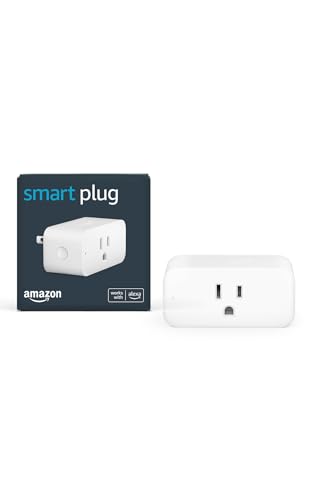
Best for Echo and Alexa users seeking straightforward automation. This plug adds voice control to any outlet and requires no smart home hub. Setup is completed via the Alexa app in minutes. Ideal for espresso machines with a physical on/off switch, enabling you to schedule brewing or turn the machine on remotely. A potential limitation is reliance on Alexa for smart routines, which may matter if you use multiple ecosystems.
TP-Link Tapo Matter Smart Plug Mini

Best for a future-ready setup. This compact 15A/1800W plug supports Matter, allowing control via Apple Home, Alexa, Google Home, and Samsung SmartThings. It remains functional within a local LAN even if your internet is down, which helps when you want to preheat or brew on a schedule without cloud access. It’s a strong pick for homes migrating toward a unified, platform-agnostic system. Caution: Ensure you have a Matter hub or compatible app for full feature access on all platforms.
Linkind Matter Smart Plug

Best for broad compatibility with Matter-enabled ecosystems. Linkind emphasizes one-control across Apple Home, Alexa, Google Home, SmartThings, and AiDot. Its LAN-only operation after setup helps keep control stable even during internet outages, and remote control via app makes it practical for turning on your espresso machine before you walk in the kitchen. Limitation: A Matter-certified hub or controller is required for full Apple/HomeKit/Alexa/Google integration, otherwise app-based control may be limited.
Kasa Smart Plug Ultra Mini 15A

Best for compact outlets and reliable daily use. The Ultra Mini EP10 fits into tight spaces, ideal when your espresso setup shares a multi-outlet strip. It supports voice control with Alexa and Google Assistant and offers scheduling to automate brewing cycles. It requires a 2.4GHz Wi-Fi network. Caution: The small size can restrict use if your outlet plate is deeply recessed or if the plug blocks adjacent sockets.
GHome Smart Plug

Best for stable Wi‑Fi connections with broad app control. GHome emphasizes a quick connection experience and compatibility with major assistant ecosystems. It supports remote control via its app and works well for scheduling the espresso machine to preheat or brew at a preset time. Limitation: Some users might prefer Matter or a broader hub ecosystem for multi-device scenes beyond Wi‑Fi control.
Buying Guide: How To Choose The Right Smart Plug For An Espresso Machine
- Platform compatibility: Do you prefer Alexa, Google Home, Apple Home, or a matter-based setup? Choose a plug that supports your primary ecosystem to enable seamless voice commands and routines.
- Local control vs. cloud control: If you want to brew regardless of internet status, consider Matter-enabled plugs with robust LAN operation or offline-capable devices.
- Size and outlet availability: For espresso machines, ensure the plug fits without blocking adjacent outlets or bulky adapters. Compact models help preserve space.
- Scheduling and automation: Look for timers, countdowns, and routines that align with your coffee routine—e.g., preheating the machine or starting a brew at a specific time.
- Security and reliability: Opt for UL-listed or otherwise certified plugs, and consider hubs or platforms with strong privacy and update support.
- Ease of setup: Hub-free options are appealing for quick setups, while some users may prefer Matter-enabled hubs for cross-device scenes.
Frequently Asked Questions
- What should I consider when using a smart plug with an espresso machine?
– Ensure the plug supports the machine’s wattage, has a stable connection, and can schedule on/off times without risking damage to the machine or boiler. - Are Matter-enabled plugs better for espresso machines?
- Can I control my espresso machine remotely with a smart plug?
- Is a hub required for these smart plugs?
- Will a smart plug affect espresso machine warranty?
– Matter can simplify cross-platform control and local LAN reliability, which can be beneficial if you use multiple ecosystems. However, ensure you have a compatible hub or controller if needed for your preferred platform.
– Yes, most plugs offer app-based remote control and voice commands through compatible assistants, provided you have internet access or LAN connectivity as required by the device.
– Most listed plugs are hub-free for basic functions, but some Matter devices may benefit from a hub for full ecosystem integration (Apple Home, Alexa, Google Home).
– It typically won’t affect warranties, but always follow the espresso machine’s operating guidelines and avoid altering power delivery beyond standard on/off control.