Best Speed Reducer Sewing Machines for More Torque and Control
If you need finer control over fabric feeding and stitch consistency, a speed reducer can dramatically improve performance. This guide compares five top options designed for industrial and heavy-duty sewing tasks, highlighting who each product is best for and when to choose one over another. The focus is on reducing machine speed while increasing torque, helping leatherwork, upholstery, and precision stitching tasks.
Buyer type overview:
– Leather and upholstery pros seek high torque and the ability to slow the machine for accurate stitches.
– Home studios and small workshops want energy efficiency and quiet operation.
– Professional garment producers prioritize reliability and universal compatibility with industrial motors.
Below is a quick product snapshot to help with initial filtering.
| Product | Best For | Key Benefit |
|---|---|---|
| Cutex Speed Reducer (2″ & 6″ Pulleys) | Industrial leatherwork | Gear-down torque with dual pulley options |
| Generic Speed Reducer (2″ & 6″ Pulleys) | Heavy-duty sewing setups | Custom installation between handwheel and motor pulley |
| Generic Speed Reducer Belt Wheel (2″ & 6″) | General industrial use | Compact belt-driven reduction |
| Industrial Sewing Machine Motor Speed Reducer (Higher Torque) | Leather and heavy fabrics | Significant torque boost for heavy-duty tasks |
| Speed Reducer Belt Wheel (2″ & 6″) | Versatile heavy-duty projects | Reliable gear-down with standard mounting |
Cutex Speed Reducer For Industrial Sewing Machines

Best for: Professionals seeking robust dual-pulley configurations for leather or upholstery work. Why: It offers 2″ and 6″ pulleys to tailor gear ratio, enabling a slower sewing rate and higher torque, which improves control on thick materials. Selected for its straightforward industrial fit and torque delivery. Limitation: Requires proper belt alignment and table-space planning for installation.
Speed Reducer for Industrial Machines (2″ & 6″ Pulleys)

Best for: Users needing versatile installation options with a clear emphasis on torque and control. Why: This model includes a 2″ and 6″ pulley setup and notes installation between the handwheel and motor pulley, which can benefit heavy-duty leather or upholstery sewing. Caution: Belt compatibility and table slot sizing may require modification.
Generic Speed Reducer Belt Wheel 2” & 6”
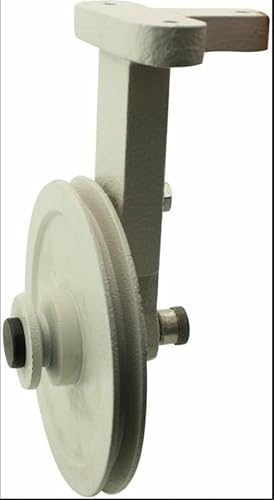
Best for: Shops needing a compact, straightforward belt-driven speed reduction. Why: It provides the essential 2″ and 6″ pulley configuration to reduce speed while boosting torque. Limitation: Product description is brief; verify compatibility with your current machine model before purchase.
Industrial Sewing Machine Motor Speed Reducer Higher Torque

Best for: Leather workers and heavy fabric projects needing significant torque at lower speeds. Why: This unit prioritizes high torque output to improve stitch control on dense materials. Caution: Specific model details (e.g., mounting compatibility) should be confirmed to ensure a proper fit.
Speed Reducer Belt Wheel 2″ & 6″ Pulley For Industrial Machine

Best for: Versatile projects that require reliable reduction without complex installation. Why: The 2″ and 6″ pulleys provide a simple way to gear down speed and increase control. Limitation: Ensure proper belt slot sizing and compatibility with your existing drive system.
Buying Guide
What to consider when choosing a speed reducer for sewing machines
- Pulley options: Look for 2″ and 6″ pulleys to offer flexible gear ratios. A dual-pulley setup lets you fine-tune speed and torque for different fabrics.
- Mounting arrangement: Some units install between the handwheel and motor pulley; others require under-table placement. Confirm your table design and space.
- Torque vs. speed: Prioritize models that emphasize torque enhancement for leather and upholstery, paired with a safe, slower stitch rate.
- Compatibility: Check whether the reducer fits your machine brand and motor type, and whether mounting holes and belt sizes align with your hardware.
- Installation effort: Some products require custom installation or belt slot adjustments. Budget time for setup and alignment checks.
- Noise and energy use: Servo-driven options may offer energy efficiency and quieter operation, beneficial for studio environments.
FAQ
- What is the main benefit of a speed reducer for sewing machines?
It lowers the machine’s operating speed while increasing torque, improving control on thick or tough materials. - Do I need professional installation for a speed reducer?
Installation complexity varies; some models fit with minimal modification, while others require custom mounting and belt adjustments. - Which fabrics benefit most from a speed reducer?
Leather, upholstery, denim, and heavy fabrics benefit most due to improved stitch control and reduced fabric slippage. - Can a speed reducer affect stitch quality?
Yes, by providing steadier, slower feed and better torque, it can improve stitch consistency on dense materials. - Are dual-pulley reducers better than single-pulley ones?
Dual-pulley options offer more tuning flexibility for different tasks, whereas single-pulley units are simpler and quicker to install. - Is energy efficiency a concern with speed reducers?
It can be; some servo-motor-based reductions may reduce idle energy use and noise, benefiting studio environments.