Best Stainless Steel or Porcelain Sinks for Your Kitchen and Bath
Looking for a durable, easy‑to‑clean sink that fits your space and style? This guide highlights five strong options—stainless steel and porcelain—that balance performance with value. Best for busy households, these picks cover large workstations, dual‑bowl setups, and compact bars or apartments. The top choices are selected to help you compare installation type, size, and features at a glance. Below you’ll find quick‑reference product insights, followed by a detailed buying guide and a short FAQ to answer common buyer questions.
| Product | Material / Type | Best For | Notes |
|---|---|---|---|
| Kraus KEU-12 WHITE Pintura | Enamel‑coated stainless steel | Families needing a quieter, durable single bowl | Lightweight cast‑iron look without heavy weight |
| KRAUS Kore 32‑Inch Undermount Workstation | Stainless steel | Home cooks needing prep space over sink | Includes cutting board and roll‑up rack |
| KRAUS Fairlane 33‑inch Drop In/Top Mount | Stainless steel | Retrofit projects with versatile mounting | Two bowls, beveled deck for easy wipe‑in |
| KRAUS Standart Pro 30 | Stainless steel | General purpose, single bowl | Heavy‑duty 16‑gauge construction |
| IconPC Ceramic Vanity Sink | Porcelain ceramic | Bathroom vanity or laundry area with a classic look | One‑piece ceramic basin with storage space |
Kraus KEU-12 White Pintura Undermount Sink

The Kraus KEU-12 Pintura combines a lightweight, long‑lasting enamel finish with a high‑capacity stainless steel bowl. Best for: households wanting a quiet, durable single bowl with an easy‑to‑wipe surface. Why selected: enamel finish is fired at 1500°F for scratch and stain resistance, while noise reduction helps maintain a calmer kitchen. Limitation: enamel surfaces can show impact marks if hit repeatedly by hard cookware.
KRAUS Kore 32‑Inch Undermount Workstation

This workstation sink has an integrated ledge for sliding accessories, promoting organized prep over the sink. Best for: home chefs who want extra counter space during prep. Why selected: a complete kit includes cutting board, roll‑up dish rack, bottom grid, and drain assembly for a cohesive setup. Limitation: outer dimensions require a sizable cabinet (min 36 inches).
KRAUS Fairlane 33‑inch Double Bowl

Elegant dual‑bowl stainless steel design with a thick mounting deck for easy wipe‑in. Best for: kitchens needing separate washing and rinsing spaces. Why selected: generous 33‑inch external size and two bowls provide flexible workflow. Limitation: larger footprint may not fit compact kitchens; check cabinet size before purchase.
KRAUS Standart Pro 30

Stainless steel single‑bowl with universal design and easy maintenance. Best for: users wanting a straightforward, reliable undercount or drop‑in installation. Why selected: 16‑gauge stainless steel with rounded corners for easier cleaning. Limitation: single bowl may limit multitasking compared with a double bowl setup.
VEVOR Stainless Steel Utility Sink
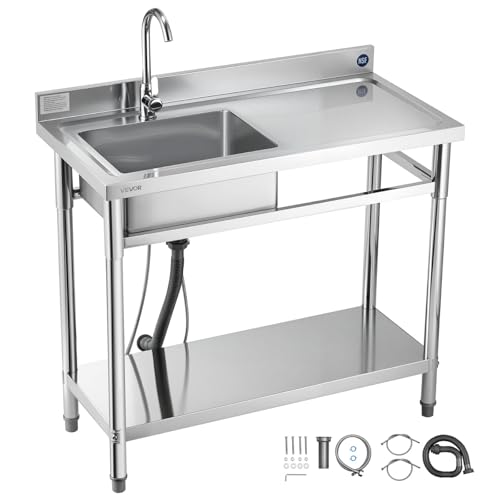
Durable NSF stainless steel utility sink with three‑in‑one workstation design and adjustable shelving. Best for: garages, workshops, or laundry rooms needing robust cleaning space and storage. Why selected: 360° faucet with hot and cold supply and adjustable shelf enhances versatility. Limitation: larger footprint may be excessive for small kitchens or bathrooms.
Buying Guide
What matters most: material and finish
Stainless steel sinks offer durability, easy cleaning, and resistance to staining. Pick 16‑gauge or thicker for higher durability. Porcelain or ceramic sinks provide a classic look and may suit traditional decor, but can chip with heavy impact. Choose a finish that hides water spots if you prefer low‑maintenance aesthetics.
Installation type and space
Undermount sinks create a seamless countertop look and simplify cleanup. Drop‑in or top‑mount models are often easier to install but may show the mounting deck. Measure cabinet space carefully to ensure the chosen size fits without crowding drawers or doors.
Size, bowls, and workflow
Consider the number of bowls and their dimensions to match your daily tasks. A large single bowl is great for bulky cookware; dual bowls support soaking and rinsing simultaneously. For prep work over the sink, a workstation sink with accessory features is a strong value.
Sound and durability
Thicker walls and soundproofing padding reduce noise from water and dishes. Enamel finishes on stainless steel can resist scratches but may require gentle use to prevent chipping. Porcelain surfaces are smooth and sanitary but can crack under heavy impact.
Practical installation tips
Check for compatibility with your countertop material, faucet gaps, and disposal placement. When possible, choose kits that include accessories (drain, bottom grids, templates) to simplify installation and ensure a coherent setup.
Maintenance considerations
Use non‑abrasive cleaners for stainless steel to prevent micro‑scratches. Wipe dry after use to reduce water spots. Porcelain surfaces may benefit from mild ceramic cleaners and avoidance of acidic or abrasive agents.
FAQ
- Which sink material is best for a busy kitchen? Stainless steel is typically best for busy kitchens due to durability, easy cleaning, and resistance to stains and heat.
- Are porcelain sinks more fragile than stainless steel? Yes, porcelain can crack or chip if subjected to heavy impact, while stainless steel tends to be more resilient in daily use.
- What installation type should I choose? Undermount sinks offer a seamless look and easy wipe‑in; drop‑in sinks are often simpler to install and retrofit.
- Do I need a workstation sink? Workstation sinks add built‑in prep space over the sink, which is helpful for frequent cooking and cleanup tasks.
- How important is gauge in stainless steel? A thicker gauge (lower number) means stronger, quieter, and more durable sinks; 16‑gauge is a common industry standard.
- Can I install a large sink in a small cabinet? It’s possible with compact layouts, but ensure cabinet dimensions meet the minimums specified by the manufacturer.