Best Stone Grinder for Wheat: Traditional Manual Mills for Fresh Flour at Home
Answering the search intent of home bakers and gluten-conscious cooks, these stone grinders transform wheat into fresh flour with traditional texture and flavor. Best for people who value nutrient retention, minimal heat, and a hands-on milling process. The top picks below are organized by how each model shines for different kitchen setups—manual, durable, and visually appealing options for wheat and other grains.
Summary of selected products
| Product | Best For | Notes |
|---|---|---|
| Stone Grain Mill Grinder for Home – Natural Granite Manual Flour Disk Mill with Wooden Stand | Traditionalists and small-batch bakers | Natural granite, dual dry/wet grinding, wooden frame |
| Natural Stone Grain Mill, Manual Granite Stone Grinder with Wooden Base | Budget-conscious home cooks | Solid granite disk, deep grinding grooves |
| Stone Grain Mill for Flour, 7.8×11.8in Manual Stone Grinder | Aesthetics-minded cooks | Fine grinding teeth, stainless steel handrails |
| Manual Stone Grain Mill, Natural Granite Handmade | Durable, long-lasting builds | High-density granite, ergonomic handle |
| Stone Grain Mill Grinder for Home – Handmade Countertop Wheat & Flour Disk Grinder | Versatile, compact setups | Natural granite, wooden frame |
Stone Grain Mill Grinder for Home — Natural Granite Manual Flour Disk Mill

The Stone Grain Mill Grinder uses 100% natural granite stone disks for both dry wheat flour and wet grinding of soaked ingredients. Best for buyers who prefer minimal heat transfer and traditional texture in their flour. This model relies on manual operation, which suits hobbyist bakers, traditionalists, and those seeking a quiet, energy-free milling process. A wooden frame adds stability during repeated turning, and the design supports counter-friendly use on small kitchens. A caution: multiple passes may be necessary to reach very fine flour.
Who it’s best for
Best for traditionalists and small-batch bakers who value nutrient preservation and authentic grain flavor. If you want to craft bread with rustic texture, this model is a strong fit.
Key advantages
- Natural granite grinding for dry and wet processing
- Stable wooden frame and ergonomic handle
- Non-electric operation keeps ingredients cooler
Limitations
Requires manual effort and several passes to achieve ultra-fine flour, which may be slower than motorized options.
Natural Stone Grain Mill — Manual Granite Stone Grinder with Wooden Base

This manual grain grinder features solid natural granite and deep grinding grooves to improve texture consistency. The slow, hand-rotated processing helps maintain grain flavor and nutrition. The wooden base provides a stable platform, particularly useful on busy countertops. This grinder leans toward everyday cooks who want reliable performance without electricity. Best for dry grains like wheat, corn, and barley, with careful use for finer flour.
Who it’s best for
Best for budget-conscious home cooks who still want a durable, long-lasting stone mill with a simple, manual operation.
Key advantages
- Solid natural granite construction
- Deep grinding grooves for texture control
- Wooden base offers stability and a classic look
Limitations
Manual rotation can be labor-intensive; not ideal for high-volume milling.
Stone Grain Mill for Flour — 7.8×11.8in Manual Grinder

This model uses a traditional disc mill approach with a stainless steel handrail, pairing rustic aesthetics with practical grinding efficiency. The fine grinding teeth enable repeated sessions to reach higher flour fineness, suitable for bread dough and tortillas. The stainless steel handrails reduce wear and improve grip during long sessions. Best for cooks who want a visibly artisan tool that doubles as a statement piece in the kitchen.
Who it’s best for
Best for shoppers who value aesthetics and fine grinding capacity in a manual mill.
Key advantages
- Rust-resistant stainless steel handrails
- Fine grinding teeth for refined flour
- Display-worthy natural stone build
Limitations
Higher cost relative to some simpler wooden-frame models; ensure adequate storage space for the sizable unit.
Stone Mill Grain Grinder — Manual Granite with Wooden Stand

This grinder emphasizes durability with a granite body, stainless steel bearing core, and a thick, ergonomic handle. The solid wood stand and non-slip底 keep it steady on the counter. It’s designed for prolonged grinding sessions with minimal resistance and robust stability. Best for serious home bakers who seek a long-lasting, high-stability tool for grinding flour, spices, and beans. A potential limitation is that the assembly may require care to ensure the bearing remains tight over time.
Who it’s best for
Best for frequent users who need a reliable manual mill with smooth operation and strong stability.
Key advantages
- Granite body for durability
- Robust stainless steel bearing core
- Burnished wooden base with non-slip bottom
Limitations
May require occasional maintenance to keep the bearing in optimal condition.
Grain Mill Electric 150g — High-Speed Stainless Steel Grinder
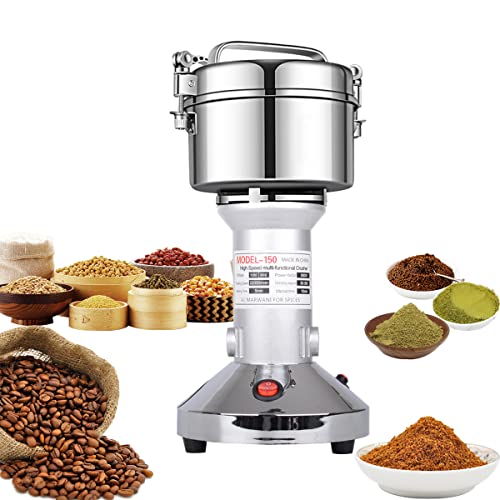
This electric grinder offers a different category for wheat milling—faster results and larger capacity, with features including 900W power and a 150g capacity. It supports grinding dried grains and spices into powder up to 300 mesh, with safety protections and auto shut-off on overload. Choose this if speed and convenience are your priorities. It’s not a stone-mill, though, so flavor and aroma may differ from traditional stone grinding.
Who it’s best for
Best for busy kitchens or if you need a quick, consistent flour texture in larger batches without manual effort.
Key advantages
- High-speed motor for fast milling
- Multiple blade system for fine powder
- Overload protection for safety
Limitations
Not a stone grinder; may not preserve flavor profiles associated with traditional stone milling.
Buying Guide
What to consider when choosing a stone grain mill for wheat:
- Grinding method: Manual vs. electric. Manual mills preserve flavor but require effort; electric mills offer speed but may heat ingredients and reduce aroma.
- Material quality: Natural granite is preferred for heat resistance and nutrient retention; stainless steel components offer durability.
- Stability and footprint: Wooden stands and non-slip bases help during extended milling sessions on busy counters.
- Finishing capability: Look for models with fine grinding teeth or grooves if you need very fine flour for bread or pastries.
- Maintenance: Some grinders require occasional tightening of bearings; ensure parts are easy to clean and rust-resistant.
- Aesthetic and versatility: Stone grinders with wooden frames provide a rustic kitchen look and can double as display pieces.
Frequently asked questions
- Can stone mills grind wet ingredients? Yes, several models are designed for both dry and wet grinding, but check the product specifics before use.
- Is manual milling better for flour flavor? Many bakers prefer stone-ground flour for its texture and aroma since it remains cooler during grinding.
- Do stone grinders produce very fine flour? Some models achieve fine flour with multiple passes; others are better for coarser textures.
- Are electric mills suitable for gluten-free grains? Yes, but ensure the machine is cleaned between different grain types to avoid cross-contamination.
- What maintenance is needed for granite mills? Periodic inspection of the wooden base and bearings, plus cleaning to prevent dust buildup, is usually sufficient.
- Can these mills grind spices and coffee? Several models claim multi-seed or spice grinding capability, but verify material compatibility with your intended use.