Best Tabletop Clay Slab Roller for Smooth, Consistent Pottery Slabs
The best tabletop clay slab roller options help potters create uniform slabs without electrical power, catering to hobbyists, students, and serious makers alike. This guide highlights five suitable picks, explaining who each is best for and why, along with practical considerations to compare at a glance.
| Product | Brand | Best For | Notes |
|---|---|---|---|
| Hand Cranked Ceramic Slab Machine | JIAYOFWCHI | Beginner to intermediate hobbyists | Manual, folding design, precise scales |
| Hand Cranked Clay Roller Machine | Tofcbye | Artists needing adjustable thickness | Adjustable gap; foldable stand |
| JARYANNIX Manual Clay Plate Machine Slab Roller | JARYANNIX | Tabletop setups with easy disassembly | Large handwheel; rust-resistant iron |
| HQHAOTWU Ceramic Clay Plate Machine | HQHAOTWU | Beginner-friendly, energy-saving | Manual, durable iron frame |
| Maisutseb Tabletop Slab Roller | Maisutseb | Medium-format printmaking on tabletop | Handwheel-controlled, stable drum |
Hand Cranked Ceramic Slab Machine By JIAYOFWCHI

This manual slab machine uses a turning method without electricity, appealing to hobbyists who prefer a simple, reliable setup. The design emphasizes a folding form and precise scales to help produce uniform slabs for consistent project results. Best for beginners and casual makers who value a compact, user-friendly workflow.
Why selected: It aligns with hands-on clay work where power-free operation and straightforward adjustments are valued. The folding design helps save space in small studios.
Caution: The lack of an automated thickness control means users must rely on manual judgment for uniform slabs, which may require a bit of practice.
Hand Cranked Clay Roller Machine By Tofcbye

This adjustable slab roller features a controllable gap to set thickness from 0.2 to 2.2 inches, promoting uniform slabs and reducing warping risks during firing. The smooth hand crank supports steady rolling speeds, making the tool suitable for soft porcelain through coarser stoneware. The foldable stand helps keep workspace tidy.
Who it’s for: Ideal for makers who need reliable thickness control and a compact, space-saving setup.
Caution: Users should ensure even rolling pressure across the entire width to avoid subtle thickness variation on wider slabs.
JARYANNIX Manual Clay Plate Machine Slab Roller
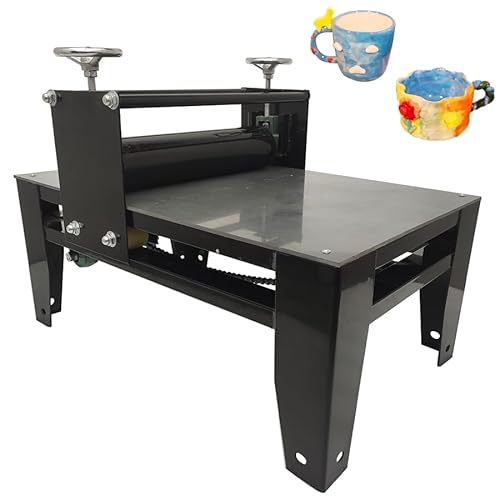
Built from sturdy iron, this slab roller emphasizes stability and durability. A large handwheel supports uniform thickness, and the frame is designed for easy disassembly and transport. It suits studios where space might be a frequent consideration and where quick setup is helpful for multiple projects.
Best for: Artists seeking a simple, robust machine with straightforward operation and easy movement between workstations.
Caution: Corrosion resistance relies on proper care; avoid prolonged exposure to moisture without drying.
HQHAOTWU Ceramic Clay Plate Machine

This manual plate machine uses a durable iron frame with a detachable frame and panel, making it easy to detach and move. The handwheel controls forward and backward roller movement to press clay evenly, supporting consistent slabs for pottery art. Suitable for newcomers who want a simple, proven design.
Best for: Beginners who want a reliable, easy-to-learn slab roller with minimal setup fuss.
Caution: Assembly and reassembly require attention to alignment to maintain even pressure across the drum.
Maisutseb Tabletop Slab Roller For Printmaking
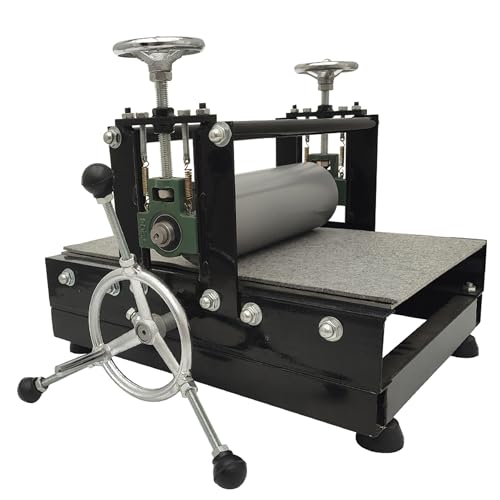
This tabletop unit uses a handwheel-driven system to apply even pressure while rolling. The platen measures 19.7 by 12.6 inches, with a drum size of 11 by 3.9 inches, providing a larger working area for medium-sized projects. The design emphasizes stability and height-adjustable features for varying workstation setups.
Best for: Potters who work with larger slabs and need a stable, medium-format roller for repeated use on a table or bench.
Caution: The heavy drum and frame may require a sturdy table and careful handling during setup and transport.
Buying Guide: Key Considerations
- Power and operation: Do you want a fully manual slab roller to avoid electricity, or are you comfortable with a powered alternative? Manual options save energy and are simpler, but require more physical effort.
- Thickness control: Look for adjustable gaps or handwheel control to ensure uniform slabs. Wider rollers benefit larger projects but require steady hands for even results.
- Workspace and storage: Consider foldable stands and detachable components if you have a small studio. Space-saving designs help maximize bench area.
- Material and durability: Iron frames provide stability and longevity; check for rust resistance and ease of maintenance in humid environments.
- Ease of assembly: Reversible panels, large handwheels, and clear scales reduce setup time and user error, especially for beginners.
- Versatility: Some models offer features like foldable stands or broader platen dimensions, which may suit printmaking or larger slabs beyond basic slab work.
Frequently Asked Questions
- What is a slab roller used for in pottery?
- Can tabletop slab rollers handle different clay types?
- Are manual slab rollers suitable for beginners?
- What maintenance is needed for an iron-framed slab roller?
- How do I achieve uniform thickness across a wide slab?
- Is space a concern when choosing a compact tabletop model?
Each product above provides a distinct balance of ease of use, adjustability, and size. When selecting, match the tool to your usual project size, desired thickness control, and available workspace. The right tabletop slab roller can streamline workflows and help produce consistent clay slabs for ceramics, sculpture, and related crafts.