Best Built-in Thermoelectric Wine Coolers for Kitchens
Answering the search intent for buyers seeking a built-in, thermoelectric wine cooler, this guide highlights five strong options and explains who each one is best for. Thermoelectric models are known for quiet operation and energy efficiency, making them ideal for compact kitchens and home bars. This article targets buyers who want a built-in appearance, reliable temperature control, and low noise for protecting wine quality. The following table summarizes the featured products to help you compare at a glance.
| Product | Capacity | Best For | Notes |
|---|---|---|---|
| BLACK+DECKER Wine Fridge 12 Bottles | 12 bottles | Compact kitchens needing full glass-front style | Mirrored front; thermoelectric; 46–66°F range |
| Ivation 12 Bottle Red & White | 12 bottles | Quiet freestanding option with digital display | Smoked glass door; 46–64°F; thermoelectric |
| Koolatron Urban Series 20 Bottle | 20 bottles | Larger capacity in a compact footprint | Dual unit cooling; external touch controls |
| Upstreman 24 Bottle | 24 bottles | Budget-friendly built-in or freestanding | Glass door; 41–68°F; touch control |
| Kalamera 18 Bottle Mini Fridge | 18 bottles | Sturdy, low-noise under-counter option | Stainless steel frame; tempered glass; memory function |
Product 1: BLACK+DECKER 12 Bottle Thermoelectric Wine Fridge

Best for small kitchens needing a glass-front look. This 12-bottle model uses thermoelectric cooling for quiet operation and energy efficiency. Temperature range from 46°F to 66°F supports light-bodied white to fuller red wines, while the interior light helps with bottle selection. Five full-length chrome racks optimize vertical storage. Best choice for a built-in or freestanding setup where space is at a premium.
Who it’s best for: small households or apartments seeking a low-noise, compact wine fridge with a stylish mirrored front.
Why selected: Combines compact footprint, clear visibility, and reliable thermoelectric cooling. A potential limitation is the fixed height and depth, which may require precise cabinet space planning.
Note: This unit emphasizes temperature stability and preserves wine quality within a modest capacity. It is not designed for long-term aging at very low temperatures.
Product 2: Ivation 12 Bottle Red & White Thermoelectric Wine Cooler
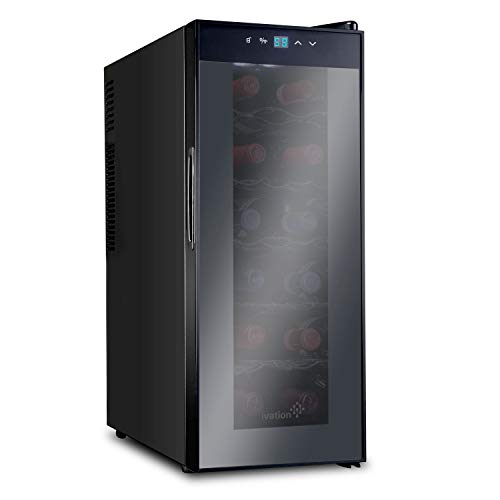
Best for congregating a mid-size collection with a focus on stable climate control. Ivation provides a range from 46° to 64°F with a digital temperature display. The smoked glass door reduces light exposure, helping maintain wine integrity over time. Quiet operation and insulated construction support environments where low noise is essential, such as living rooms or kitchens with open layouts.
Who it’s best for: households prioritizing a consistent climate with easy digital monitoring.
Why selected: Strong temperature range and a door design that minimizes light exposure. A potential limitation is the length of the warranty and the need to confirm energy use over long-term operation.
Product 3: Koolatron Urban Series 20 Bottle Wine Cooler

Best for higher capacity without expanding overall footprint. The Koolatron unit targets 46–66°F with thermoelectric cooling and offers external touch screen controls for easy temperature management. Its freestanding design makes it flexible for kitchens, home bars, or living spaces where a larger collection needs convenient access. The no-vibration operation helps preserve sediment and aroma in stored wines.
Who it’s best for: buyers needing more storage while keeping a compact overall size.
Why selected: Strong capacity for its class and user-friendly controls. Consider that the unit is freestanding, which may affect built-in kitchen aesthetics; ensure clearance for airflow behind the cabinet.
Product 4: Upstreman 24 Bottle Wine Cooler

Best for those who want a larger built-in- or freestanding-capable unit with flexible placement. This 24-bottle model features a glass door, a digital touch control panel, and a temperature range from 41°F to 68°F. The compact footprint supports under-counter or freestanding installation while providing even cooling and a clean, modern appearance.
Who it’s best for: wine lovers needing a sizable yet space-conscious cooler for a home bar or kitchen island.
Why selected: Its balance of capacity, ease of use, and flexibility makes it a top pick for mid-sized collections. A caveat is that it may be more prone to minor temperature drift if placed in a very warm kitchen; proper placement away from heat sources is advised.
Product 5: Kalamera 18 Bottle Mini Fridge

Best for a sturdy, quiet under-counter installation with a modest capacity. Kalamera’s 18-bottle model combines a stainless steel frame with a double-layer tempered glass door and a temperature memory function to help maintain a desired setting after power interruptions. The low-vibration compressor supports wine stability for short- and medium-term storage.
Who it’s best for: those wanting an under-counter option with durable construction and reliable temperature memory.
Why selected: Solid build and practical memory function. A limitation is the relatively smaller capacity compared to the 24-bottle option, which may require more frequent rotation of bottles for growing collections.
Buying Guide: Thermoelectric Built-In Wine Coolers
What makes a built-in thermoelectric wine cooler different?
Thermoelectric cooling uses electrical currents to move heat via the Peltier effect, producing quiet operation and energy efficiency. Built-in or integrated models often feature front-venting or compact dimensions to fit under counters or into cabinetry for a seamless look.
Key purchase considerations
- Capacity vs. space: Choose capacity that matches your collection while fitting your kitchen layout.
- Temperature range and stability: Look for a model with a stable range around 46–66°F for flexible wine styles.
- Door design and UV exposure: Double-layer tempered glass and UV-blocking features protect wine quality.
- Noise and vibration: Thermoelectric units are typically quieter; check for vibration-reduction features.
- Build and finish: Built-in-ready frames with stainless steel or wood accents complement modern kitchens.
Built-in vs freestanding: how to decide
Built-in-capable units are designed to sit flush with cabinetry and often require precise dimensions and ventilation. Freestanding units provide installation flexibility but may not blend as cleanly into cabinetry. If you prioritise aesthetics and space efficiency, lean toward under-counter or built-in-friendly designs with a glass door for visibility.
Energy, maintenance, and longevity
Thermoelectric units typically consume less power and generate less heat than compressor-based models, contributing to lower energy use. Regularly check door seals and ensure proper ventilation. Favor models with durable racks and a well-sealed door to preserve humidity and cork integrity over time.
Frequently Asked Questions
- Are thermoelectric wine coolers good for long-term aging? Thermoelectric coolers maintain stable temperatures well for short to mid-term storage but are not always ideal for long-term aging like climate-controlled cellars. Choose a unit with a stable mid-range temperature for best results.
- Can these be built into cabinetry? Yes, many thermoelectric coolers are designed for built-in installation or to sit flush under counters, provided the cabinet space allows ventilation and front clearance.
- What is a typical temperature range for wine storage? A common range is 46–64°F, with 55°F being a preferred temperature for long-term aging of many wines.
- Do these units protect wine from light? Models with tempered glass doors and UV-blocking features help shield wine from light exposure that can degrade flavors and aroma.
- Is noise a concern with thermoelectric coolers? Thermoelectric cooling is generally quiet, but the overall noise level can depend on fan operation and unit size.
- What should I consider about placement? Place away from heat sources (ovens, dishwashers) and ensure sufficient clearance for ventilation to maintain consistent cooling.