Best Oven Inside Thermometer for Precise Cooking
Answering the need for accurate oven monitoring, these inside-oven thermometers help ensure meats, roasts, and baked goods reach the right temps. They’re best for home cooks who want straightforward, battery-free readings, or professionals seeking quick visual confirmation. The top picks below are ideal for different kitchen setups, from quick-checks during baking to continuous monitoring for grills and smokers. The table summarizes the five selected products for easy comparison.
| Product | Brand | Temperature Range | Best For |
|---|---|---|---|
| AcuRite 00620A2 Stainless Steel Oven Thermometer | AcuRite | 150°F to 600°F | General oven use, leave-in monitoring |
| Stainless Steel Oven Thermometer 50-300°C/100-600°F (PECULA) | PECULA | 100°F to 600°F / 50°C to 300°C | Versatile placement, no batteries |
| Rubbermaid Commercial Stainless Steel Monitoring Thermometer | Rubbermaid Commercial | 60°F to 580°F / 20°C to 300°C | Professional or high-volume kitchens |
| TempPro 2-Pack Oven Thermometer | TempPro | 100°F to 600°F / 50°C to 300°C | Two-pack value, clear readability |
| Efeng Large Dial Oven Thermometer | Efeng | 100°F to 600°F | Large dial visibility, durable |
AcuRite 00620A2 Stainless Steel Oven Thermometer

The AcuRite 00620A2 is a stainless steel, leave-in thermometer suitable for ovens, grills, and smokers. It measures 150°F to 600°F and features a durable glass lens for clear readings. This model is best for home cooks who want a robust, long-lasting thermometer that integrates smoothly with existing oven setups. Caution: monitor placement to avoid contact with high flames in open grills.
PECULA Analog Oven Thermometer 50-300°C/100-600°F
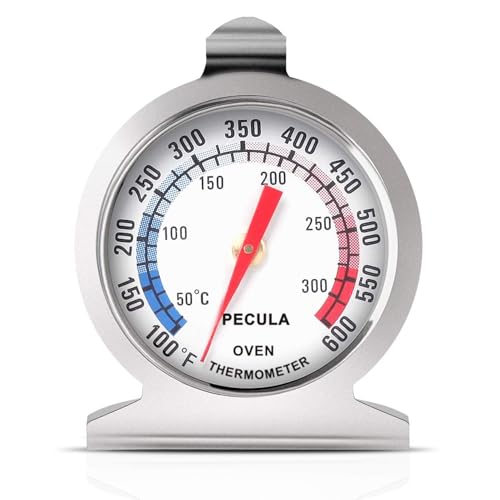
PECULA offers a clear dial with dual-zone blue and red indicators for quick at-a-glance readings. Its 100–600°F range is versatile for ovens, grills, smokers, and deep fryers. It includes a hook and stand base for flexible placement without tools. Battery-free mechanics deliver instantaneous readings, making it a good choice for users who prefer low-maintenance, mechanical designs. Limitation: dial legibility can diminish under certain oven lighting conditions.
Rubbermaid Commercial Stainless Steel Monitoring Thermometer
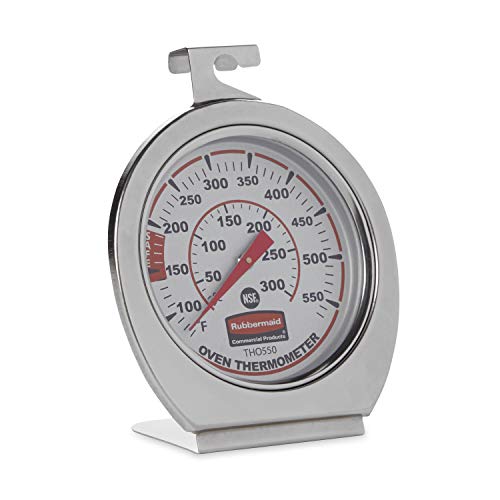
This Rubbermaid Commercial thermometer provides a wide range from 60°F to 580°F, making it suitable for both home kitchens and professional settings. Its stainless steel build and easy-to-read display emphasize food safety and quick checks inside ovens, grills, and smokers. Best for high-usage environments. Caution: plastic components further from the dial may be more susceptible to heat exposure over time in very hot jobs.
TempPro 2-Pack Oven Thermometer

The TempPro two-pack provides a broad 100–600°F (50–300°C) range and a clear dial with bold numbers. Its 431 stainless steel construction offers good heat resistance, and the dual-pack is convenient for multiple ovens or backup use. Best for households with more than one cooking station. Better for: setups requiring redundancy. Limitation: two units may require separate placement considerations to avoid cross-interference of readings.
Efeng Large Dial Oven Thermometer

Efeng’s large dial design emphasizes readability, with measurements from 100°F to 600°F. It supports standing or hanging placement and uses a durable stainless steel case with a toughened glass lens. This makes it a strong pick for long cooking sessions and larger ovens. Choose this if you value a visibly large dial and versatile mounting. Caution: ensure the dial does not contact hot oven surfaces directly for extended periods.
Buying Guide
What should you consider when choosing an oven thermometer?
- Temperature range: Ensure the thermometer covers your typical cooking temperatures, including meat probes and baking temps.
- Readability: Large, clear dials with color zones help reduce ambiguity during busy cooking moments.
- Mounting options: Look for units that hang or stand securely to suit your oven design and shelf clearance.
- Battery-free vs. battery-powered: Battery-free (mechanical) models avoid replacement hassles in high-heat environments.
- Construction quality: Stainless steel and shatter-resistant lenses increase longevity in hot, busy kitchens.
- Maintenance and cleaning: Opt for models that are easy to wipe and keep free from grease buildup.
Frequently Asked Questions
- Do these thermometers require batteries? Most mechanical models don’t. Battery-free designs are common for inside-oven use.
- Can I use these in a broiler? Some models tolerate brief exposure to very high heat, but check the product’s maximum rating and placement guidelines.
- Is a larger dial always better? Larger dials improve readability, especially through oven glass, but consider mounting fit and space.
- Can I use one thermometer for multiple ovens? A two-pack or larger models with stand/hook versatility lets you monitor several ovens or grills.
- Should I choose analog or digital? Analog (mechanical) thermometers are reliable without batteries; digital ones offer precise numerical displays but require power.
- How do I calibrate these thermometers? Most have fixed scales; if you suspect inaccuracy, compare against a known reference and adjust by placement and timing rather than attempting to recalibrate the dial.