Best Thermometer for Inside Smoker: Top Picks for Precise Smoke Cooking
Finding an accurate thermometer for an inside-smoker is essential for consistent flavors and safe, well-cooked meat. This guide highlights five reliable options that work well in smokers, grills, and ovens. Each pick suits different needs—from battery-free, quick-read models to wireless, app-connected thermometers. Best for traditional pitmasters, best for busy cooks, best for high-heat smoking, and best for budget-conscious users are covered to help you choose confidently.
Buyer types at a glance:
– Traditionalists: analog models with quick reads and durable build.
– Busy cooks: wireless or Bluetooth thermometers that send alerts to a phone.
– High-heat enthusiasts: devices rated for high temperature ranges and robust probes.
– Value seekers: affordable options without sacrificing essential accuracy.
– Multi-task cooks: models with dual probes or dual displays for monitoring multiple temperatures.
| Product | Best For | Key Benefit |
|---|---|---|
| PECULA Stainless Steel Oven Thermometer | Analog lovers, high-heat environments | Battery-free instant readings, dual-color dial |
| TempPro 2-Pack Oven Thermometer | Budget-conscious cooks needing extra units | Wide range, simple analog readout |
| Rubbermaid Commercial Stainless Steel Thermometer | Professional kitchens and serious home cooks | Broad range, easy to read |
| TempPro Wireless Meat Thermometer | Multi-task cooks, larger gatherings | 2 probes, smartphone alerts, no tethering needed |
| Govee Bluetooth Meat Thermometer | Tech-friendly cooks wanting app control | Smart alerts, remote monitoring, dual probes |
PECULA Stainless Steel Oven Thermometer
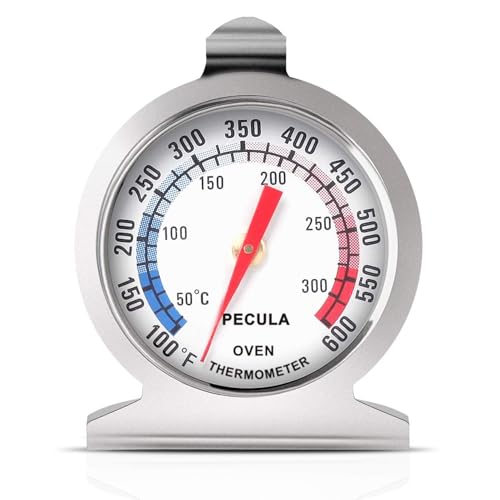
Best for: Home cooks who prefer a battery-free, analog readout with a simple hanger or base placement. This model reads 50–300°C/100–600°F, with a clear dual-color dial for quick temperature checks inside ovens, smokers, grills, or fryers. It requires no wiring or power, making it reliable for constant use in high-heat environments.
Why selected: The battery-free design reduces maintenance, while its versatile hanger and base provide flexible placement. The large, easy-to-read dial helps ensure accurate temperature control during long smoking sessions. Caution: analog accuracy depends on placement and oven airflow, so avoid blocking vents for best readings.
TempPro 2-Pack Oven Thermometer

Best for: Cooks who want redundancy and a straightforward, durable option for multiple oven or smoker chambers. The 3x3x1.61 inch units provide a clear Fahrenheit and Celsius display across 100–600°F (50–300°C).
Why selected: Durable 431 stainless steel construction with an anti-oxidation dial suits high-heat use and repeated cleaning. The battery-free design reduces maintenance. Caution: Analog display can be less precise than digital models in ultra-tight tolerance smoking scenarios.
Rubbermaid Commercial Stainless Steel Monitoring Thermometer
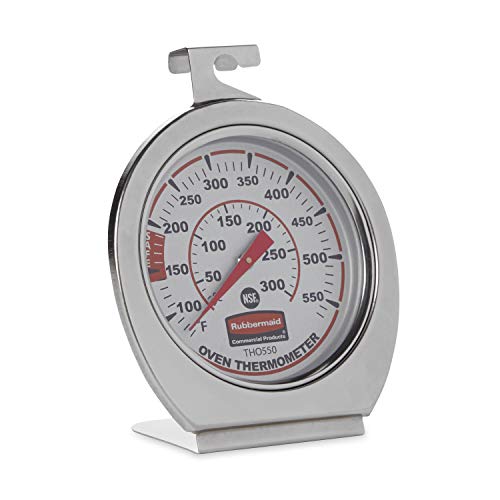
Best for: Professional or serious home kitchens needing quick, true oven temperature feedback. It covers a wide range from 60°F to 580°F (20°C to 300°C).
Why selected: This model is designed for reliability in both home and restaurant settings, providing fast readings to ensure safe, consistent smoking and cooking. Caution: It is an analog instrument; very high oven airflow can still influence perceived accuracy.
TempPro Wireless Meat Thermometer

Best for: Grilling large quantities or managing multiple foods with different target temps. Dual-probe wireless capability enables monitoring of two different meats or grill zones simultaneously.
Why selected: The wireless design keeps you within reach while monitoring from a distance and preparing sides. Consider: App usability and battery life vary by model; ensure your setup fits your smoking workflow for best results.
Govee Bluetooth Meat Thermometer

Best for: Tech-friendly cooks who want remote monitoring and smart alerts via an app. It uses Bluetooth to connect to a phone for real-time data and guidance on USDA temperatures.
Why selected: The app-based approach helps prevent overcooking, and smart alerts provide timely notifications. Caveat: Bluetooth range limits may require proximity to the smoker or a reliable signal in larger spaces.
Buying Guide: How To Choose The Right Smoker Thermometer
- Measurement type: Analog vs digital. Analog models are simple, battery-free, and durable; digital models offer precise readings and remote monitoring.
- Temperature range: Ensure the device covers your smoking temperatures (commonly 225–275°F for smoking, up to 600°F for searing or grilling).
- Display readability: Large dials with color-coding or backlit screens help quick at-a-glance checks, especially in smoky or dark environments.
- Placement flexibility: Choose models with a hanger or base for versatile positioning inside the oven, smoker, or grill.
- Probes and connectivity: If you do long smokes or multiple items, consider dual-probe or wireless/Bluetooth options for multitasking.
- Maintenance and durability: Stainless steel construction and high-temperature resistance extend lifespan in hot, humid smoker environments.
- Ease of use: Battery-free options reduce maintenance, while digital models may require occasional app or device setup.
Frequently Asked Questions
- What temperature should I target for smoking meat?
– Common targets vary by meat, but a typical range is 225–275°F (107–135°C) for smoking most cuts; follow USDA guidelines for safe internal temperatures. - Analog or digital—which is better for a smoker?
– Analog is maintenance-free and durable; digital offers precise readings and optional remote monitoring. Choose based on your smoking routine and preference for convenience. - Are Bluetooth or wireless thermometers worth it for smoking?
– Yes, for multi-tasking cooks who want alerts without staying close to the smoker. Check range and app reliability for your space. - Can I use oven thermometers inside a smoker?
– Yes, many oven thermometers are suitable for smokers, grills, and fryers. Ensure the device supports the high heat and fits your smoker’s setup. - How accurate are these thermometers?
– Most reputable models offer ±1–3°F (±1–2°C) accuracy for standard cooking ranges; placement and airflow can affect readings. - Do these meters require calibration?
– Some digital thermometers offer calibration features. Analog models typically do not require calibration beyond checking placement and airflow.