Best Refrigerator Temperature Thermometers for Precise Food Freshness
Answering the question, the best refrigerator thermometers provide quick readings, reliability in cold storage, and easy visibility. This guide highlights five solid options ideal for home kitchens, apartments, or small offices. Each pick targets a different reader need—whether you want simple analog reading, digital max/min tracking, or budget-friendly packs. Use the quick-reference table to compare key points at a glance.
| Product | Best For | ||
|---|---|---|---|
| PECULA 2 Pack Refrigerator Thermometer | Budget-conscious readers | Large dial, no battery | Clear blue/red zones for easy reading |
| RIY Refrigerator Thermometer Digital | Digital readers needing precision | Large LCD, Max/Min history | Wide range and high readability |
| Taylor 5924 Large Dial Thermometer | Classic analog reliability | Extra large 3″ dial | Durable stainless steel casing |
| VOULOIR Waterproof Digital Thermometer | Waterproof, versatile placement | Magnetic/stand/hook options | 2-pack value |
| TempPro 2 Pack with Backlit LCD | Low-light environments | Backlit display, easy battery swap | Wide range, Max/Min |
PECULA 2 Pack Refrigerator Thermometer

The PECULA thermometer set offers a simple, no-battery solution with a large dial and dual-color zones for quick temperature recognition. It measures -20 to 80 °F (-30 to 30 °C), covering typical refrigerator and freezer needs. It can be hung or placed on a shelf, making it versatile for traditional fridges, freezers, and even insulated boxes. Best for households seeking a low-maintenance, large-reading dial without electronics. A potential limitation is dial readability if positioned in a shadowed area; ensure the dial is in direct line of sight for best results.
RIY Refrigerator Thermometer Digital Fridge Freeze Room Thermometer
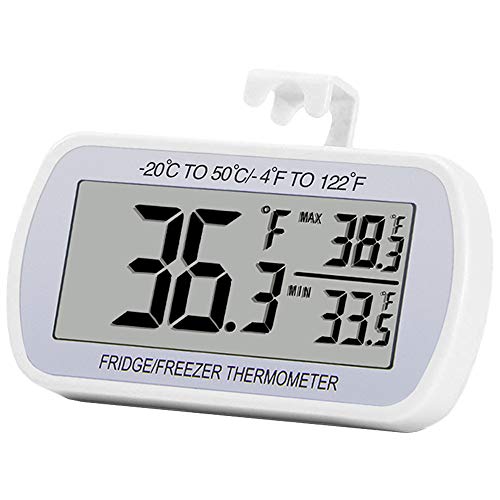
The RIY digital thermometer features a large LCD display and a wide measuring range from -4°F to 122°F, with ±2°F accuracy. It includes a Max/Min readout to monitor temperature fluctuations over time. It’s designed to be hung, magnetically mounted, or stood on a surface for flexible installation. This option is best for tech-focused buyers who want accurate, at-a-glance readings and a simple way to track temperature trends. A caution: ensure the protective film is removed before use to avoid readability issues.
Taylor 5924 Large Dial Kitchen Refrigerator and Freezer Thermometer

The Taylor thermometer uses an extra-large 3-inch dial with a stainless steel casing designed for durability. It can be hung from a rack or placed on a shelf, offering flexibility for both refrigerators and freezers. It’s ideal for users who value quick, easy-to-read analog readings in high-traffic kitchens. A limitation is that analog dials may be less precise in tiny temperature differentials compared to digital models.
VOULOIR Waterproof Refrigerator Fridge Thermometer
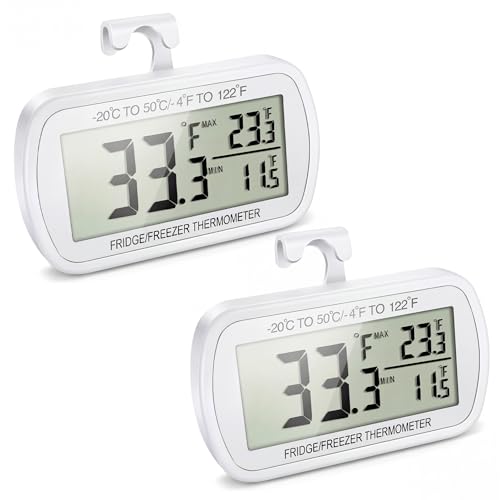
The VOULOIR digital thermometer stands out for its waterproof design and a larger 2.56-inch LCD. It shows current, max, and min temperatures with a simple button interface and a magnetic back, making it easy to place on metal surfaces. Best for environments with moisture or for those who want a quick glance at temperature history. Caution: battery life depends on usage; consider turning off when not needed to save power.
TempPro Refrigerator Thermometer 2 Pack

The TempPro digital thermometers feature a backlit LCD display for easy reading in dim conditions and offer Max/Min readings. They measure -4°F to 122°F with ±1.8°F accuracy. They are a good choice for spaces where visibility is a priority and for users who want quick battery changes without tools. A potential drawback is battery maintenance; keep spares ready for uninterrupted monitoring.
Buying Guide
Key considerations when choosing a refrigerator thermometer:
- Reading type: Analog vs. digital. Analog dials are simple and battery-free, while digital displays provide precise numbers and Max/Min histories.
- Measurement range: Ensure the thermometer covers your fridge and freezer temperatures. Common ranges include -20 to 80 °F (-30 to 30 °C) or -4 to 122 °F (-20 to 50 °C).
- Display readability: Large digits, backlighting, and color-coded zones improve quick assessment, especially in busy kitchens.
- Installation flexibility: Wall hooks, racks, magnets, or stand options matter for best placement and accurate readings.
- Durability and water resistance: In humid kitchens or near sinks, waterproof or IP-rated models are beneficial.
- Maintenance: Battery-free options require less upkeep, while digital models may need periodic battery changes.
Frequently Asked Questions
- What temperature should a refrigerator be set to for safety? Answer: Most foods should be stored at or below 40°F (4°C) to prevent bacterial growth, with freezers at 0°F (-18°C).
- Do I need a thermometer if my fridge has an built-in display? Answer: An independent thermometer provides a second data source and can help verify accuracy, especially in cold spots.
- Which thermometer is best for small spaces? Answer: Compact digital models with a small footprint and a clear LCD display work well in tight shelves.
- Are analog thermometers reliable? Answer: Yes, for general readings; they are durable and battery-free, but may be less precise than digital options for fine adjustments.
- How often should I check fridge temperature? Answer: Check at least once daily during initial setup or after changes, and monitor after door openings and heavy usage.