Best Tube Turner for Sewing: Quick Turn Tools for Easy Fabric Tubes
Yes, if you regularly flip fabric tubes for straps, piping, or casings, a quick turn fabric tool is essential. These tool sets speed up turning, reduce hand strain, and improve fabric results for both hobbyists and professional sewers. The top picks below are suited for different tube sizes and project types, from small fashion projects to large DIY crafts. Buy according to the tube diameter you most frequently encounter and whether you value multi-piece sets or compact single-tube options.
Summary of recommended products
| Product | Best For | Diameter Range | |
|---|---|---|---|
| YEQIN Quick Turn Fabric Set | Frequent small-to-medium tubes | 3/16″ to 5/8″ | Three sizes; wooden handle combo |
| FQTANJU Quick Turn Fabric Set | Versatile daily sewing | 3/8″ to 1″ plus smaller | Three sizes; wood/plastic/metal mix |
| HONEYSEW Fabric Tube Turners Set | Mid to large tubes | 3/8″ to 1″ | Three sizes; includes classically shaped tubes |
| YEQIN 8pcs Quick Turn Fabric & That Purple Thang | Comprehensive kit | Multiple radii listed | Eight pieces; expanded toolkit |
| Prym Turning Set by Prym | Standard fabric tubes | 3 sizes for 9.5–25 mm tunnels | Renowned brand; simple operation |
YEQIN Quick Turn Fabric Set

This set targets crafters who repeatedly flip self-made fabric tubes, offering three sizes built around a plastic tube plus wood and metal rod design. Best for light to medium fabric tubes in DIY garments or home projects. The 3/16 inch (0.5 cm) cylinder handles tubes from 3/8 inch to 5/8 inch (0.9–1.6 cm).
Best for: hobbyists who need quick flips for several tube diameters in a compact kit. The multi-size arrangement speeds up workflow when multiple tube widths appear in a single project. A potential limitation is that very large tubes exceed the largest diameter offered here.
Caution: Ensure tubes are not overly stiff or very slippery fabrics, which might require gentler handling to avoid fabric creasing.
FQTANJU Quick Turn Fabric Set

Designed for everyday sewing tasks, this three-piece set uses wood, plastic, and metal to form a versatile turning solution. It covers a broad tube range, from 3/8 inch to 1 inch and larger, suitable for straps, belts, or casings in various fabrics. Three sizes accommodate many standard project needs.
Best for: sewers who need a flexible set that spans small and mid-size tubes without buying individual tools. A limitation is that the largest diameter options may still require a larger dedicated tool for very thick tubes.
Choosing tip: If your projects often mix curved and straight tubes, this set’s diversity helps maintain smooth finishes across sizes.
HONEYSEW Fabric Tube Turners Set
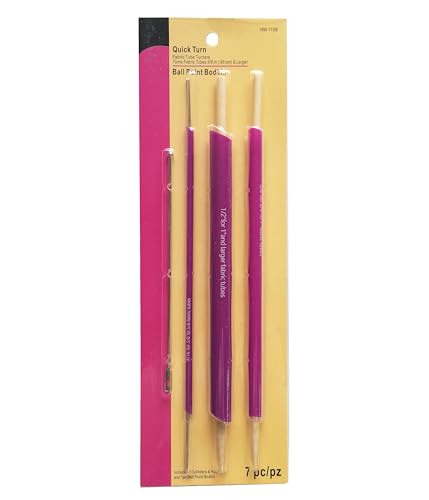
This set focuses on three fixed diameters, making it straightforward for users who know their go-to tube sizes. The combination includes 3/16″, 3/8″, and 1/2″ cylinders for tubes ranging roughly from 3/8″ to 1″ in diameter. It’s particularly suitable for beginners who prefer predictable tool sizes.
Best for: beginners or crafters who frequently work with standard tube sizes. Caution: the tool set might lack very large or very small diameter options for specialized projects.
YEQIN 8pcs Quick Turn Fabric & That Purple Thang

This eight-piece kit expands the standard quick turn set with added Purple Thang tools, delivering a broader range of diameters and accessory options. The core tubes match common ranges: 3/16 inch (0.5 cm) to 5/8 inch (1.6 cm) for smaller tubes, and 3/4 inch to 1 inch for larger passages.
Best for: crafters who want a richer assortment for project variety and quick swaps between tube sizes. Limitation: a larger total collection can be more than some users need and may require more storage space.
Prym Turning Set by Prym

Prym’s turning set emphasizes ease of use with three tube sizes designed for fabric tunnels measuring 9.5 to 25 mm. It’s a reliable option for standard garment tubes and beginner-to-intermediate projects. The design highlights a straightforward turning experience with plastic tubes and wooden/metal components.
Best for: sewists who want a trusted, brand-name option for regular tube turning. Warning: the tunnel width is fixed to a specific range, so very narrow or very wide tubes may require alternative tools.
Buying Guide: How To Choose The Right Tube Turner
What tube diameter range do you most often turn? If you frequently work with narrow straps, prioritize compact sizes. For broader casings or belts, seek larger diameters. Pick a set that includes multiple sizes or a flexible kit if your projects vary widely.
What materials matter most to you? Tools combining wood, plastic, and metal glide smoothly through most fabrics. Stainless steel rods reduce snagging on delicate knits, while smooth plastic turners help avoid snagging on slippery synthetics.
Is portability important? Compact, multi-tool kits are ideal for traveling sewers or small studios. Weight and storage space should align with your workspace and project load.
How much upgrading will you need? Beginners benefit from a simple three-size set, while advanced makers might prefer eight or more pieces for diverse tasks, including loop turners and threaders.
What about auxiliary tools? Some kits include extra items like threaders or loop turners. These enhance workflow for complex projects but may not be essential for basic tube turning.
Frequently Asked Questions
- What is a tube turner used for in sewing? It flips fabric tubes inside out so you can finish edges or insert components like drawstrings and straps.
- Which diameter range should I start with? Start with 3/16″ to 1/2″ diameters for common straps and piping; add larger sizes if you work with thicker tubes.
- Are these tools suitable for all fabrics? Most are designed for woven and light-to-midweight knits. Very delicate fabrics may require extra care to avoid snagging.
- Do I need a full kit or can I buy single tools? A kit is convenient for beginners or frequent projects; singles are better for targeted sizing needs.
- Can these tools replace hand-turning completely? They accelerate turning and reduce strain but may not be perfect for every fabric type or very tight corners.
- How should I store these tools? Keep them in a dedicated sewing kit or drawer to protect the tips and avoid losing small parts.