Best Types of Espresso Machines for Home Baristas
Choosing the right espresso machine depends on your needs, budget, and how hands-on you want to be. This guide focuses on popular at-home options that cover semi-automatic to fully automatic styles, with a quick snapshot of each top pick. Ideal buyers include: beginners seeking built-in grinders, small-space households needing compact designs, and aspiring baristas who want consistent, café-style crema at home.
The following table summarizes the selected products to help you compare key features at a glance.
| Product | Best For | Key Benefit |
|---|---|---|
| Breville Barista Express Espresso Machine BES870XL | Hands-on home brewers | Integrated grinder, precise dose control |
| atatix Espresso Machine with Milk Frother | Compact, entry-level frothing | 20-bar pressure, quick heat-up, milk foaming |
| CASABREWS CM5418 Espresso Machine | Budget-friendly, 2-in-1 steam wand | 20-bar pump, built-in pressure gauge |
| CASABREWS 3700 Essential Espresso Machine | Compact stainless steel option | 20-bar, strong heating, milk frothing |
| PHILIPS 5500 Series Fully Automatic Espresso Machine | One-touch convenience | LatteGo system, built-in grinder, presets |
Breville Barista Express Espresso Machine BES870XL, Brushed Stainless Steel

This semi-automatic machine combines a built-in grinder with a 4 keys formula for cafe-quality espresso at home. It uses integrated dose control grinding to deliver the exact amount of freshly ground coffee directly into the portafilter, compatible with any bean roast. The low-pressure pre-infusion gradually increases pressure to extract balanced flavors. Best for: home baristas who want control over grind size, dose, and shot timing in one unit.
Limitations: The grinder and heating system add to the machine’s size and maintenance. If space is tight, consider a smaller model or a dedicated grinder.
atatix Espresso Machine With Milk Frother

This compact model emphasizes convenience with a 20-bar pressure system and a 44-ounce removable water tank. It’s well-suited for homes or small offices that want quick espresso-based drinks like latte, cappuccino, or macchiato. Best for: beginners or users who want a quick setup and reliable milk frothing in a budget-friendly package.
Caution: While compact, it may require regular cleaning to maintain consistent steam and crema texture, especially if used daily.
CASABREWS CM5418 Espresso Machine 20 Bar

With a semi-automatic 2-in-1 design, this stainless steel machine delivers a professional 20-bar pump and an included pressure gauge to help you adjust extraction. The powerful steam wand enables textured microfoam for latte art. Best for: value-conscious users who want a capable machine with visible pressure feedback.
Limitations: The user must manage tamping and grind consistency; there is no built-in grinder, so you’ll need separate accessories for bean grinding.
CASABREWS 3700 Essential Espresso Machine
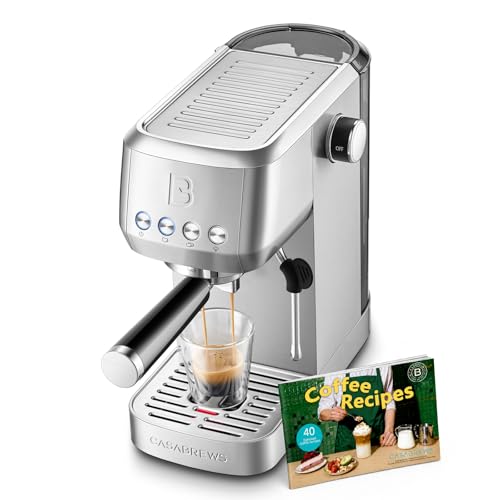
This compact stainless steel model emphasizes a balanced 20-bar pressure system with a robust 1350 W boiler. It’s designed for home users who want a reliable, consistent extraction with a strong steam wand for milk-based drinks. Best for: households needing a sturdy entry-point espresso maker with good steaming capability.
Caution: As a compact unit, it may have a smaller water reservoir and cup clearance compared with larger machines, affecting how you brew back-to-back shots.
PHILIPS 5500 Series Fully Automatic Espresso Machine

This fully automatic model uses LatteGo milk system and an integrated grinder for one-touch customization. It offers up to 20 presets and lets you save up to four profiles. Best for: users who want café-style drinks with minimal manual steps and easy cleanup.
Limitation: Automatic machines can take longer to heat and may offer less control over grind size versus semi-automatic options.
Terra Kaffe Super Automatic Espresso Machine (App-Enabled)

Fully automatic with app control, this model supports over 100,000 drink combinations and can froth all milk types. It provides roaster-approved espresso settings via QR guidance for a consistent brew each time. Best for: tech-forward buyers who want extensive drink customization and smart features.
Caution: Complex features may require setup time and a learning curve for optimal results.
Buying Guide: Key Purchase Considerations
- Brewing style: Do you prefer manual grind-and-pull control (semi-automatic) or one-touch convenience (fully automatic)?
- Built-in grinder: Is a built-in grinder important to reduce counter clutter, or would you rather use a separate grinder for flexibility?
- Steam and milk: Do you want a powerful steam wand for latte art, or is milk frothing a secondary feature?
- Space and footprint: How much counter space do you have? Compact models fit smaller kitchens but may have smaller water tanks.
- Maintenance: Are easier cleaning systems (like LatteGo) a priority, or are you comfortable with routine maintenance for peak performance?
- Reliability and parts: Look for machines with readily available parts and straightforward descaling routines to maximize longevity.
Frequently Asked Questions
- What is the difference between a semi-automatic and a fully automatic espresso machine?
Semi-automatic machines require user control over grinding, tamping, and extraction timing, while fully automatic machines automate grinding, dosing, and brew time. - Is a built-in grinder worth it for beginners?
Yes, it can simplify workflows and ensure fresher grounds, but it adds cost and maintenance compared to using a separate grinder. - What should I consider when choosing a milk frother?
Look for a steam wand with adjustable steam pressure or a dedicated frothing system like LatteGo for easy cleanup. - How important is a pressure gauge?
A pressure gauge helps monitor extraction and can guide adjustments for flavor balance, especially on 20-bar machines. - Can I use pre-ground coffee with these machines?
Most semi-automatic and 2-in-1 machines work best with fresh ground coffee, but some automatic models support pre-ground options. - Are these machines easy to maintain?
Maintenance varies; models with automatic cleaning cycles and accessible parts tend to be easier to sustain over time.