Best Vertical Slider Window Air Conditioners for Your Space
Finding the right vertical slider window air conditioner means balancing cooling power, energy efficiency, and how well the unit fits your casement or sliding window. The models below are designed for American homes and apartments, offering features from 4-way air direction to smart control. This guide highlights five top options, with practical specs to help you compare capacity, dehumidification, and ease of installation without needing permanent modifications.
| Product | Brand | BTU / Room Size | Key Features |
|---|---|---|---|
| Keystone 10,000 BTU Slider Window AC | Keystone | 10,000 BTU, up to 450 sq ft | 4-way air direction, dehumidifier mode, 3 cooling modes, timer |
| Keystone 8,000 BTU Slider Window AC | Keystone | 8,000 BTU, up to 350 sq ft | 3 cooling modes, 3 fan speeds, programmable timer, 4-way louvers |
| PerfectAire 10,000 BTU Slider Window AC | PerfectAire | 10,000 BTU, 400-450 sq ft | Adjustable temperature settings, expandable mounting kit, 3 speeds |
| Midea 10,000 BTU U Shaped Inverter Window AC | Midea | 10,000 BTU, up to 450 sq ft | Ultra quiet, ENERGY STAR, Wi-Fi and voice control |
| Midea 8,000 BTU U Shaped Inverter Window AC | Midea | 8,000 BTU, up to 350 sq ft | Ultra quiet, ENERGY STAR, Wi-Fi and voice control |
Keystone 10,000 BTU Slider Window AC

The Keystone 10,000 BTU vertical slider window air conditioner is designed for standard sliding or casement windows and is suitable for rooms up to 450 square feet. It provides three cooling modes and three fan speeds, plus four-way air louvers to direct airflow where it helps most. A built-in dehumidifier reduces moisture by about 0.9 pints per hour, improving comfort in humid spaces. The unit includes a programmable timer for scheduling startup or shutdown and 4-way air direction control for tailored comfort.
Keystone 8,000 BTU Slider Window AC

The Keystone 8,000 BTU model is suited for smaller living spaces, delivering cooling for rooms up to 350 square feet. It includes three cooling modes and three fan speeds, with four-way adjustable air louvers and a programmable timer. Like its larger sibling, it also removes up to 0.9 liters of moisture per hour via its built-in dehumidifier, helping maintain comfort in humid climates. The four-way air direction enables precise airflow where it’s needed most.
PerfectAire 10,000 BTU Slider Window AC
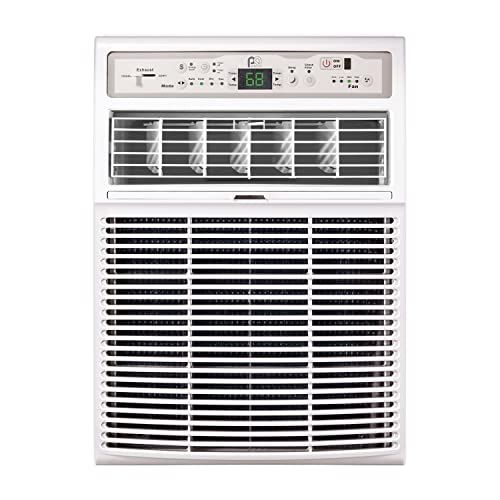
PerfectAire’s 10,000 BTU slider unit targets mid-to-large rooms up to 450 square feet, offering adjustable temperature control within a range of 62°F to 86°F. The expandable window mounting kit accommodates a variety of window sizes, enabling installation that suits horizontal sliding or casement configurations. The unit includes three cooling speeds and a similar three-speed fan option, delivering flexibility for day and night comfort without overcooling a space.
Midea 10,000 BTU U Shaped Smart Inverter Window AC

The Midea U Smart Inverter 10,000 BTU unit emphasizes quiet operation and energy efficiency. Its U-shaped design helps minimize outdoor noise intrusion, with a highly efficient inverter system claimed to be up to 10 times quieter than traditional units. It achieves over 35% energy savings, is ENERGY STAR certified, and supports Wi-Fi control via a mobile app, with compatibility for Alexa and Google Assistant for voice commands. This model is ideal for open-plan spaces where both comfort and low noise are priorities.
Midea 8,000 BTU U Shaped Smart Inverter Window AC
The 8,000 BTU Midea unit provides solid cooling for rooms up to 350 square feet. Its ultra-quiet, inverter-driven performance is designed for daytime living spaces and bedrooms alike. Like the 10,000 BTU version, it features ENERGY STAR certification and smart control via the Midea app, with voice compatibility for hands-free operation. This option balances efficiency with practical cooling for smaller homes or secondary rooms.
Buying Guide
Key considerations when choosing a vertical slider window air conditioner include window compatibility, BTU capacity, energy efficiency, and control features. Start by confirming your window type (sliding or casement) and the window dimensions to ensure a proper fit. BTU rating should reflect room size: larger spaces require higher BTU but avoid oversizing, which can lead to poor humidity control and inefficiency.
Dehumidification capability matters in humid climates; look for units that explicitly mention dehumidification performance if moisture control is a goal. Four-way air deflection helps you direct airflow away from walls or toward seating areas, improving comfort in open rooms. If you value smart features, prioritize models with Wi-Fi control, scheduling, and voice assistant compatibility for convenient operation from a mobile device or smart speaker.
Energy efficiency is another crucial factor. Look for ENERGY STAR certified models or inverter-driven designs that promise lower operating costs over time. Noise levels are worth evaluating for bedrooms and study spaces; inverter-driven units are typically quieter. Finally, installation flexibility—such as expandable mounting kits for wider ranges—can simplify setup and help you achieve a snug, secure fit without additional tools or modifications.
Notes on Installation And Fit
Vertical slider window units are designed for standard sliding or casement window configurations, but fit can vary. Verify window dimensions and mounting hardware compatibility. Some models offer expandable mounting kits or adjustable louvers to optimize airflow and seal, which can reduce energy waste. A well-sealed installation improves cooling efficiency and prevents drafts during cooler months.
Additional Considerations
Consider the balance between cooling power and dehumidification if your space experiences high humidity. Smart features can add convenience but may require a stable Wi-Fi connection for full functionality. Maintenance, such as filter cleaning or replacement, should be part of your routine to maintain performance and air quality. Finally, assess warranty terms and customer support options to ensure reliable service if issues arise.