Best Water Heater Options for Electric Homes: 5 Top Models Reviewed
Choosing an electric water heater involves evaluating capacity, efficiency, and installation requirements. This guide highlights five well-regarded electric models that cover a range of needs—from compact apartments to households with multiple bathrooms. Each product includes key features to help you compare performance, space needs, and longevity. A concise buying guide follows to help you assess capacity, energy efficiency, installation considerations, and warranty coverage for a 100-gallon-equivalent planning perspective.
| Product | Brand | Capacity (gallons) | Notes |
|---|---|---|---|
| Rheem 50 Gal. Smart High Efficiency Hybrid Heat Pump | Rheem | 50 | Smart hybrid with high efficiency; requires dedicated circuit |
| Rheem 72-40-2 240V / 4500W 40 Gal Electric | Rheem | 40 | R-Glass lined tank, insulation, corrosion protection |
| GE 18 Gallon Versatile Plug & Play | GE | 18 | Compact, versatile for small homes or apartments |
| Rheem PROE50 M2 50-Gallon Professional Classic | Rheem | 50 | Space-saving, reliable hot water for larger households |
| GE 10 Gallon Versatile Plug & Play | GE | 10 | Compact option for very small spaces or boosters |
Rheem 50 Gal. Smart High Efficiency Hybrid Heat Pump Water Heater
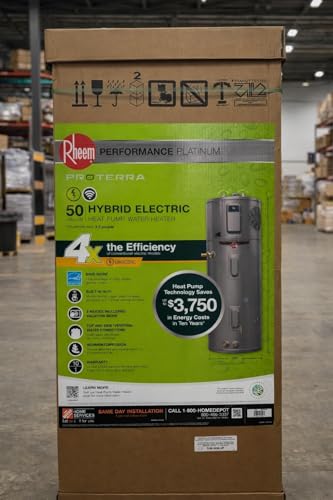
The Rheem 50 Gal. Smart High Efficiency Hybrid Heat Pump combines heat pump technology with traditional electric heating to improve energy efficiency. It is designed for residential use and requires a dedicated electrical circuit, similar to other large electric appliances. This model suits homes seeking lower operating costs without sacrificing hot water reliability. It is a 50-gallon unit that can support families of several members with average daily hot water demand.
Rheem 72-40-2 240V / 4500W 40 Gallon Electric Water Heater

This 40-gallon electric water heater features a Rheemglas lined tank and R-Foam insulation to minimize heat loss. An anode rod protects against corrosion and extends tank life. While smaller than a 50- or 60-gallon model, it provides a solid solution for households with moderate hot water needs or tighter spaces where a larger tank wouldn’t fit.
GE Appliances 18 Gallon Versatile Plug and Play Electric Water Heater

GE’s 18-gallon model emphasizes easy installation and space efficiency. It supports single-point hot water needs or serving a small home, condo, or apartment. It uses a standard 3/4-in NPT connection and 120-volt supply, making it a practical choice for compact living spaces. The unit offers a favorable warranty structure for peace of mind in smaller residences.
Rheem PROE50 M2 RH95 50-Gallon Professional Classic

The Rheem PROE50 M2 is a professional-class 50-gallon electric water heater designed for performance and reliability. It includes an enhanced-flow brass drain valve, automatic thermostat, and an anode rod. This model targets households with 3–5 people or homes with multiple bathrooms, offering a compact footprint relative to its capacity and dependable hot water delivery.
GE Appliances 10 Gallon Versatile Plug and Play Electric Water Heater
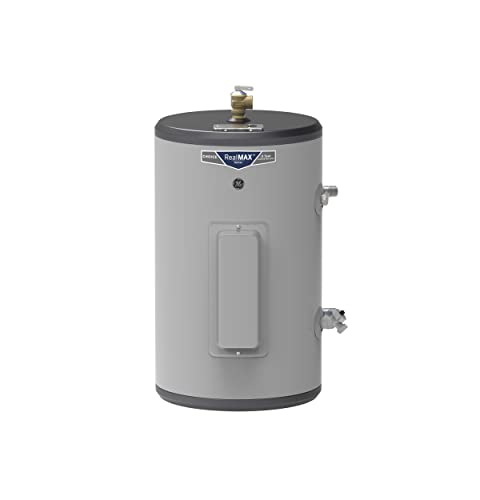
GE’s 10-gallon option is designed for minimal footprint and flexible placement. It’s ideal as a booster in larger homes or for locations with limited space, such as kitchens or laundry rooms. It connects to 120-volt power and features a compact design with a space-saving profile for installations where a full-size heater would not fit.
Additional Product Considerations
When evaluating electric water heaters for a 100-gallon planning scope, consider the following perspectives:
- Capacity and demand: Larger households or higher simultaneous hot water use may justify multiple smaller tanks or a larger unit if space allows.
- Energy efficiency: Heat pump hybrids and high-efficiency elements can reduce operating costs over time, though initial installation costs may be higher.
- Installation requirements: Dedicated electrical circuits and appropriate venting (where applicable) are critical for safe, compliant installation.
- Space constraints: Compact and vertically oriented models help in tight spaces, while larger tanks require sufficient room and proper bracing.
- Maintenance and warranty: Anode rods, insulation, and valve quality influence longevity; prioritize models with solid warranty terms.
Buying Guide: Key Purchase Considerations
For planning a 100-gallon-equivalent setup, these considerations help balance capacity, efficiency, and practicality:
- Capacity planning: If your peak hour demand exceeds a single 50-gallon unit, you may need a second unit or a high-capacity model. Consider simultaneous usage by multiple bathrooms, laundry, and kitchen hot water needs.
- Energy efficiency vs cost: Hybrid heat pump units offer significant energy savings in favorable climates but require more space and potentially a higher upfront cost. Conventional electric tanks are simpler and often more affordable upfront.
- Space and location: Installations in garages, basements, or closets benefit from compact or vertically oriented models. Ensure proper clearance and ventilation as required by local codes.
- Electrical requirements: Most electric heaters need a dedicated circuit or upgraded service. Verify panel capacity, wire gauge, and breaker specifications before purchase.
- Durability and materials: Tanks with glass lining and corrosion protection extend life in mineral-rich water regions. Anode rods protect against corrosion and are easier to replace than whole tanks.
- Maintenance ease: Features such as a brass drain valve and accessible thermostats simplify routine service and temperature adjustments.
These sections provide a practical, objective overview of modern electric water heaters and related accessories. They aim to help American homeowners select a dependable solution aligned with space, demand, and long-term costs. For broader 100-gallon planning, consider combining smaller high-efficiency units with proper plumbing design to meet peak demand while maintaining efficiency.