Best Water Heaters for Mobile Homes: Efficient, Compact Solutions for on-the-Go Living
Mobile homes demand water heating that fits tight spaces, runs reliably on limited electrical service, and delivers consistent hot water when you need it. The following selections are among the best options for mobile homes, including plug-and-play electric models, compact tankless units, and gas-powered on-demand heaters. This guide compares capacity, installation ease, energy use, and smart features to help you choose a system that matches your home and lifestyle.
Summary of chosen products:
| Product | Type | Capacity / Flow | Fuel / Power | Key Benefit |
|---|---|---|---|---|
| GE Appliances 18 Gallon Versatile Plug and Play Electric Water Heater | Tank | 18 gallons | Electric, 120V | Versatile location with easy, quick install |
| Rheem 18kW 240V Tankless Electric Water Heater | Tankless | Up to 4.4 GPM | Electric, 240V | Advanced self-modulation and precise temp control |
| Westinghouse APOLO-14kW 240V Smart Tankless | Tankless | Up to 3.38 GPM | Electric, 240V, WiFi | Smart control with Alexa/Google compatibility |
| CAMPLUX CX422 4.22 GPM Gas Tankless | Gas Tankless | 4.22 GPM | Propane | High efficiency and compact footprint |
| APUS 18kW 240V Electric Tankless Hot Water Heater | Tankless | Up to 4.4 GPM | Electric, 240V | Memory retain settings and energy-saving modulation |
These options cover electric and gas choices, balancing space savings with reliable performance. The right pick will depend on your electrical service, space, and whether you want smart controls or straightforward installation.
GE Appliances 18 Gallon Plug-In Water Heater

Designed for flexibility, this GE 18-gallon model serves as a compact home or RV-ready unit. It connects into a standard 120-volt supply and uses 3/4-inch NPT water connections, enabling straightforward installation in kitchens, baths, or utility spaces. The unit’s adjustable thermostat helps tailor hot water output to your needs while preserving energy. Its overall footprint suits tight layouts common in mobile homes, where space is at a premium.
Rheem 18kW 240V Tankless Electric Water Heater
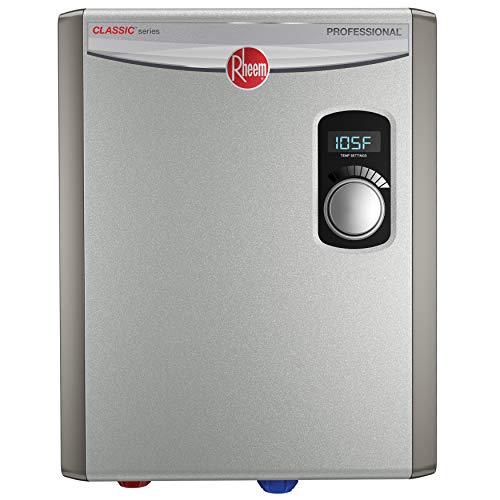
The Rheem model uses self-modulating technology to adjust power and maintain stable temperatures at up to 4.4 GPM. With a compact form factor, it’s suitable for spaces where a traditional tank would take up too much room. Copper immersion heating elements promote durability, while the user-friendly digital thermostat improves accuracy for morning showers or evening dishes. This unit is ideal for households that want continuous hot water with minimal energy waste.
Westinghouse APOLO-14kW 240V Smart Tankless
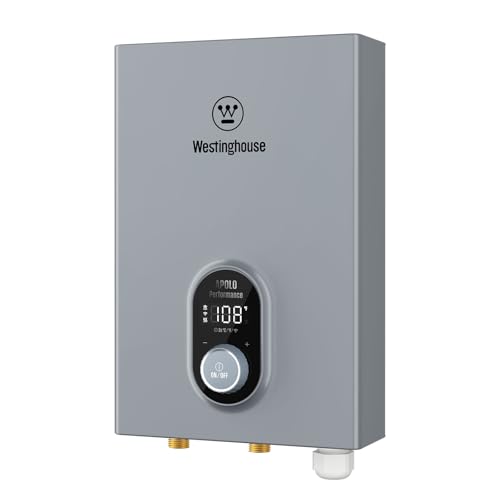
Westinghouse APOLO-14kW offers on-demand hot water with a smart WiFi interface and voice assistant compatibility. It delivers up to about 3.38 GPM and is designed to work with a 60-amp circuit breaker and appropriate wiring. Remote temperature adjustments and real-time status via LED display provide convenient control, helpful when installing in a mobile home where heat needs vary by season or usage patterns.
Westinghouse APOLO-27kW Tankless
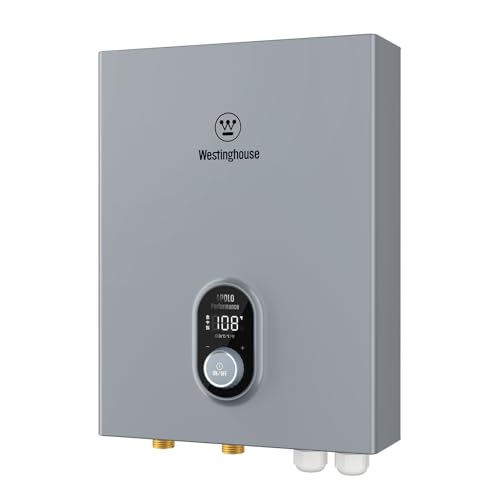
For larger mobile homes or those with high simultaneous usage, the APOLO-27kW unit delivers up to 6.26 GPM. It can supply multiple outlets at once, making it suitable for two bathrooms and major appliances without temperature fluctuations. The unit supports smart control with app and voice commands, and its deeper electrical requirements should be matched with a robust service panel and proper circuit breakers.
CAMPLUX CX422 Gas Tankless

This 4.22 GPM gas heater is ideal for compact homes and mobile setups where gas supply is available. The unit provides hot water on demand for multiple outlets, with smart flow sensors and a precision control system to maintain stable temperatures. Anti-freeze protection helps maintain performance in cooler environments. Its space-saving design fits well in closets or utility bays common in mobile residences.
APUS 18kW 240V Electric Tankless
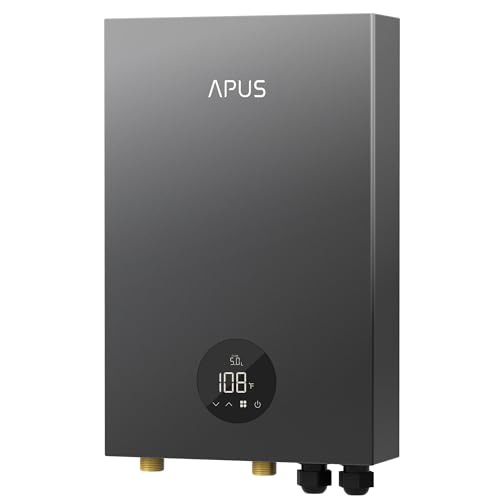
The APUS 18kW model delivers up to 4.4 GPM, great for 2–3 simultaneous hot-water uses. It features a built-in memory to retain settings after outages and self-modulating technology to optimize energy use. The LED display shows precise temperature control from 86°F to 140°F, helping to minimize energy waste while keeping consistent comfort in spaces with variable usage.
Buying Guide: Key Purchase Considerations For Mobile Homes
Choosing the right water heater for a mobile home involves balancing space, electrical or gas capacity, and daily hot-water demands. Consider these angles to ensure you pick a reliable unit that suits your layout and service availability.
- Space and installation footprint: Tank-style heaters save space in some layouts but require cabinet clearance. Tankless units offer slim profiles but may need venting or dedicated wiring. Assess the area where the unit will sit and measure access for maintenance.
- Electrical service and load: Mobile homes often have limited electrical capacity. If you have 240V service, tankless electric heaters can be efficient but may require upgrading your panel. On 120V, a small tank model could be the better fit, though it may heat water more slowly or in smaller batches.
- Gas availability and venting: Gas-fired tankless options provide ample hot water but require gas lines and venting. In off-grid or low-vent scenarios, electric models avoid combustion byproducts and simplify installation.
- Hot-water demand and flow: Tank heaters deliver steady supply for a few fixtures, while tankless options excel at on-demand hot water. For households with multiple simultaneous uses, consider higher-GPM tankless models or a combination system.
- Energy efficiency and operating costs: Tankless units typically reduce energy usage by heating on demand. Look for models with modulation, high energy factors, and good insulation to limit standby heat loss in mobile settings.
- Smart features and monitoring: WiFi-enabled units offer remote temperature control and diagnostics. In mobile homes, remote visibility can help manage comfort and prevent oversights when away from home.
- Maintenance and warranty: Consider units with accessible service parts and clear warranty coverage. A long warranty reduces total cost of ownership, and readily available parts simplify repairs in the future.
- Durability and materials: Copper elements and corrosion-resistant interiors extend life in variable climates and humidity typical in mobile homes. Anti-freeze features are valuable in cold seasons or when water lines are exposed to freezing conditions.
Each option above provides a different balance of size, efficiency, and control. When evaluating, match the unit’s electrical or gas requirements with your home’s service and the typical hot-water needs of your household. If in doubt, consult a licensed installer to confirm compatibility and safety before purchase.