Best Wine Fridge for Beer and More: Top Dual‑Zone Beverage Coolers
Looking for a dual‑zone beverage cooler that handles wine and beer (and more) with reliable temperature control? This guide highlights five top Amazon picks that balance wine storage with ample beer and soda space. Each option targets different buyers: compact bedrooms, home bars, offices, or built‑in kitchen setups. Whether you want precise wine temperatures or flexible can storage, these selections offer practical layouts and cooling performance for everyday entertaining.
Product snapshot at a glance:
- Honeywell Beverage Refrigerator and Cooler — Best for compact office or bar spaces, glass door, adjustable shelves.
- EUHOMY Mini Fridge 130 Can — Best for large party setups or family homes needing wide can capacity and flexible shelving.
- Kalamera 24 Inch Dual Zone — Best for built‑in or freestanding installations with separate wine and can zones.
- ORYMUSE 24 Inch Dual Zone — Best for quiet operation and built‑in or freestanding use with French doors.
- Tylza 24 Inch Dual Zone — Best for balanced wine and can storage with robust capacity and versatility.
Honeywell Beverage Refrigerator And Cooler

The Honeywell unit is a compact, three‑pane glass door cooler with an electronic digital thermostat and slide‑out plastic coated shelves. Best for small offices, break rooms, or bar carts where glass visibility and easy temperature control matter. It is suited for mixed use: wine bottles on one shelf with beer or soda on others. Caution: capacity is limited compared to larger freestanding models, so plan shelving to optimize space.
EUHOMY Mini Fridge 130 Can Beverage Cooler

Designed for larger parties, this 3.2 cu. ft. capacity unit holds up to 130 standard cans with 5 removable shelves for flexible organization. Precise digital temperature control from 37°F to 61°F, a clear LED display, and a dual‑pane glass door help maintain consistent cooling. Best for entertaining spaces or home bars needing significant can storage; better for cans than large wine collections. Limitation: primarily a can cooler, not optimized for long‑term wine aging.
Kalamera 24 Inch Dual Zone
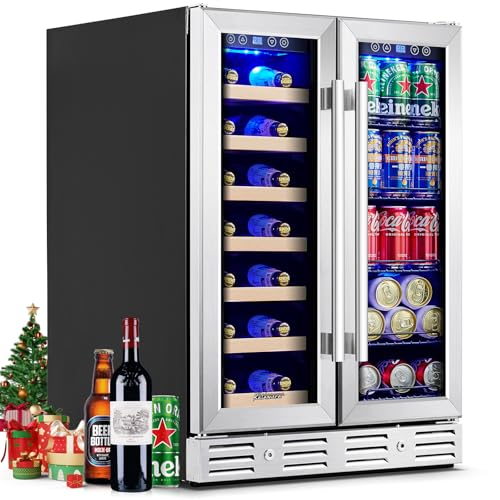
Kalamera pairs 21 wine bottles with 75 cans in a dual‑zone cabinet. The left wine zone (40–66°F) complements the right beverage zone (38–50°F). A built‑in or freestanding design makes it versatile for kitchens, bars, or offices. It’s best for households that want a dedicated wine temperature alongside a separate, stable beverage zone. Note: its dual zones are independent, so users should manage two temperature targets rather than a single uniform climate.
ORYMUSE 24 Inch Dual Zone

ORYMUSE offers two independent zones with left 35–50°F and right 41–64°F. Its quiet compressor delivers low vibration (under 40 dB) and a blue LED interior light for visibility. Best for built‑in under counters or freestanding use where nighttime quiet matters. Limitation: dual zones require careful configuration to avoid cross‑mixing flavors if not separated visually.
Tylza 24 Inch Dual Zone

The Tylza model holds 20 wine bottles and 88 cans with removable shelves for flexible storage. It features independent dual cooling zones (left 35–50°F, right 41–64°F) and a built‑in or freestanding design. Best for households mixing wine nights with beer or soda events. Caution: deeper dimensions may limit under‑counter installation depending on space.
Buying Guide
What should you consider when choosing a wine fridge for beer?
- Storage mix: Do you want more wine capacity with a smaller beer area, or a large combined space? Dual‑zone models balance both needs.
- Temperature ranges: Wine prefers lower, stable temperatures; beer is often best around 35–50°F. Look for zones that cover both needs without sacrificing consistency.
- Installation: Built‑in or freestanding? Consider door swing, ventilation, and whether a glass door is important for visibility.
- Noise level: Quiet operation matters for bedrooms or home offices. Check decibel ratings if available.
- Shelving and access: Removable or adjustable shelves help maximize space for bottles and cans and simplify loading.
- Power and controls: Digital thermostats and LED displays make it easier to monitor temperature at a glance.
What configuration works best for entertaining?
For frequent hosting, choose a model that separates wine and beverage zones clearly, with stable temperatures in each. A larger can capacity is useful for parties, while a robust wine zone benefits daily wine storage.
Are dual‑zone fridges worth it for small spaces?
Yes, if you can maximize layout efficiency. Look for slimmer footprints with good door clearance and adjustable shelves to fit wine bottles and cans without crowding.
Which features improve reliability?
Independent dual zones, a compressor‑based cooling system, and a low vibration design reduce temperature fluctuations and preserve beverage quality over time.
How important is a glass door?
A glass door improves visibility for quick selection and presentation, but it can slightly impact insulation. If energy use is a concern, consider models with high‑quality seals and UV‑blocking glass.
What should I avoid?
A unit with only a single narrow temperature range or limited shelving that forces compromises on either wine or beer storage. Also avoid setups with excessive noise or poor temperature stability in real‑world use.
FAQ
- What’s the typical temperature range for wine in these fridges? Most dual–zone models offer a wine zone around 40–66°F, suitable for most varietals.
- Can I install these under a counter? Many models support built‑in or freestanding use; check dimensions and ventilation for under‑counter installation.
- Is a glass door necessary? Glass doors improve visibility and presentation; they may slightly impact insulation and energy use.
- Do these fridges hold both red and white wine? Yes, dual zones allow different temperatures to accommodate red and white bottles simultaneously.
- What about energy efficiency? Look for models with tight seals, efficient compressors, and low noise ratings for continuous operation.
- How many bottles and cans can I store? Capacities vary by model; confirm specific counts in product specs to match your needs.