Best Wood Cook Stove With Water Reservoir for Outdoor Cooking and Heating
If you’re seeking a wood-burning solution that also provides hot water for cooking, cleaning, or coffee, you want a stove with an integrated water reservoir or a dependable water tank accessory. The following picks highlight models designed to maximize heat efficiency, ease of use, and portability for solo adventures or small groups. This guide includes who each product is best for and practical considerations to help you compare quickly.
Summary table of selected products:
- FireHiking Wood Stove Water Tank — 3L stainless steel reservoir, odorless and corrosion-resistant.
- TAISOCA Camping Tent Stove Water Tank — 3L capacity, 6 cm chimney compatibility, copper faucet.
- PAOOPA Wood-Burning Heating Stove With Water Tank — 8L tank, multi-function, smokeless design.
- Fire Beauty Humidifying Iron Kettle — 3-quart capacity kettle for wood stoves, stable heat handling.
- Lineslife Wood Burning Camp Stove — portable cast-iron design, robust for outdoor cooking (no built-in water tank but pairs well with water-heating options).
FireHiking Wood Stove Water Tank 3L

Best for solo campers or small groups who want reliable hot water while cooking on a wood stove. This 304 stainless steel water tank is odorless, rust-proof, and designed to withstand high temperatures and outdoor conditions. A 3L capacity supports coffee, dishwashing, and quick boils without refilling after every meal. It uses waste heat from the stove to heat water, so there’s no extra fuel cost.
Who it’s for: solo hikers, couples, or small crews who prioritize simplicity and lightweight gear. Why selected: high-quality stainless steel and efficient heat use maximize water heating without adding fuel needs. Limitation: the 3L capacity may be limiting for larger groups or long trips without frequent refills.
Trailblazer Cookstove — Wood Fired Stovetop With Oven

Best for off-grid living and emergency heat where versatility matters. This solid-steel stove features folding legs, a gasket-free door, and a reversible grill/griddle with removable cooktop rings, enabling boil, simmer, fry, and bake. A built-in oven supports standard pans, expanding cooking options in remote environments. It’s heavier than some options but stands up to rugged use.
Who it’s for: campers who want reliable, long-term cooking versatility without relying on electricity. Why selected: proven design for off-grid cooking and emergency heat. Limitation: heavier and bulkier than compact camping stoves, requiring more storage space.
VEVOR Camping Wood Stove With Chimney Pipes

Best for campers needing efficient secondary combustion and easy setup. This stove features a large 1400in³ firebox, damper control, and multiple ventilation holes that help regulate heat and smoke. The included accessories—rain cap, stove bag, gloves, chimney pipe, and hook—make transport and assembly straightforward. Weight remains manageable for a portable kit.
Who it’s for: hikers and campers who want quick, controllable heat with simple maintenance. Why selected: strong heat output with efficient burning. Limitation: does not inherently include a water reservoir; pairing with a water tank is recommended for hot-water needs.
TAISOCA Camping Tent Stove Water Tank 3L
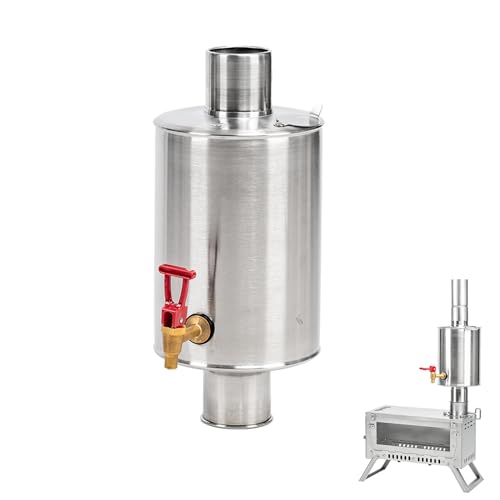
Best for tents and small shelters where a compact water reservoir is needed. The 304 stainless steel water tank offers a mirror-polished interior and exterior for easy cleaning and reduced lime-scale buildup. It includes a pure copper faucet for smooth, splash-free pouring. The 6 cm (2.36 in) pipe diameter fits a common stove chimney and holds up to 3L of water.
Who it’s for: campers who want a dedicated water tank accessory with easy faucet access. Why selected: durable stainless steel with convenient faucet; fits standard 6 cm chimney pipes. Limitation: only as useful as compatible stove setup and chimney length in your camp’s layout.
Fire Beauty Humidifying Iron Kettle

Best for households using wood stoves who want an integrated water heater with a traditional look. This heavy cast iron kettle holds up to about three quarts and includes a chrome cool-touch handle for safety. It’s designed to withstand high temperatures on wood stoves and pellet stoves, making it a reliable hot-water accessory for extended heating sessions.
Who it’s for: users who want a reliable kettle to heat water for tea, coffee, or cooking on a wood stove. Why selected: durable construction and generous capacity. Limitation: does not store water directly on a stove, requiring a heat source and compatible setup.
PAOOPA Wood-Burning Heating Stove With Water Tank

Best for off-grid cooking and heating with a higher water capacity. This multi-function stove features an 8L water tank, a full welding and airtight design for efficient burn control, and compatibility with a range of fuels. The design supports smokeless operation and uses natural fuels like wood, twigs, and chips. It includes a wok option for versatile outdoor cooking.
Who it’s for: campers who want robust water heating with a larger reservoir and smokeless operation. Why selected: larger water capacity and integrated design support extended use. Limitation: heavier and more complex than compact stoves, which may require more space and setup time.
Buying Guide: Key Considerations For A Wood Stove With Water Reservoir
- Water capacity vs. fuel efficiency: Larger tanks provide more hot water but add weight and may reduce portability. Choose a capacity that aligns with your typical trip length and cooking needs.
- Tank material and durability: Stainless steel is common for outdoor use due to corrosion resistance and heat endurance. Look for food-grade finishes and smooth interiors to minimize mineral buildup.
- Compatibility with chimney diameter: Verify the stove’s chimney or pipe diameter and ensure it matches the water tank connection. A mismatch can reduce heating efficiency or cause leaks.
- Mobility and setup: Consider weight, folding legs, and included accessories. Some setups favor backpacking, others shore up with a more robust, rucksack-friendly design.
- Heat efficiency: Models that maximize waste heat into hot water save fuel and extend burn times. Look for damper controls and secondary combustion features where available.
- Versatility: If you want more than hot water, choose stoves with oven space, multi-zone cooking, or compatibility with wok and griddles.
- Maintenance: Easy cleaning surfaces, removable ash trays, and accessible water tanks ease camping maintenance and longevity.
Frequently Asked Questions
- What capacity water tank is best for a weekend trip? A 3L tank typically suffices for cooking and coffee for a small group; larger trips may benefit from 6–8L tanks.
- Is a water tank necessary for every wood stove? Not always, but a dedicated water reservoir adds convenience for hot beverages and dishwashing without extra gear.
- Can I heat water in the kettle without a water reservoir? Yes, you use a kettle on the stove to heat water as needed.
- Will the tank affect stove portability? Yes, heavier tanks increase weight; consider a modular setup if you hike in with the stove.
- What maintenance helps prevent mineral buildup? Regular cleaning with mild vinegar or commercial descalers, and rinsing after use, helps maintain water quality and flow.
- Are these setups safe for backcountry use? When used as designed, with appropriate ventilation and proper installation, they are intended for outdoor use; follow all manufacturer guidelines for safety.