Best Meat Thermometer With Alarm for Precise Cooking and Stress-Free Grilling
When you need reliable, hands-off temperature alerts for meat, a meat thermometer with alarm is your best ally. These devices monitor internal temperatures and trigger alarms when targets are reached, making them ideal for busy cooks, pitmasters, and gift-givers. Top picks below are organized for different needs: single-probe simplicity, dual-probe versatility, wireless freedom, and smart kitchen integration. Each product includes clear alarm functionality and fast readings to help you hit exact doneness every time.
Overview of chosen products:
- TempPro TP16 Large LCD Digital Meat Thermometer — Best for beginners and single-meat cooks
- TempPro TP17 Dual Probe Digital Cooking Thermometer — Best for grilling and two-piece monitoring
- TempPro TP829 1000ft Wireless Meat Thermometer — Best for moving around the yard or deck
- Vuwwey Instant Read Meat Thermometer Dual Probe — Best for fast readings and versatile locations
- CHEF iQ Sense Smart Wireless Thermometer — Best for smart kitchen integration and multiple sensors
| Product | Probes | Alarm / Alerts |
|---|---|---|
| TempPro TP16 | 1 probe | Programmable alarms with USDA presets |
| TempPro TP17 Dual Probe | 2 probes | High/Low alarms; timer and backlit display |
| TempPro TP829 | 4 probes (wireless) | RF range up to 1000 ft; multiple alarms |
| Vuwwey Dual Probe | 2 probes | Fast alarm with hold/temp lock |
| CHEF iQ Sense | 5 sensors (including ambient) | Guided cooking, real-time alerts |
TempPro TP16 Large LCD Digital Meat Thermometer
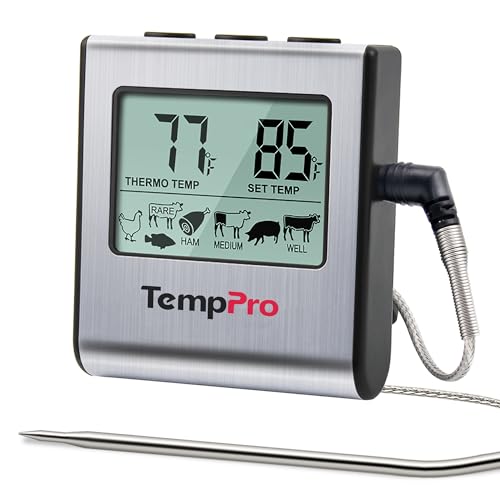
The TempPro TP16 is a single-probe thermometer with USDA preset temperatures and adjustable favorites. It includes a programmable alert that beeps when the target is reached, making it ideal for cooks who want straightforward, reliable alarms for roasts, steaks, and poultry. The probe and wire withstand up to 716°F, and the temperature range spans 32–572°F with 1-degree resolution. Best for: home cooks or beginners who want a simple, accurate alarm thermometer without extra probes. Caution: fewer probes mean less simultaneous monitoring of multiple items.
TempPro TP17 Dual Probe Digital Cooking Thermometer

This model provides two probes and dual-parameter monitoring, great for cooking two meats or tracking grill and meat temps simultaneously. It includes USDA presets and adjustable targets, with a large backlit display to read temperatures in any lighting. Best for: grill masters and family cooks who want to monitor two foods at once. Caution: heavier setup may require more space on counter or lid clearance.
TempPro TP829 1000ft Wireless Meat Thermometer

The TP829 uses RF technology to provide a stable connection up to 1,000 feet, ideal for outdoor grills, smokers, and patios. It supports four color-coded probes for multiple meats or zones, and it does not rely on apps for setup. Best for: backyard cooks who want strong wireless performance and easy plug-and-play operation. Caution: wireless range may vary with obstacles and interference.
CHEF iQ Sense Smart Wireless Thermometer

The CHEF iQ Sense offers smart, wireless monitoring with five sensors, including an ambient sensor for environmental tracking. It provides real-time temperature updates, guided cooking, and rest timers, delivering precise results with a high degree of automation. Best for: tech-forward kitchens and cooks who want step-by-step cooking guidance. Caution: premium features may require network connectivity and battery considerations.
Buying Guide: Key Purchase Considerations
What type of thermometer should I choose?
Single-probe models are simple and affordable, ideal for beginners. Dual-probe units support two foods or zones simultaneously. Wireless options offer freedom to move away from heat, while smart Bluetooth/Wi‑Fi models add guided cooking and reminders. Choose based on how many items you monitor at once and how far you want to be from the grill or oven.
How important is alarm customization?
Look for presets from reputable sources (USDA) and the ability to customize temperatures. Alarms should be audible and easy to set, with notifications for both reaching target temperatures and timing alerts. A backlit display helps during night cooking or shaded areas.
What about accuracy and range?
Accuracy within ±1.8°F to ±2°F is common and sufficient for most cooking tasks. A wide temperature range ensures you can use the thermometer for candy, fried foods, or smoking. Probes and cables should be heat-resistant and durable for regular use.
Is wireless connectivity a benefit or a risk?
Wireless thermometers provide motion-free monitoring and remote viewing at a distance, but can be subject to interference. If you frequently cook in a crowded kitchen or near other wireless devices, consider a non-app-based unit with strong RF performance.
What should I know about durability and ease of use?
Look for stainless steel probes, heat-resistant cables, and simple button layouts. A clear, backlit display and intuitive controls reduce the learning curve and help you cook accurately in any lighting condition.
How many probes do I really need?
One-probe units cover basic needs. Dual-probe units are ideal for two items. Four-probe or multi-sensor systems are best when you manage multiple meats, zones, or a combination of ambient and food temperatures.
Are there safety and maintenance tips?
Always insert the probe into the thickest part of the meat, away from bone. Calibrate when needed, clean probes after use, and store units in a dry place to extend lifespan. Replace batteries as recommended by the manufacturer.
Summary of considerations
- Number of items monitored concurrently
- Need for mobility versus fixed kitchen placement
- Desire for smart features like guided cooking
- Budget and desired accuracy
Frequently Asked Questions
- Do all meat thermometers have alarm sounds? Yes, most offer beep notifications when targets are reached or when timers expire.
- Is a wireless thermometer better than a wired one? Wireless models provide more freedom to move away from heat, while wired units are often simpler and more affordable.
- How many probes do I need for grilling? One is sufficient for a single cut; two or more are useful for multiple pieces or zones.
- Can I use these thermometers for candy or deep-frying? Yes, many models support high-temperature ranges suitable for candy making and deep-frying.
- Are smart thermometers worth it for beginners? They can add helpful guided cooking and reminders, but traditional models are reliable and easy to use.
- How do I ensure accuracy over time? Regular calibration with ice water or boiling water can help maintain accuracy, along with following manufacturer guidelines.