Best Serger Sewing Machines for Quick, Professional Edges and Finishes
The top picks below are ideal for sewists seeking fast, clean overlock seams and durable construction. This guide highlights machines well-suited to beginner-to-intermediate users, plus designers working with denim, knits, and lightweight fabrics. Each product is evaluated for who it’s best for, and why it stands out in its category.
The table below summarizes five strong options, focusing on metal-frame reliability, threading ease, stitch versatility, and speed. Use it to compare core strengths at a glance.
| Product | Brand | Best For | Key Strength |
|---|---|---|---|
| Brother 1034D | Brother | Home sewists tackling multiple layers | Solid metal frame; 1,300 SPM; removable trim trap |
| SINGER X5004-HD | SINGER | Durable, versatile projects | 2-3-4 stitch options; adjustable differential feed |
| SewLaVie 360 Upgraded | SewLaVie | Pro-level serging with easy setup | Open threading; 12 stitches; 1,300 SPM |
| FEIYUE FY505 | FEIYUE | Heavy fabrics and rolled hems | 2/3/4 thread capability; durable metal frame |
| VEVOR Serger | VEVOR | Varied fabrics and fast projects | 1,250 SPM; 2/3/4-thread; differential feed |
Brother Serger 1034D with Metal Frame

The Brother 1034D is a durable, metal-framed serger designed for reliability with heavy fabrics. It offers a maximum speed of 1,300 stitches per minute and supports 3- or 4-thread configurations. A removable trim trap helps manage waste fabric, and the foot pedal provides speed control for consistent finishes. Best for sewers who need a solid all-around serger for hems, edges, and light-to-medium weight layers. One limitation is that some users may prefer more lighting or automated features for beginners.
Who this is best for
Best for hobbyists and home sewers who want a strong, straightforward serger for everyday projects, including denim and multiple-layer fabrics.
SINGER X5004-HD Metal Frame Serger

The SINGER X5004-HD features a heavy-duty metal frame and supports 2-, 3-, and 4-thread stitches across six stitch types, with adjustable differential feed for fabric control. It’s designed for longevity and smoother operation on thicker fabrics, helping reduce vibration during use. A potential caveat is that the machine’s setup can be more involved for absolute beginners given its broader range of stitch options.
Who this is best for
Best for quilters and garment makers who need flexibility and a sturdy frame to handle thicker fabrics, with a mix of basic and decorative edges.
SewLaVie 360 Upgraded Serger Overlock
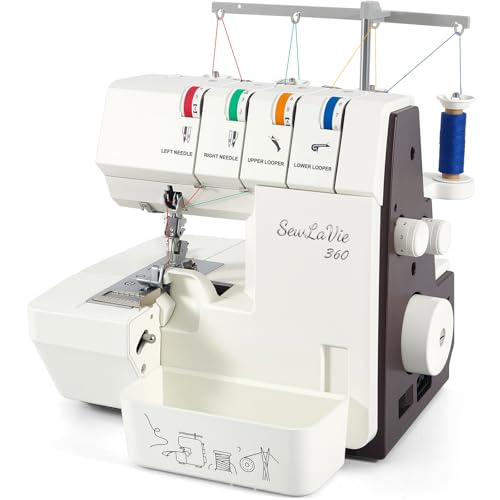
The SewLaVie 360 Upgraded Serger emphasizes accessible threading with a wide-open threading area and a visual alignment guide. It runs at up to 1,300 stitches per minute and offers 2/3/4-thread capability with 12 built-in stitches. This makes it ideal for professional sewers and tailors who want faster setup and efficient finishing. A noted limitation is that, like many pro-level sergers, it may require a slightly higher initial learning curve for complete beginners.
Who this is best for
Best for intermediate to advanced users or pros who need quick setup and a broad stitch library for a range of projects from garments to upholstery.
FEIYUE FY505 Serger Overlock

The FEIYUE FY505 uses a robust metal frame and offers 2/3/4-thread capability with a built-in rolled hem option. It emphasizes durable cutting with a strong carbon steel blade for clean edges. This machine suits users who expect a reliable, long-lasting unit capable of handling project variety, including heavier fabrics. A potential limitation is that the product description highlights durability and blade quality but provides less detail on stitch types or speed compared to some competitors.
Who this is best for
Best for hobbyists and small studios seeking a sturdy, versatile serger capable of rolled hems and thicker fabrics without complex setup.
VEVOR Serger Overlock, 1250 SPM

The VEVOR serger offers 2/3/4-thread capability with a high-speed 1,250 stitches-per-minute performance and a 0.7–2.0 differential feed. It is designed for a range of fabrics and includes an LED light for improved visibility. The machine provides a practical balance of speed and control for ongoing projects. A consideration is that some shoppers may want more detailed information on free-arm capabilities or accessory compatibility beyond the listed features.
Buying Guide: Key Purchase Considerations
What thread options do I need?
Most home sergers offer 2-, 3-, or 4-thread configurations. A 4-thread setup is versatile for durable seams, while a 2-thread option can be faster for lightweight fabrics. Consider whether you need rolled hems or decorative edges as you pick a model.
How important is speed?
Speed matters for efficiency. Models around 1,200–1,300 SPM complete edges quickly, which is beneficial for larger projects. Slower speeds are acceptable for beginners learning precise control.
Is a metal frame worth it?
Yes. A metal frame generally means better stability, reduced vibration, and longer life, especially with heavy fabrics or long sewing sessions.
What about threading and maintenance?
Open threading areas or guided threading reduce setup time. Check for features like automatic loopers, clear threading diagrams, and accessible cut-off blades for maintenance and safe operation.
Best overall for beginners vs. pros
For beginners, prioritize models with straightforward threading, good lighting, and known reliability like the Brother 1034D or SINGER X5004-HD. For pros, seek machines with open threading, more stitch options, and stronger cutting performance like SewLaVie or FEIYUE FY505.
FAQ
- What is a serger used for? It finishes fabric edges, prevents fraying, and creates professional seams on garments and home décor.
- Do I need a serger if I already own a sewing machine? A serger excels at edging and finishing edges quickly, complementing a standard sewing machine for professional results.
- Can sergers sew through denim? Yes, many sergers are built to handle multiple layers of denim when equipped with a metal frame and appropriate threading.
- Is open threading important? Open threading simplifies setup and troubleshooting, especially for beginners learning looper paths.
- What should I look for in a differential feed? Differential feed helps control fabric stretch, preventing wavy edges on knits and creating smoother finishes on woven fabrics.
- Are 2-, 3-, and 4-thread options interchangeable? They provide different seam properties. Choose based on fabric type and the project’s finish requirements.