Best Goat Milk Pasteurizer Machines for Home Use and Small-Scale Dairy
Looking for a goat milk pasteurizer machine that is reliable for home use or a small dairy operation? This guide identifies five strong options, explains who each is best for, and highlights practical pros and limitations. The selections range from compact home units to larger, semi-commercial pasteurizers, helping goat farmers and small beverage producers choose the right fit without overpaying.
| Product | Best For | Notes |
|---|---|---|
| The Schlueter Company Home Milk Pasteurizer [115V] | Small households or hobby dairies | Simple, 2-gallon canister; buzzer alerts completion |
| Wtecom Commercial Milk/Juice Pasteurization Sterilization Machine | Dairy or beverage businesses needing regular batches | Stainless steel, 30–40 minute batches with auto wash |
| Kolice 50L Commercial Refrigerated Pasteurization Machine | Small to mid-size operations needing cooling | Dual heating and cooling, interactive controls |
| Kolice Commercial 150L Milk Pasteurizer Pasteurization Machine | Mid-to-large scale pasteurization | Higher capacity, 3-gear control, no cooling |
| Milk Cream Centrifugal Separator (WEHAVEFUN 100L/H) | Supplementary dairy processing (cream separation) | Not a pasteurizer but useful in dairy workflows |
The Schlueter Company Home Milk Pasteurizer [115V]

Best for small households or hobby dairies that want ready-to-use pasteurized milk quickly. This unit accepts goat’s or cow’s milk in a 2-gallon canister and uses a straightforward outer water chamber method. The process finishes in about 25 minutes, and a buzzer signals completion. It’s suitable for home use only, not commercial operations.
Best for: households seeking a simple, low-capital pasteurization option. It’s chosen for ease of use and compact size. Limitations: not designed for commercial volumes or long-term industrial workflows.
Wtecom Commercial Milk/Juice Pasteurization Sterilization Machine
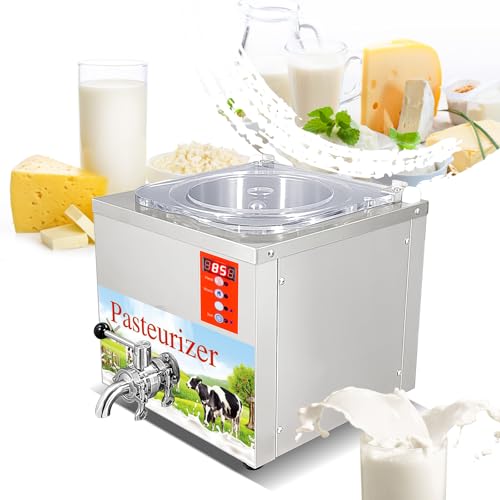
Better for dairy or beverage operations that require regular batch processing with automatic features. This unit uses food-grade stainless steel, supports liquids like milk and juice, and runs batches at 60°C–85°C (140°F–185°F) in 30–40 minutes. It includes an auto wash option and a detachable stirring paddle for easier cleaning.
Best for: small commercial setups needing reliable pasteurization with simple maintenance. Caution: larger initial footprint and power requirements may be a factor for tight kitchens or limited spaces.
Kolice 50L Commercial Refrigerated Pasteurization Machine
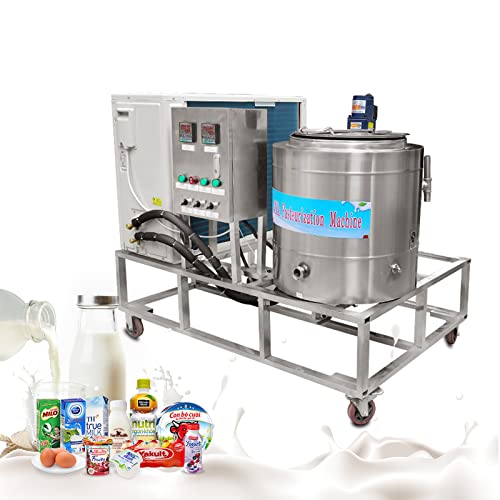
Designed for small-to-mid-size operations that require both pasteurization and cooling. It features a 50-liter capacity, food-grade stainless steel construction, dual heating and cooling functions, and a real-time temperature display. The machine integrates a jacketed water inlet connected to a city water line, plus stirring for even heat distribution.
Best for: operations that need on-demand cooling and a robust build. Choose this if you want temperature control and continuous operation at a higher capacity. Limitation: larger footprint and higher price point than compact home units.
Kolice Commercial 150L Milk Pasteurizer Pasteurization Machine

Best for mid-to-large operations needing substantial pasteurization capacity. This model offers a 150-liter capacity, a 3-gear controller to tailor pasteurization time, and a double-layer stainless steel construction. It supports heating with a water-inlet jacket and features a real-time temperature display. Notably, it provides heating without a dedicated cooling function.
Best for: users who prioritize higher throughput and precise temperature control. Limitations: no built-in cooling means separate cooling infrastructure may be required for some workflows.
Upgrade 2-in-1 Goats And Cows Milking Machine
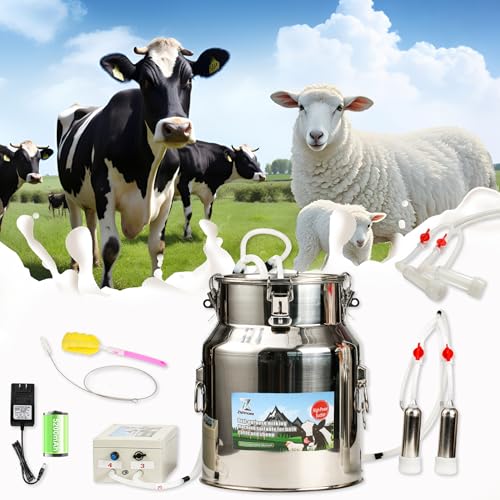
While primarily a milking device, this model is included here for households seeking a combined milking and dairy processing approach. It features a 3.7-gallon (14L) stainless steel bucket with a built-in 5200mAh rechargeable battery and multiple teat cups. It is best for small herds or households that want flexibility in milking alongside basic dairy processing.
Best for: households needing mobility and cordless operation for milking. Caution: not a pasteurizer; plan separate pasteurization if required.
Milk Cream Centrifugal Separator (WEHAVEFUN)

This device separates milk into cream and skimmed milk using centrifugal force. It is not a pasteurizer, but it can be a useful addition to dairy processing workflows that aim to produce cream fractions prior to pasteurization. Best for: farms needing cream separation as a preparatory step.
Buying Guide: Key Purchase Considerations
What capacity do you need?
Household pasteurizers typically handle 2 gallons, while commercial units range from 50 liters to 150 liters or more. Match capacity to your expected daily throughput to avoid over-investing or under-serving demand.
Do you need cooling and heating in one unit?
Some models offer combined heating and cooling, which helps maintain product safety after pasteurization. If your process requires rapid cooling, prioritize a Kolice 50L or similar refrigerated design.
What are the space and power requirements?
Compact home units fit small countertops but may rely on standard household outlets. Larger commercial machines demand dedicated electrical circuits and room for installation, plus space for cleaning and maintenance.
Is cleaning and maintenance straightforward?
Look for units with detachable components, accessible interior surfaces, and auto-clean features. Easy cleaning reduces downtime and improves safety and compliance for dairy processing.
What level of control do you require?
Three-gear controllers or precise temperature displays offer better process control for safe pasteurization. Consider whether you need manual temperature limits or automated cycle settings for your workflow.
Safety and compliance considerations
Choose equipment designed for food-grade contact surfaces (such as stainless steel) and with clear temperature monitoring. While product listings may not specify certifications, prioritize models that emphasize hygiene, corrosion resistance, and reliable alarms or indicators.
Frequently Asked Questions
- What does pasteurization do for goat milk?
Pasteurization heat-treats milk to reduce harmful bacteria while preserving usable nutrients and flavor.
- Can I pasteurize cow and goat milk in the same machine?
Yes, most pasteurizers handle both, but check specifications for temperature ranges and batch sizes.
- Do I need a separate cooling system?
Not always. Some units include cooling; others require a separate setup depending on volume and product safety needs.
- Is a home pasteurizer suitable for small commercial use?
Home units are best for personal use or hobby farms. For commercial volumes, a larger, dedicated pasteurizer is recommended.
- Which model has the best cleaning features?
Machines with detachable paddles and auto-wash options simplify maintenance and reduce downtime.
- What is the typical pasteurization temperature range?
Common ranges span from about 60°C to 85°C (140°F to 185°F), with user-adjustable settings on many units.