Best Meat Slicer for Steaks: Top Picks for Home Kitchens
Answering the common search intent, these meat slicers are ideal for evenly slicing steaks, deli meats, cheeses, and breads at home. The best options balance stone-thin precision with reliable power, safety features, and easy cleanup. This guide highlights five models suited for home cooks who crave restaurant-level consistency without professional equipment.
| Product | Blade Size | Power | Best For | Approx. Thickness Range |
|---|---|---|---|---|
| Borlebbi Meat Slicer | 7.5″ (x2 blades) | 200W | Home cooks needing dual blades for variety | 0–15 mm |
| Weston Electric Meat Cutting Machine | 9″ | Motor-driven | Quiet, medium-thick to deli-thin slices | From deli-thin to 1/2″ |
| BESWOOD 10″ Electric Deli Slicer | 10″ | 240W | Home use with premium blade | Untold, adjustable |
| VEVOR Commercial Meat Slicer | 10″ | 240W | Versatile for raw, frozen, and cooked meats | 0–12 mm |
| CUSIMAX Electric Deli Meat Slicer | 8.7″ | Removable blades | Flexible blade options for different foods | 1–20 mm |
Borlebbi Meat Slicer with Dual 7.5″ Blades

Best for cooks who want speed and versatility in one compact unit. With two removable stainless steel blades and a stainless steel tray, this slicer supports a range of foods—from steaks to cheeses. The 0–15 mm thickness range lets you produce wafer-thin slices or thicker portions for steak sandwiches. It’s also designed for easy cleaning, with removable blade, carriage, and tray components for sanitation.
Who it’s best for: buyers who value dual blades for different textures and quick cleanup. Why selected: the dual blades extend capabilities beyond a single-task slicer, making it a flexible kitchen tool. Caution: ensure proper blade removal and reattachment during cleaning to avoid sharp-edge mishaps.
Weston Electric Meat Cutting Machine

Best for steady, reliable slicing in a home kitchen with a focus on quiet operation. The Weston slicer emphasizes a belt-driven motor for smooth performance and consistent results, with adjustable thickness to accommodate everything from ultra-thin deli slices to thicker steak portions. It’s well-suited for users who want straightforward setup and predictable results.
Who it’s best for: cooks prioritizing quiet operation and predictable performance. Why selected: its belt-driven motor provides a stable slice without excessive noise. Caution: not ideal for frozen meats unless the blade is specifically rated for tougher textures.
BESWOOD 10″ Electric Deli Slicer
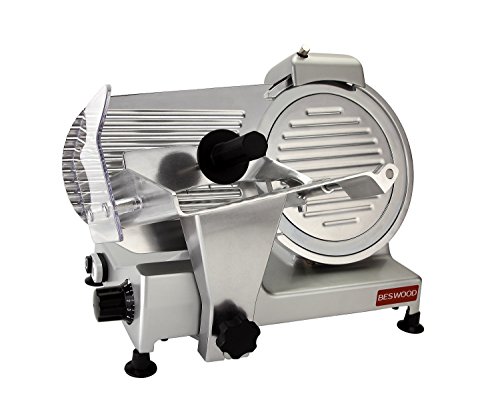
Best for serious home use with a premium blade. This 10-inch model uses a chromium-plated steel blade designed for corrosion resistance and longer edge life, reducing maintenance. The slicer supports a wide range of thickness, and the double-illuminated ON/OFF switch adds practical protection. It’s a solid pick for cooks who want a durable, high-quality slicer for regular steak and deli meat prep.
Who it’s best for: buyers seeking durable construction and less frequent blade maintenance. Why selected: premium blade and safety features enhance long-term performance. Caution: higher upfront cost compared to entry-level models; ensure it fits your space.
VEVOR 10″ Commercial Meat Slicer
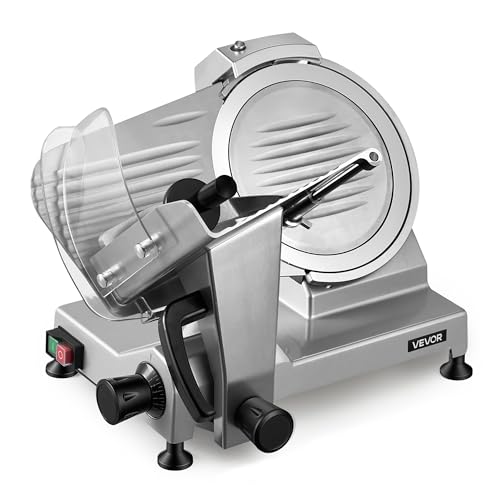
Best for those needing a versatile slicer capable of handling varied textures, including frozen and raw meats. The 10″ blade with a 240W motor and an adjustable thickness knob supports precise control from 0 to 0.47 inches (0–12 mm). A built-in sharpening stone helps keep blades sharp between maintenance sessions, aiding efficient workflow in busy kitchens.
Who it’s best for: professional-style home use and frequent slicing. Why selected: strong power and blade technology enable faster, more consistent results. Caution: be mindful of blade cleanliness when switching between different foods to avoid flavor transfer.
CUSIMAX 8.7″ Deli Slicer

Best for flexible blade options and home versatility. The CUSIMAX slicer provides 1–20 mm adjustable thickness with dual blade configurations including serrated and non-serrated blades, enabling precise cuts for meat, cheese, bread, and vegetables. Non-slip feet and safety guards enhance stability and protection during operation.
Who it’s best for: buyers who want blade variety and easy cleaning. Why selected: removable blades and carriage simplify cleaning, reducing cross-flavor concerns. Caution: blade setup may require careful alignment to achieve uniform slices.
Buying Guide: Key Considerations For Meat Slicer Purchases
What size blade do you need? A 7–8 inch blade is compact and ideal for small kitchens or light home use, while 9–10 inch blades handle larger slices and higher throughput. For thick steaks, look for a model with a thicker-capable range and a stable motor.
How important is motor power? Higher wattage generally means faster slicing and better performance with tougher meats. Home models around 200–240W provide a good balance of power, noise, and price.
Are safety and cleaning features important? Look for removable blades, food carriage, and guards that make sanitation easier. Non-slip feet and safety switches help prevent accidents in busy kitchens.
What about blade maintenance? Some models include built-in sharpening stones or corrosion-resistant blades. Consider how often you’ll need to sharpen and whether maintenance is practical for your routine.
What foods will you slice? If you frequently slice frozen or bone-in meats, choose a slicer with robust motor power and a wider thaw-friendly blade, plus a design that tolerates tougher textures.
Frequently Asked Questions
- What thickness range is typical for home meat slicers?
Most models offer adjustable thickness from about 0 to 12–15 mm, with some reaching up to 20 mm in specialty units. - Can a home meat slicer handle frozen meat?
Some models feature sharpening stones and stronger blades designed for partially frozen meats; check the blade and motor specs before use. - Are dual blades worth it?
Dual blades provide faster switching between textures or food types, improving versatility for frequent users. - How should I clean a meat slicer after use?
Remove blades and carriage as directed by the manufacturer, wash with warm soapy water, and dry thoroughly to prevent corrosion. - Is professional-grade construction necessary for home use?
For most home cooks, a sturdy 200–240W slicer with solid safety features satisfies typical needs without industrial specs.