Best Grease Tank for Restaurant: Top Picks for Efficient Fat, Oil, and Grease Management
Answering the needs of busy restaurant kitchens, this guide highlights the best grease tanks and traps for commercial use. These picks help prevent drains and sewer blockages, support compliant operation, and reduce maintenance hassles. Best for small-to-midscale kitchens, fast-casual setups, and under-sink installations where space matters. The top choices below balance capacity, durability, and ease of cleaning to fit different workflow needs. Use the summary table to compare key specs at a glance.
| Product | Brand | Capacity | Material | Best For |
|---|---|---|---|---|
| 8 lbs Commercial Grease Trap | Wadoy | 8 lbs | Stainless Steel 201 | Small kitchens or under-sink spots |
| 25lbs Commercial Grease Trap | Wadoy | 25 lbs | Stainless Steel 201 | Moderate-volume operations |
| Thermaco Big Dipper W-200-IS | Thermaco | 47 lb capacity | Stainless Steel | High-volume restaurants |
| Carbon Steel Commercial Grease Trap 40 Lbs | Generic | 40 Lbs | Carbon Steel | Durable, heavy-duty installs |
| Grease Box for Canopy Hood Exhaust | CAPTIVE-AIRE | Grease box for exhaust system | Aluminized steel | Commercial hood systems |
8 lbs Commercial Grease Trap for Home Restaurants

Best for compact under-sink installations in smaller restaurant setups. This model uses stainless steel construction to resist rust and corrosion, with a sealed design to reduce leakage. It prevents fats, oils, and solids from reaching the drain, protecting municipal sewers and reducing blockages.
Who it’s for: small cafes, food trucks, or satellite kitchens needing a simple, space-saving grease trap. Why selected: compact capacity, robust sealing features, and a material choice aimed at durability in busy kitchen environments. Limitation: smaller capacity means more frequent emptying for high-fat operations.
Key features: stainless steel, threaded outlets for tight seals, rubber lid seal, buckle locks, and multiple sealing structures to prevent leaks.
25lbs Commercial Grease Trap for Home Restaurants

Better for mid-size kitchens or under-sink placements with higher throughput. It explains the cooling process that separates FOG (fats, oils, and grease) from the wastewater. Durable stainless steel construction supports longer service life and easier cleaning with a removable residual basket.
Who it’s for: mid-volume restaurants, bistros, or catering kitchens seeking smoother maintenance cycles. Why selected: larger capacity compared to 8 lb units, straightforward cleaning via removable basket. Caution: ensure compatible piping and space for a larger unit under the sink.
Thermaco Big Dipper W-200-IS Automatic Trap

A fully automatic grease trap removal device designed for restaurant dishwasher sinks. It features a digital control interface and a grease collector to minimize manual handling. The unit’s corrosion-resistant stainless steel exterior supports sanitary kitchen operation and long-term use.
Who it’s for: high-volume operations seeking automation to reduce staff time on grease management. Why selected: automatic cleaning cycles and integrated components shorten downtime. Limitation: higher upfront complexity and installation considerations in some layouts.
Carbon Steel Commercial Grease Trap 40 Lbs

Designed for demanding kitchen environments, this heavy-duty carbon steel trap supports a robust internal separation system. It handles up to a 15.32 GPM flow rate and uses threaded plumbing connections for airtight seals, reducing leaks and maintenance needs.
Who it’s for: large kitchens, restaurants with high FOG loads, or facilities needing a sturdy, long-lasting trap. Why selected: high capacity, strong structural reinforcement, and reliable threaded connections. Caution: heavier unit; ensure floor load and installation space can accommodate it.
Grease Box for Canopy Hood Exhaust
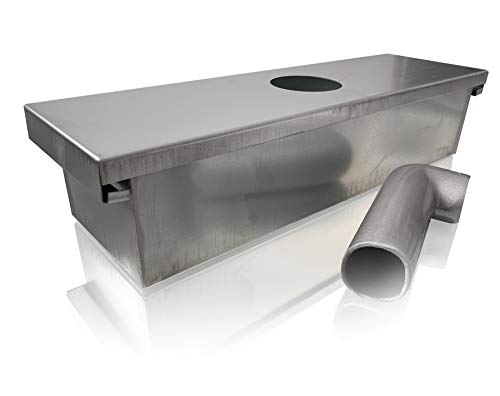
Best for commercial hood exhaust systems where grease collection is needed at the hood level. The grease box helps prevent rooftop grease buildup and supports easier downstream cleaning. It’s constructed from aluminized steel and designed to fit under canopy installations.
Who it’s for: kitchens with centralized hood exhausts and rooftop grease management needs. Why selected: integrates with hood systems to reduce grease migration. Limitation: specific installation geometry required for optimal performance.
Buying Guide
What to consider when choosing a grease tank or trap for a restaurant kitchen:
- Capacity versus kitchen throughput: match trap size to peak flow rates to avoid frequent emptying.
- Material durability: stainless steel resists corrosion in fatty, humid environments; carbon steel offers ruggedness but may require coatings.
- Sealing and leakage prevention: look for threaded outlets, rubber seals, and buckle-lock designs for tight fits.
- Maintenance needs: removable baskets, easy access, and clean-out design influence daily workflow.
- Installation space: measure under-sink clearance and access to pipes before selecting a unit.
- Compatibility with existing systems: ensure inlet/outlet connections align with current plumbing.
- Automation options: consider automatic cleaning features for high-volume operations to reduce labor.
Practical Buyer Questions
- What size grease trap do I need for my restaurant? Assess peak hydraulic load (GPM) and typical waste composition to determine capacity.
- Do I need stainless steel or carbon steel? Stainless steel offers corrosion resistance; carbon steel is robust but may need protective coatings.
- How often should I clean a grease trap? Frequency depends on usage, but larger units usually require less frequent emptying than smaller ones.
- Can I install a grease trap myself? Some units are DIY-friendly, but professional plumbing may be required for code compliance and proper hookup.
- Are automatic grease removal devices worth it? For high-volume kitchens, automation can reduce labor and improve consistency.
- Do these traps affect sewer system compliance? Properly sized and maintained traps help prevent sewer backflows and meet local regulations.
FAQ
- What is a grease trap and how does it work? It separates fats, oils, and grease from wastewater as it cools, allowing clean water to flow to the sewer.
- How long do grease traps typically last? With proper maintenance and material choice, traps can last many years; check manufacturer guidance.
- Can a grease trap be installed under a typical restaurant sink? Yes, many models are designed for under-sink installation, but space and plumbing must accommodate.
- What are common signs of a failing grease trap? Slow drainage, foul odors, and backflow are typical indicators requiring inspection.
- Is it necessary to hire a professional? For code compliance and correct installation, professional assistance is often advised.