Best Steam Espresso Machines for Home Baristas
If you’re shopping for a steamer-equipped coffee machine, you want a versatile option that delivers rich espresso and creamy milk foam. The top picks below are geared toward home users who want café-style results without leaving the kitchen. Best for beginners: compact, easy-to-use machines with helpful manuals. Best for creating lattes and cappuccinos: strong steam wands and reliable frothing. Best for quick mornings: fast heat-up and simple one-knob operation. See the quick-buying table to compare core benefits at a glance.
| Product | Best For | Why It Stands Out |
|---|---|---|
| Mr. Coffee 4-Shot Steam Espresso Cappuccino and Latte Maker | Everyday espresso with large portafilter | 4-shot capacity and integrated frother |
| atatix Espresso Machine with Milk Frother | Compact home or office setup | 20 bar pressure system and quick heat-up |
| CASABREWS CM5418 Espresso Machine 20 Bar | Balanced extraction with a visible gauge | 20 bar pump; stainless steel finish |
| De’Longhi Stilosa Manual Espresso Machine | Hands-on espresso with tamper | 15 bar pump; includes tamper |
| Chefman CraftBrew Espresso Machine | Value-friendly, versatile home setup | 15-bar pump; built-in steam wand |
Mr. Coffee 4-Shot Steam Espresso Maker

The Mr. Coffee model uses a powerful steam-brewing process to craft dark, rich espresso. Its extra-large portafilter allows brewing up to four shots, making it well suited for households that enjoy multiple cups in a row. The integrated frothing wand is designed for cappuccinos and lattes. Best for: households that want quick, multi-shot espresso with easy milk frothing. Caution: the steam wand requires careful handling to avoid splatter on hot milk. Selection rationale: strong value for users who want café-style beverages at home without a dedicated coffee shop setup.
atatix Espresso Machine With Milk Frother

The atatix machine features a 20-bar pressure system and a compact build, designed for home or small office use. It enables you to craft lattes, cappuccinos, and macchiatos with a milk frother, aiming for barista-style texture. Best for: users who want a powerful pump in a compact footprint. Caution: check the water tank capacity (44 oz) if you brew multiple drinks in one session to avoid refills. Selection rationale: strong pressure and fast heat-up support quick, consistent microfoam.
CASABREWS CM5418 Espresso Machine 20 Bar

The CASABREWS CM5418 combines a professional 20-bar pump with a stainless steel design and a removable water tank. The machine’s built-in steam milk frother makes it easy to craft lattes and cappuccinos at home. Best for: users who want a semi-automatic feel with a visible pressure gauge to guide adjustments. Caution: the unit’s performance depends on proper tamping and grind consistency. Selection rationale: durable stainless steel aesthetic plus clear feedback on pressure helps dial in flavors.
De’Longhi Stilosa Manual Espresso Machine
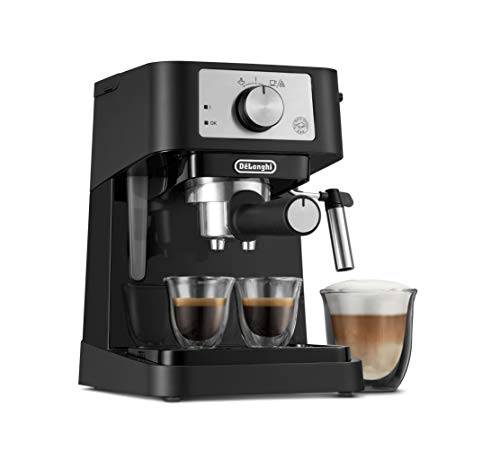
The De’Longhi Stilosa emphasizes manual control with a stainless steel boiler and a tamper included. It uses a 15-bar pump to produce authentic espresso, with a manual steam wand for milk texture. Best for: traditionalists who want hands-on extraction and control. Caution: fewer automated features mean a steeper learning curve for beginners. Selection rationale: reputable brand, straightforward setup, and a focus on manual espresso fundamentals.
Chefman CraftBrew Espresso Machine
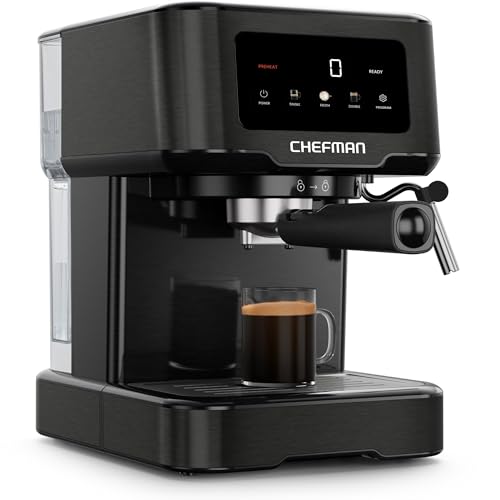
The Chefman CraftBrew presents a value-friendly option with a 15-bar pump and a built-in steam wand. It supports single or double-shot brewing and includes a removable water reservoir for easy refilling. Best for: budget-conscious buyers who want café-style beverages at home. Caution: some users may prefer a larger reservoir or more precise temperature control for specialty drinks. Selection rationale: reliable performance at a friendly price point with essential milk frothing capabilities.
Buying Guide
- Steam power and frothing: Look for a robust steam wand and a reliable frothing system to achieve microfoam suitable for latte art. A 15–20 bar pump is common for good crema and texture.
- Capacity and footprint: Consider the water reservoir size and machine footprint if you have a smaller kitchen or limited counter space. Public-friendly options often balance size and performance well.
- Ease of use vs. control: Manual machines offer hands-on control but require practice. Semi-automatic systems with pressure gauges help dial in extraction with less trial and error.
- Maintenance and durability: Stainless steel boilers and sturdy portafilters contribute to longer life. Check for removable parts that simplify cleaning.
- Included accessories: Portafilters, tamper, and measuring tools aid consistent brewing. A frothing pitcher is a nice addition for beginner setups.
Frequently Asked Questions
- What is the ideal steam wand for beginners? A machine with a user-friendly steam wand and a forgiving frothing process helps new users learn milk texturing without frustration.
- Do I need a high-pressure machine for good espresso? A 15–20 bar system is typical for home machines; pressure stability and grind quality matter as much as peak pressure.
- Is a larger water tank important? A bigger reservoir reduces frequent refills during a session, especially if you plan to make multiple drinks.
- Should I prioritize manual control or automation? Automation eases consistency; manual control suits those who want to experiment with texture and shot timing.
- What maintenance helps longevity? Regular cleaning of the group head, portafilter, and steam wand, plus descaling as needed, maintains performance.
- Are these machines suitable for offices? Yes, compact models with decent capacity and quick heat-up work well for small offices and shared kitchens.